


Every Demon Slayer Breathing Style, Ranked
After the Hashira ranking covered the strongest demon slayers by character, and the Upper Moons covered the villain side of the conflict, this post covers the underlying power system that defines every fight in Demon Slayer: the breathing styles themselves.
"Strongest breathing style," "sun breathing," "all breathing styles list" — these are among the highest-traffic Demon Slayer searches on Google. The Hashira post answers who; this post answers what they use and why the style matters.
All 12 canonical breathing styles are ranked here, from Sun Breathing (the original, from which every other style derives) down through the specialised forms. Each entry covers the style's origin, its strongest known user, signature techniques, and its lineage in the breathing style family tree.
How Breathing Styles actually work
Breathing Styles (全集中の呼吸, Zenshū Chūka no Kokyū — "Total Concentration Breathing") are combat techniques built on precise breath control. The core mechanic: a demon slayer controls their breathing pattern to oxygenate their blood at an abnormally high rate, increasing physical output — strength, speed, and reaction time — far beyond a normal human's ceiling.
Total Concentration Breathing is the base state. Standard demon slayers can only sustain it during combat. Advanced demon slayers (all current Hashira) can maintain it constantly, even while sleeping — this is called Constant Total Concentration Breathing and is one of the training milestones that distinguishes Hashira candidates from the general corps.
Breathing Marks are a separate unlockable state that manifests physically as a tattoo-like mark on the body when certain physiological thresholds are crossed during combat: heart rate above 200 BPM, body temperature above 39°C. The Mark grants a dramatic increase in ability — functionally transforming a Marked Hashira into a different class of fighter. The cost is severe: the historical evidence from Yoriichi's era suggests Marked demon slayers almost always die before age 25. The current Hashira generation breaks this pattern to varying degrees, which remains unexplained in the manga.
The family tree: Every breathing style except Moon Breathing traces back to Sun Breathing, which Yoriichi Tsugikuni created roughly 500 years before the series. His contemporaries — other demon slayers who trained alongside him but couldn't replicate Sun Breathing — adapted what they could learn into derivative styles suited to their own bodies. Those derivatives were further adapted by later generations, creating the branching family tree of modern breathing styles.
Tier 1: The Original
Sun Breathing — Hinokami Kagura

Sun Breathing
The origin of the entire system. Created by Yoriichi Tsugikuni — a demon slayer born with the Demon Slayer Mark active from birth, the only person in recorded history to achieve this. Yoriichi developed Sun Breathing not as a combat technique but as an expression of his own physical nature: he moved and breathed in a way no one else could replicate. He is the only person in the series to wound Muzan Kibutsuji to the point of forcing him into survival mode — Muzan spent the subsequent 400 years subdividing his cells specifically to survive the technique that Yoriichi used on him. Sun Breathing has thirteen forms, culminating in the Thirteenth Form: a continuous rotation through all twelve prior forms in sequence. This was the technique Yoriichi used against Muzan and the one Tanjiro ultimately recreates in the final arc. Yoriichi's contemporaries could not replicate Sun Breathing in full, so they each adapted the elements they understood — producing the five primary derivative styles (Flame, Water, Thunder, Wind, Stone) that form the foundation of modern demon slaying. Sun Breathing is the ceiling of the entire system.
Tier 2: The Direct Derivations
These three styles have the closest relationship to Sun Breathing — either through direct lineage (Flame, Water) or through being the only style developed independently at the Sun Breathing tier (Moon). They sit above the elite Hashira styles because their canonical ceiling — the strongest known user of each — exceeds what any Tier 3 or 4 practitioner has demonstrated.
Moon Breathing
Moon Breathing
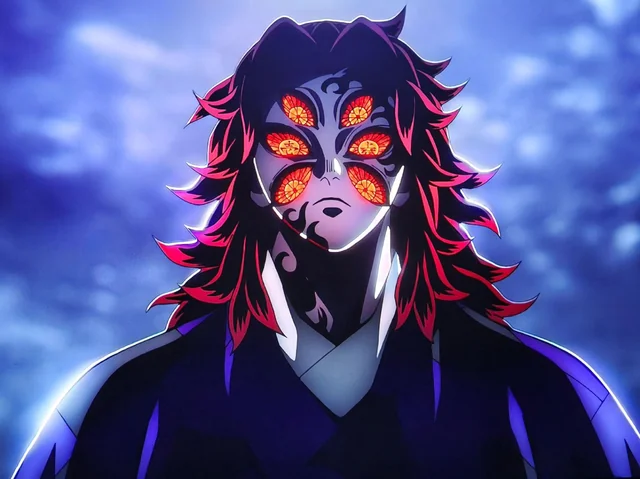
The only breathing style not derived from Sun Breathing — and the closest any other style comes to matching it in raw power. Developed by Michikatsu Tsugikuni, Yoriichi's twin brother, who became a demon (and Upper Moon One, Kokushibo) after the resentment of never being able to replicate his brother's ability consumed him. Moon Breathing uses crescent-shaped slashes and curved trajectories that contrast directly with Sun Breathing's circular and flowing forms. Sixteen forms in the final version. As a demon, Kokushibo enhanced Moon Breathing with his Blood Demon Art — producing crescent-shaped flesh blades that extend from his sword and body, giving the style a reach and unpredictability no human practitioner could replicate. The canonical ceiling of Moon Breathing is Kokushibo himself, who required Gyomei, Sanemi, Muichiro, and Genya — four of the strongest fighters in the series — to bring down. No human currently uses or could use Moon Breathing in the form Kokushibo developed.
Flame Breathing
Flame Breathing
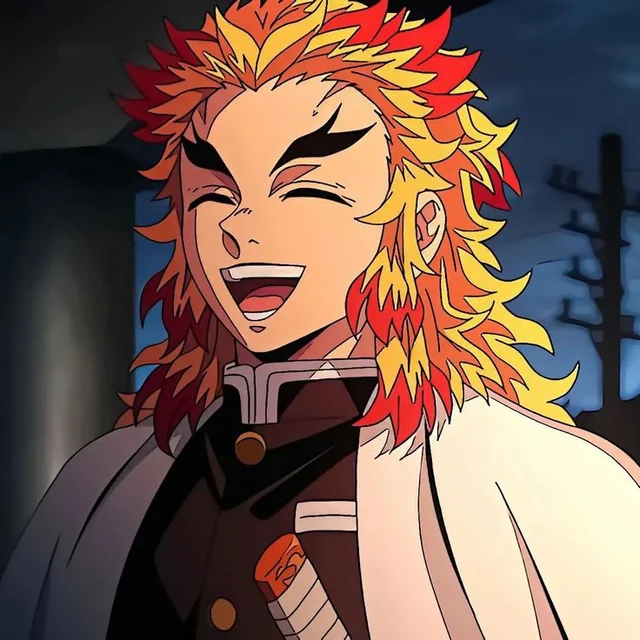
The most prestigious of the Sun Breathing derivatives in Demon Slayer's cultural context — the Rengoku family has guarded the Flame Breathing style and its flame swordsman tradition for generations, and the series frames the Flame Hashira position as carrying particular historical weight. Nine forms (Unknowing Fire through Ninth Form: Rengoku). The strongest known user in the series is Kyojuro Rengoku, who wielded it at a level that matched Akaza (Upper Moon Three) well enough to fight to a mutual near-destruction on the Mugen Train. Rengoku was not Marked during that fight — the implication is that a Marked Rengoku would have killed Akaza. Flame Breathing's techniques are characterised by forward momentum and rising trajectories, embodying the image of a flame accelerating upward. The style's lineage is direct from Sun Breathing's origination period, making it one of the five oldest styles in the system.
Water Breathing
Water Breathing
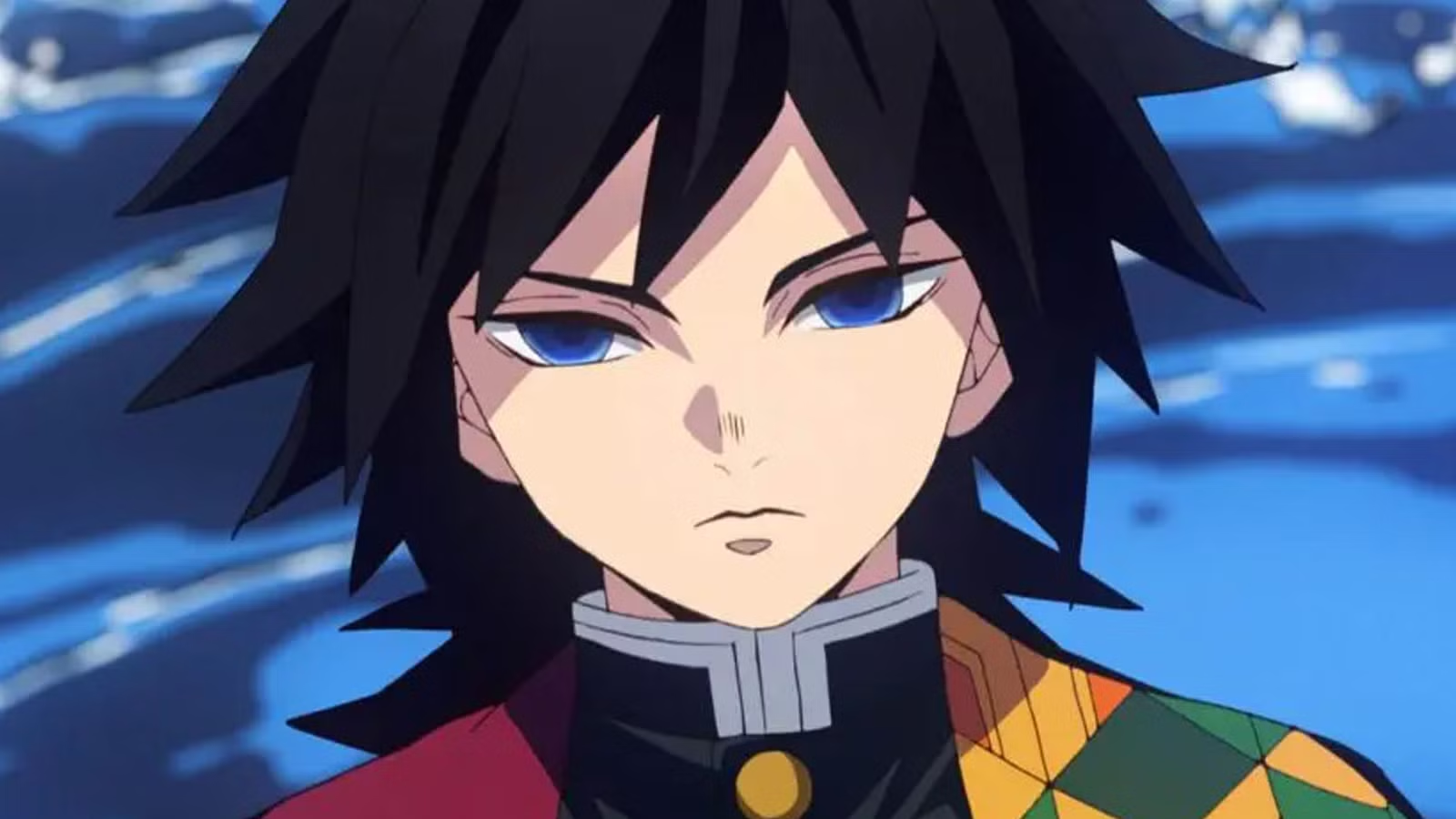
The most widely taught breathing style in the Demon Slayer Corps — Sakonji Urokodaki's training produces the largest number of graduates of any single master in the series. Ten forms (Water Surface Slash through Constant Flux), plus an eleventh form invented by Giyu Tomioka: Dead Calm, which creates an absolute state of stillness that nullifies incoming attacks. Water Breathing's techniques are fluid and continuous, emphasising deflection and redirection over raw power — the style's design philosophy rewards timing and economy of motion over strength. The strongest known user is Giyu Tomioka, who fought Upper Moon Three (Akaza) in the war arc alongside Tanjiro and survived, activating his Demon Slayer Mark during the fight. Water Breathing is also the style Tanjiro originally trained in before his lineage manifested as Hinokami Kagura, and it forms the base of his understanding of the breathing system throughout the series.
Tier 3: The Elite Hashira Styles
Four styles whose practitioners consistently operate at the top of the current-era Hashira tier. These are ranked as a group rather than individually — the canonical evidence across the final arc places all four roughly in the same bracket, with positional differences more about circumstance and matchup than a clear hierarchy.
Wind Breathing
Wind Breathing
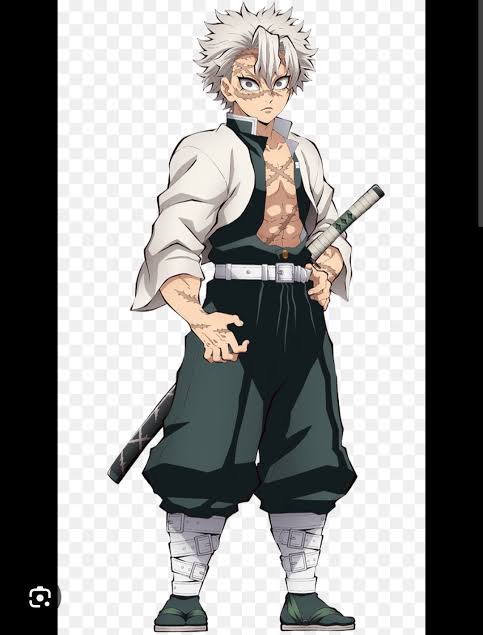
Nine forms (Dust Whirlwind Cutter through Idaten Typhoon). Wind Breathing is the most physically aggressive of the elite Hashira styles — its techniques are characterised by wide, sweeping slashes and rotational motion that create cutting pressure over a large area. Sanemi Shinazugawa, the Wind Hashira, is physically the most durable Hashira in the current generation: his Marechi blood (rare blood that intoxicates demons on contact and makes them lose focus) combined with Wind Breathing made him the Hashira who fought Kokushibo longest before backup arrived and arguably the one who contributed most to the eventual killing blow. His Demon Slayer Mark activated during the Kokushibo fight, elevating his performance into the highest bracket the series depicts for a human fighter.
Stone Breathing
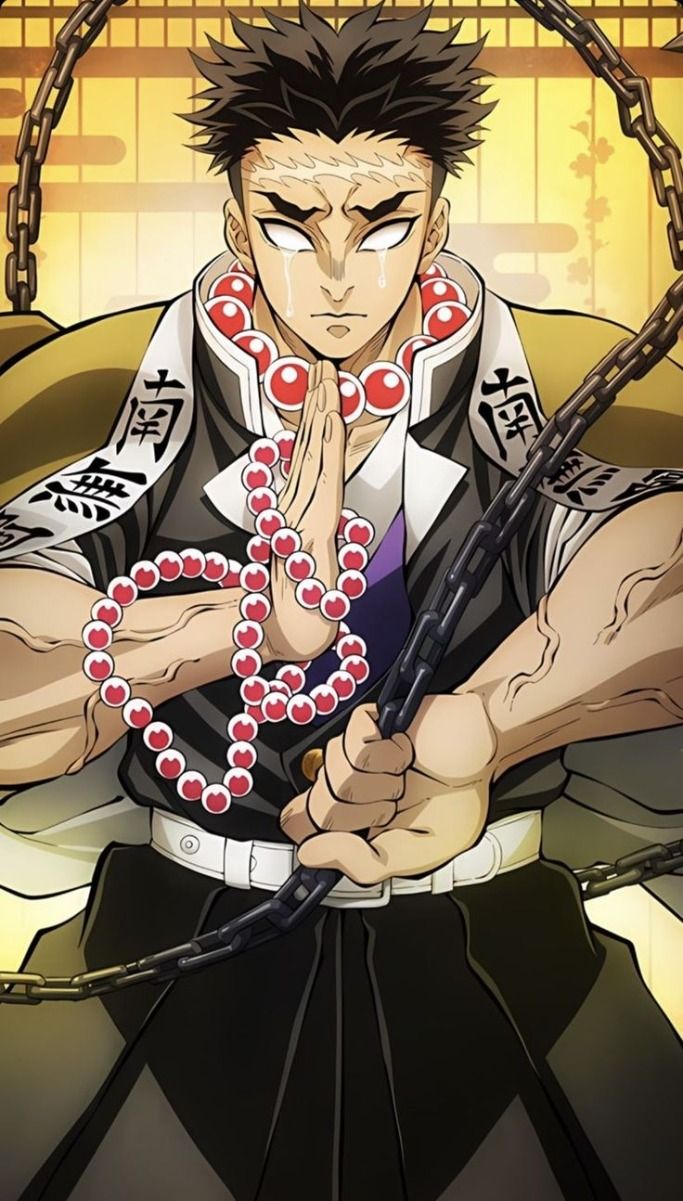
Stone Breathing
Five forms (Metamorphic Steel — Volcanic Rock, Pebble Dance through Arcs of Justice). Stone Breathing is the rarest of the primary styles and the one with the smallest number of known practitioners in the series' history. Gyomei Himejima is described within the narrative as the strongest Hashira of his generation — Tanjiro's internal assessment puts him in a tier above the other Hashira, which the series validates in the war arc when Gyomei activates his Demon Slayer Mark and fights Kokushibo at a level that's explicitly framed as exceptional even among the Marked Hashira. Stone Breathing's techniques are built around power and weight — the spiked flail and axe chain Gyomei wields (unique among the Hashira, who almost all use swords) reflect the style's emphasis on force over speed. The style's rarity means the direct lineage from its Sun Breathing origins is less documented than Flame or Water.
Mist Breathing
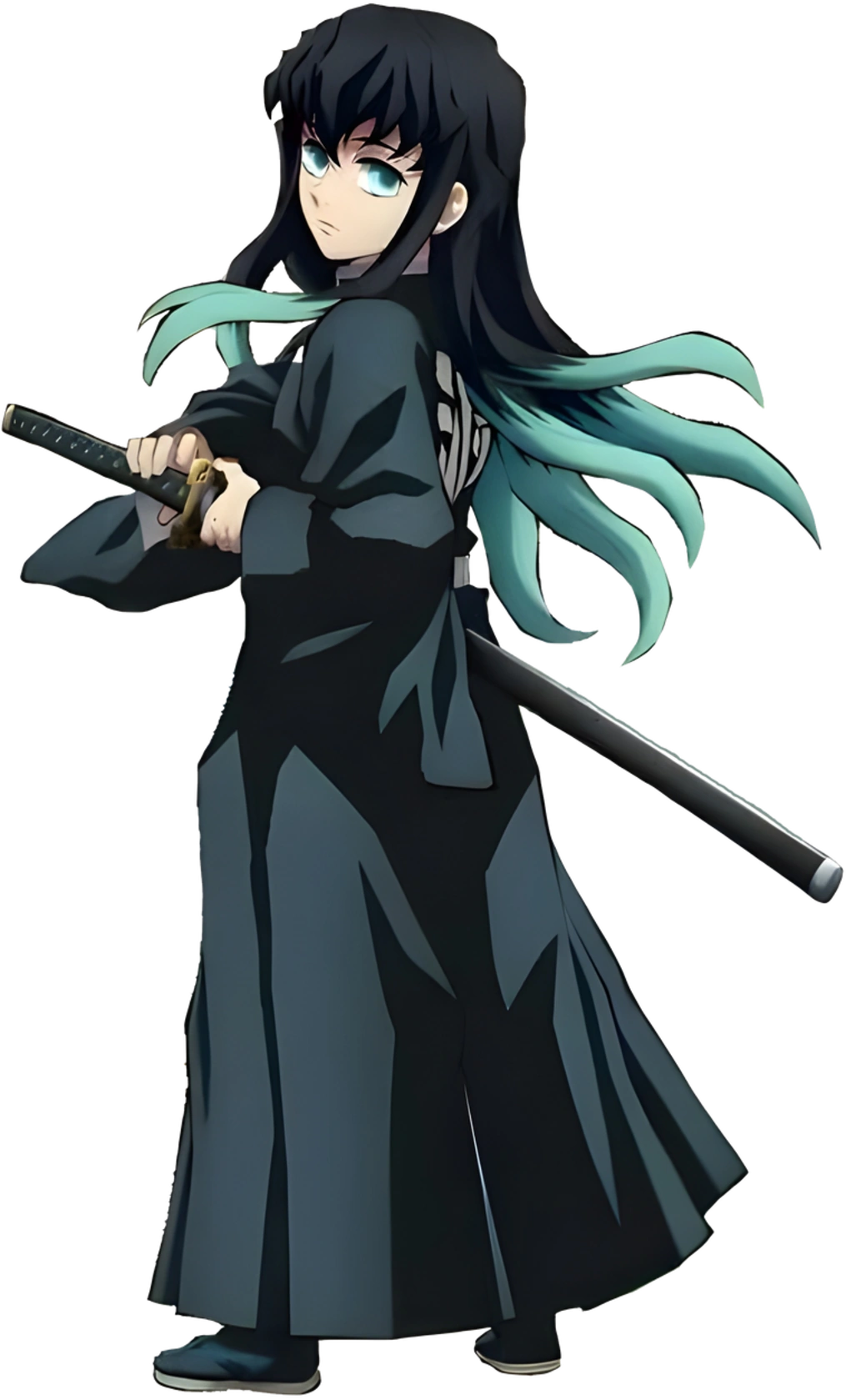
Mist Breathing
Seven forms (Low Clouds, Distant Haze through Obscuring Clouds). Mist Breathing is built on deceptive trajectories and unpredictable rhythm — attacks that accelerate or decelerate mid-swing to break the opponent's timing. The seventh form, Obscuring Clouds, changes its speed irregularly throughout the motion, making it nearly impossible to read even for fighters with enhanced perception. Muichiro Tokito, the Mist Hashira, is the most extreme case of innate talent in the current Hashira generation: he achieved Hashira rank two months after starting training (the fastest in Corps history) and had lost all memory of his past when he was inducted. Muichiro activates his Demon Slayer Mark during the fight against Gyokko (Upper Moon Five) and is confirmed to be a direct descendant of Yoriichi's twin brother — meaning he inherits the same genetic potential as both Yoriichi and Kokushibo. He dies in the Kokushibo fight after the Mark's physical toll combines with accumulated injury.
Sound Breathing
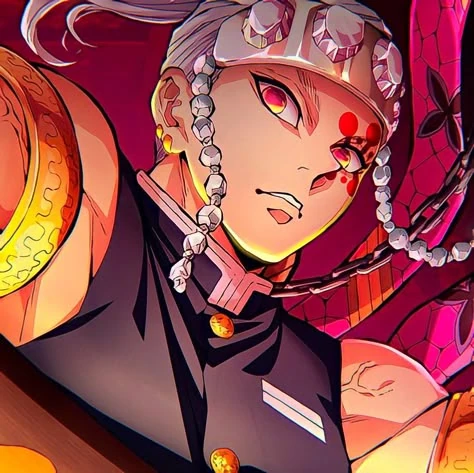
Sound Breathing
Five forms (Roar — Constant Catastrophe through String Performance). Sound Breathing is a derivative of Thunder Breathing adapted specifically for Tengen Uzui's dual-cleaver fighting style and his shinobi background. The forms are built around explosive, maximalist attacks that prioritise overwhelming force and area coverage over subtlety — which matches Tengen's personality. The signature element is rhythm: Sound Breathing practitioners analyse the "musical score" of a fight, identifying patterns in the opponent's attacks to predict and counter them. Tengen applied this during the Entertainment District arc against Gyutaro (Upper Moon Six) — fighting while poisoned, with one arm severed, he maintained the rhythm analysis until the coordinated kill with Tanjiro. He retires from the Corps after the fight due to his injuries and is the only current-generation Hashira to survive the war arc entirely by not participating (by choice and injury).
Tier 4: The Specialised Styles
Four styles developed for specific body types, fighting philosophies, or combat constraints. All four are wielded by Hashira-level or near-Hashira-level fighters, but their design compromises — specialisation for a niche — place their ceiling below the elite styles in most matchup scenarios.
Love Breathing
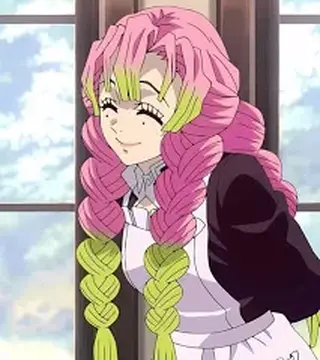
Love Breathing
Six forms (Shivers of First Love through Cat-Legged Winds of Love). Love Breathing was developed by Mitsuri Kanroji specifically for her unique physique: she has eight times the muscle density of a normal person packed into an unusually flexible frame, which made standard Flame Breathing (the style she originally trained in) underperform her physical potential. The style is built around her whip-like blade and maximum-range, flowing strikes that exploit her abnormal flexibility — attacks that would be physically impossible for any other Hashira to replicate. Love Breathing is the style most constrained by its user's specific biology: the technique design is entirely built around Mitsuri's body, which makes it extremely powerful in her hands and essentially inapplicable to anyone else. Her Mark activates during the fight against Zohakuten (one of Hantengu's Upper Moon Four manifestations).
Serpent Breathing
Serpent Breathing
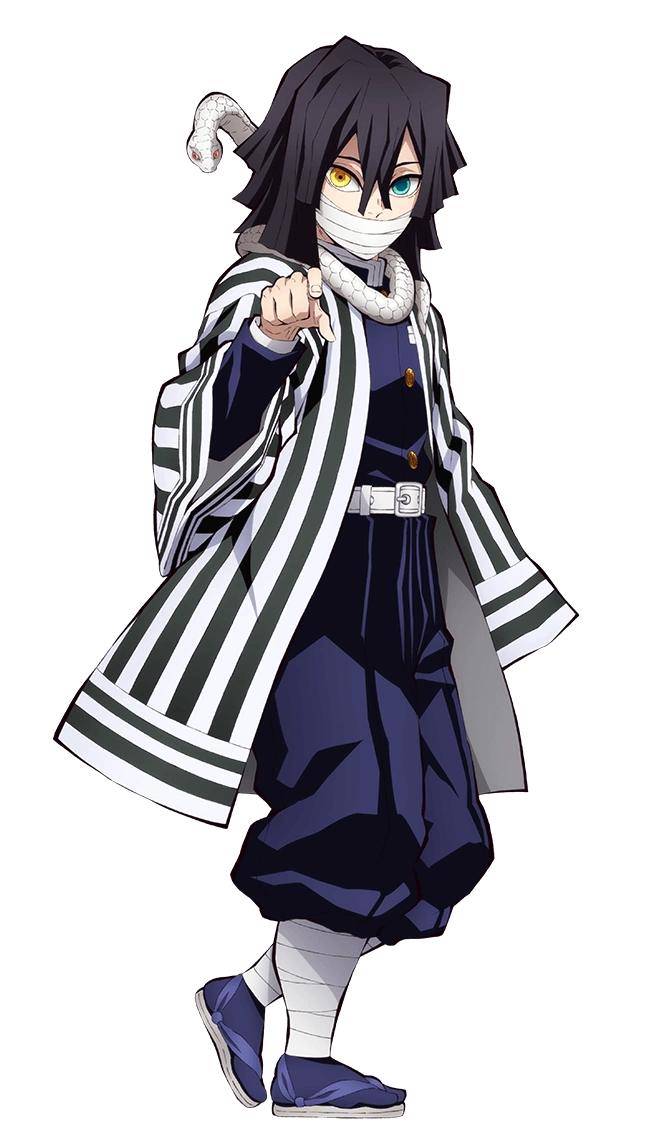
Five forms (Winding Serpent Slash through Boa, Constricting). Serpent Breathing was developed by Obanai Iguro, who was partially blind in one eye (his left eye was heterochromatic from birth) and carried his white snake Kaburamaru as a combat partner. The style's design reflects the snake motif: twisting trajectories, techniques that change direction after initiation, and attacks that come from angles that conventional Breathing Style forms don't approach. Kaburamaru's ability to read attacks was integrated into Obanai's fighting style as a real-time information feed — effectively compensating for his limited vision. Obanai fights Muzan directly in the final arc and activates his Demon Slayer Mark during that fight. He is one of the few Hashira to survive long enough to fight Muzan in his weakened state after the sun exposure sequence, though he is mortally wounded.
Insect Breathing
Insect Breathing
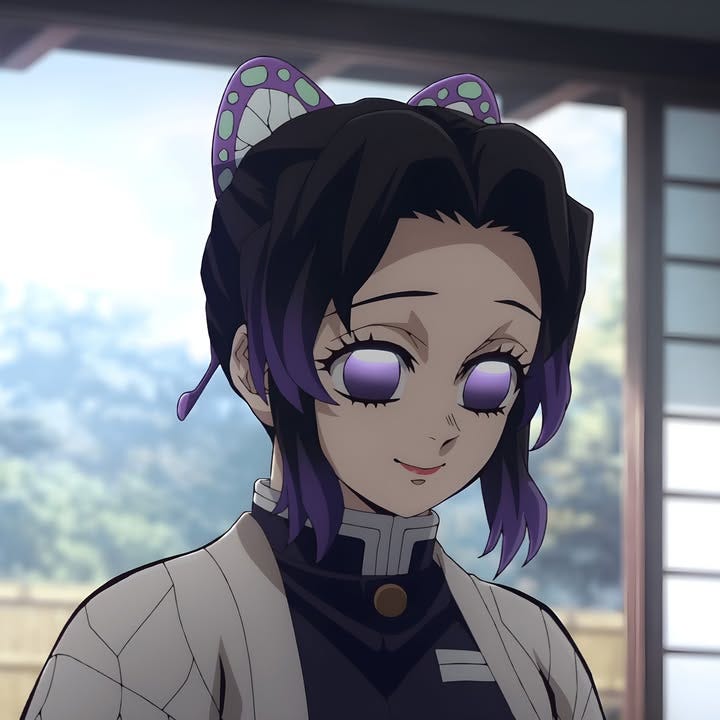
Four forms (Butterfly Dance: Caprice, Dance of the Bee Sting: True Flutter, Dance of the Dragonfly: Rise of the Flapping Wings, Dance of the Centipede: Hundred-Legged Zigzag). Insect Breathing was developed by Shinobu Kocho specifically because she lacks the physical strength to decapitate a demon — the standard kill condition for a demon slayer. Instead, Insect Breathing was redesigned around her ability to inject wisteria-derived poison directly through her modified blade. The techniques are built for speed and precision over power: small, quick stabs that deliver a lethal dose of poison to a demon's body with each hit rather than attempting decapitation. Insect Breathing is the only breathing style whose fundamental premise is "this is what you do if you can't do what all other styles require." Shinobu's final fight against Doma (Upper Moon Two) is the purest expression of the style — she spent months absorbing wisteria poison into her own body fat so that when Doma absorbed her, the poison dose was large enough to begin killing him from inside, setting up Kanao and Inosuke's finishing blows.
Thunder Breathing

Thunder Breathing
Six forms (Thunderclap and Flash through Rumble and Flash, Sixfold). Thunder Breathing is built around a single core concept: move so fast the opponent cannot track or react. The First Form, Thunderclap and Flash, is the style's signature technique — a draw-and-slash at maximum speed. Zenitsu Agatsuma, its strongest current user, can only access Thunder Breathing unconsciously (while asleep or pushed past his fear into a dissociative state), but in that state he achieves speeds that exceed what conscious technique users demonstrate. He develops a Seventh Form independently during the series — Flaming Thunder God — which appears to combine Thunder Breathing's speed with an aerial trajectory that no prior Thunder Breathing form attempted. Thunder Breathing is the most-searched breathing style on Google by a significant margin, driven entirely by Zenitsu's popularity. Its canonical ceiling — a Zenitsu who could access his ability consciously at full power — would place it higher in this ranking; as the style currently exists in practice, the constraint keeps it in Tier 4.
Honourable mentions
Hinokami Kagura is not a separate style — it is Sun Breathing, preserved in altered form by Tanjiro's family as a ritual dance passed down through generations of charcoal burners. The Kamado family danced it as a New Year's ritual without understanding its origins. Tanjiro gradually reconstructs the thirteen Sun Breathing forms through the series as his body adapts. It is placed as a honourable mention rather than in Tier 1 because it is the same style as Sun Breathing under a different name; covering it separately is useful for search intent, not because it's a distinct system.

Hinokami Kagura — Tanjiro Kamado
Tanjiro begins the series as a Water Breathing practitioner (trained by Urokodaki). He starts using Hinokami Kagura in the Spider Mountain arc when he recognises that his body is better suited to the Sun Breathing lineage than to Water Breathing. By the final arc he has reconstructed all thirteen Sun Breathing forms and uses the Thirteenth Form — the continuous rotation through all twelve — as his technique against Muzan. The earrings he inherited from his father (matching Yoriichi's) are confirmed to be a physical connection to the Sun Breathing lineage. Tanjiro is the series' primary example of a modern demon slayer rediscovering the lost apex of the breathing system.
Beast Breathing is Inosuke Hashibira's self-invented style, developed with no formal training or master. Nine forms (Slice 'n' Dice through Spatial Awareness). Inosuke grew up with wild boars and developed his fighting style through survival instinct rather than instruction. Beast Breathing's defining feature is total sensory integration — Inosuke can feel vibrations through his blade tips, giving him a spatial map of his surroundings without visual input. It has no formal lineage in the Sun Breathing family tree; it is a self-invented style that arrived at breathing technique through a completely different path.

Beast Breathing — Inosuke Hashibira
The only breathing style with no connection to the Sun Breathing lineage. Inosuke developed it independently, based entirely on combat instinct developed from living with wild boars. The dual-blade approach and extreme range of motion (Inosuke can rotate his joints far beyond a normal human's range) make Beast Breathing visually distinctive from every other style in the series. Its ceiling is unclear because Inosuke never formally trains to refine it past what his natural ability produces — but in the war arc, he contributes to killing Doma (Upper Moon Two) alongside Kanao, which places him in the top bracket of non-Hashira fighters.
Flower Breathing is a Water Breathing derivative developed within the Kocho family line. Kanae Kocho (Shinobu's deceased older sister, former Flower Hashira) used it before her death at Doma's hands. Kanao Tsuyuri, Shinobu's adopted sister, also uses Flower Breathing — her final technique, Flower Breathing: Scarlet Spider Lily Eyes, achieves a state of maximal Concentration that slows her perception of time at the cost of potentially blinding her. This technique is what lands the final blow on Doma after Shinobu's poison had begun weakening him.
Nichirin swords by breathing style: the collector's guide
Every breathing style is associated with a Nichirin sword colour, which manifests when a demon slayer first grips their blade. The colour reflects their nature and their style's elemental identity — and it's what makes Nichirin sword replicas one of the most desirable Demon Slayer collector items in the UK market.
Flame Breathing → red/orange. Rengoku's flame-patterned blade is the most iconic Nichirin design in the series. The Mugen Train arc made it culturally ubiquitous, and replica demand remains the highest of any individual Demon Slayer blade.
Water Breathing → blue. Giyu's deep blue blade. Widely available as a replica; the Wave pattern hilt is the distinguishing detail on quality versions.
Thunder Breathing → yellow. Zenitsu's yellow blade. High demand driven by Zenitsu's popularity. The standard replica often gets the hilt colour wrong — the authentic yellow with lightning pattern is the tell for a quality piece.
Sun Breathing / Hinokami Kagura → black → red. Tanjiro's blade initially manifests black (which is considered bad luck within the Corps and associated historically with Yoriichi). It later shows red/orange at the series' climax. Black Nichirin replicas referencing Tanjiro's blade are among the most distinctive collector pieces.
Mist Breathing → white. Muichiro's white blade. Less common as a replica than Flame or Water; the white and grey gradient on authentic versions is visually striking.
Sound Breathing → orange. Tengen's dual cleavers in orange. The dual-blade format makes these a distinct collector item from all single-blade styles.
If you're building a breathing-style blade collection, check the AnimeVault listings for current Nichirin replica availability. Rengoku's flame blade and Zenitsu's thunder blade are the two that move fastest when they come in stock.
TL;DR: Breathing styles ranked
| Tier | Style | Strongest user | Lineage | |------|-------|----------------|---------| | 1 | Sun Breathing | Yoriichi Tsugikuni | Original — no parent style | | 2 | Moon Breathing | Kokushibo (Upper Moon One) | Independent — not derived from Sun | | 2 | Flame Breathing | Kyojuro Rengoku | Direct from Sun Breathing | | 2 | Water Breathing | Giyu Tomioka | Direct from Sun Breathing | | 3 | Stone Breathing | Gyomei Himejima | Direct from Sun Breathing | | 3 | Wind Breathing | Sanemi Shinazugawa | Direct from Sun Breathing | | 3 | Mist Breathing | Muichiro Tokito | Derived from Water Breathing | | 3 | Sound Breathing | Tengen Uzui | Derived from Thunder Breathing | | 4 | Love Breathing | Mitsuri Kanroji | Derived from Flame Breathing | | 4 | Serpent Breathing | Obanai Iguro | Derived from Water Breathing | | 4 | Thunder Breathing | Zenitsu Agatsuma | Direct from Sun Breathing | | 4 | Insect Breathing | Shinobu Kocho | Derived from Flower → Water Breathing | | HM | Hinokami Kagura | Tanjiro Kamado | Sun Breathing under a different name | | HM | Flower Breathing | Kanae / Kanao Kocho | Derived from Water Breathing | | HM | Beast Breathing | Inosuke Hashibira | Self-invented — no lineage |
The debate forum question that gets the most traction: "Strongest breathing style if you don't count Sun Breathing?" The answer depends entirely on whether you're judging by the style's ceiling (Moon Breathing, given Kokushibo's feats) or by the style as practised by a human demon slayer (Flame or Water, with Stone Breathing making a strong case via Gyomei's war arc performance).
More from the blog
Get new anime collector posts in your inbox.
Reviews, guides, and hobby news — delivered directly.
By subscribing, you agree to our Privacy Policy.