


Every Devil Fruit Type Explained: Paramecia, Zoan, and Logia
Devil Fruits divide into three types in One Piece, and the classification matters more than it first appears. Paramecia covers everything the other two do not: body modifications, environmental manipulation, force generation, and stranger abilities that resist easy categorisation. Zoan gives the user an animal form to shift between, with the combat advantages of a second body and the Haki compatibility that comes with a physically enhanced build. Logia is the rarest of the three: elemental transformation, making the user's body the element itself rather than a user of it.
The distinction is not just taxonomy. It shapes how each fruit interacts with Haki, how it awakens, and what its ceiling looks like in a serious fight. Logia users are functionally untouchable without Haki; Zoan users gain raw physical durability that makes sustained combat their natural environment; Paramecia users are the most variable class, ranging from situational gimmicks to some of the most broken abilities in the series.
This breakdown covers fifteen fruits across all three types. For a straight power ranking, see the strongest devil fruits guide.
Paramecia
Paramecia is the largest category and the hardest to generalise. The common thread is that the fruit grants a superpower that does not fit the Zoan (animal form) or Logia (elemental body) definitions. In practice that means everything from rubber bodies to surgery to gravity wells. Paramecia fruits awaken by extending the user's power outward onto their environment, transforming the terrain around them rather than just themselves.
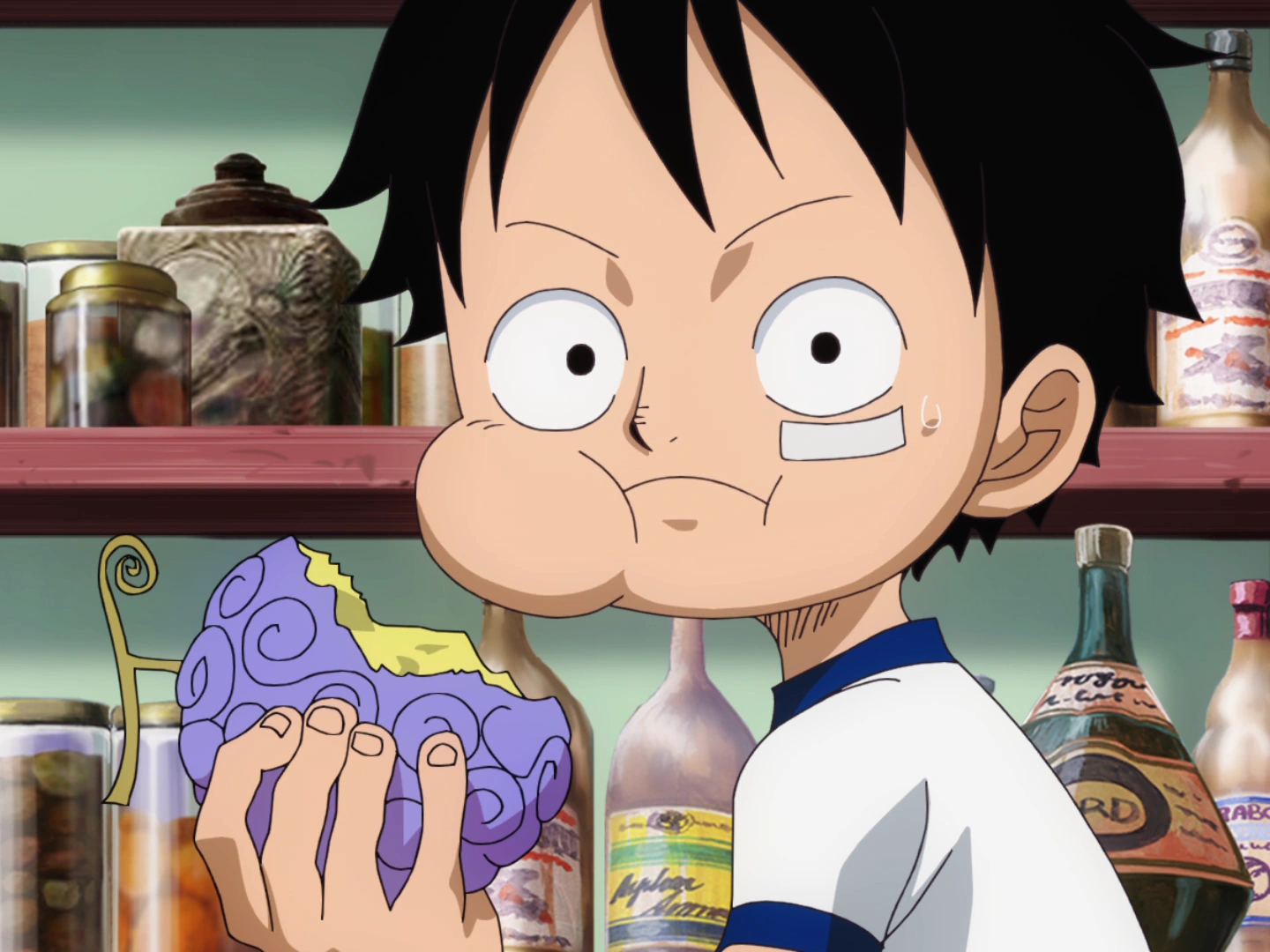
Gomu Gomu no Mi (Luffy)
The Gomu Gomu no Mi grants a rubber body: compression, extension, and complete immunity to blunt force and lightning. In its base form it is a straightforward enhancement fruit that Luffy spent most of the series iterating on through Gear systems rather than the fruit's own ceiling. Gear Second used blood-pump acceleration to overclock his body. Gear Third inflated his bones into giants for single blows. Gear Fourth compressed and hardened specific regions for a combination of speed and impact.
Awakening changed the category entirely. The Gomu Gomu no Mi's awakened form, Gear Fifth, extends rubber properties to the environment: terrain, opponents, and objects all become subject to cartoon-physics manipulation. More significantly, Gear Fifth revealed the fruit's true identity as the Hito Hito no Mi, Model: Nika, a Mythical Zoan that the World Government had classified and suppressed as a Paramecia for centuries. The rubber properties are a manifestation of what the sun god Nika was said to embody, not a standard body-modification Paramecia. That reclassification is the most significant fruit reveal in the series and recontextualises Luffy's entire combat trajectory.
For One Piece collectors, Gear Fifth figures and the Nika form are among the highest-demand items in the current UK market. Browse One Piece listings on AnimeVault for available items.
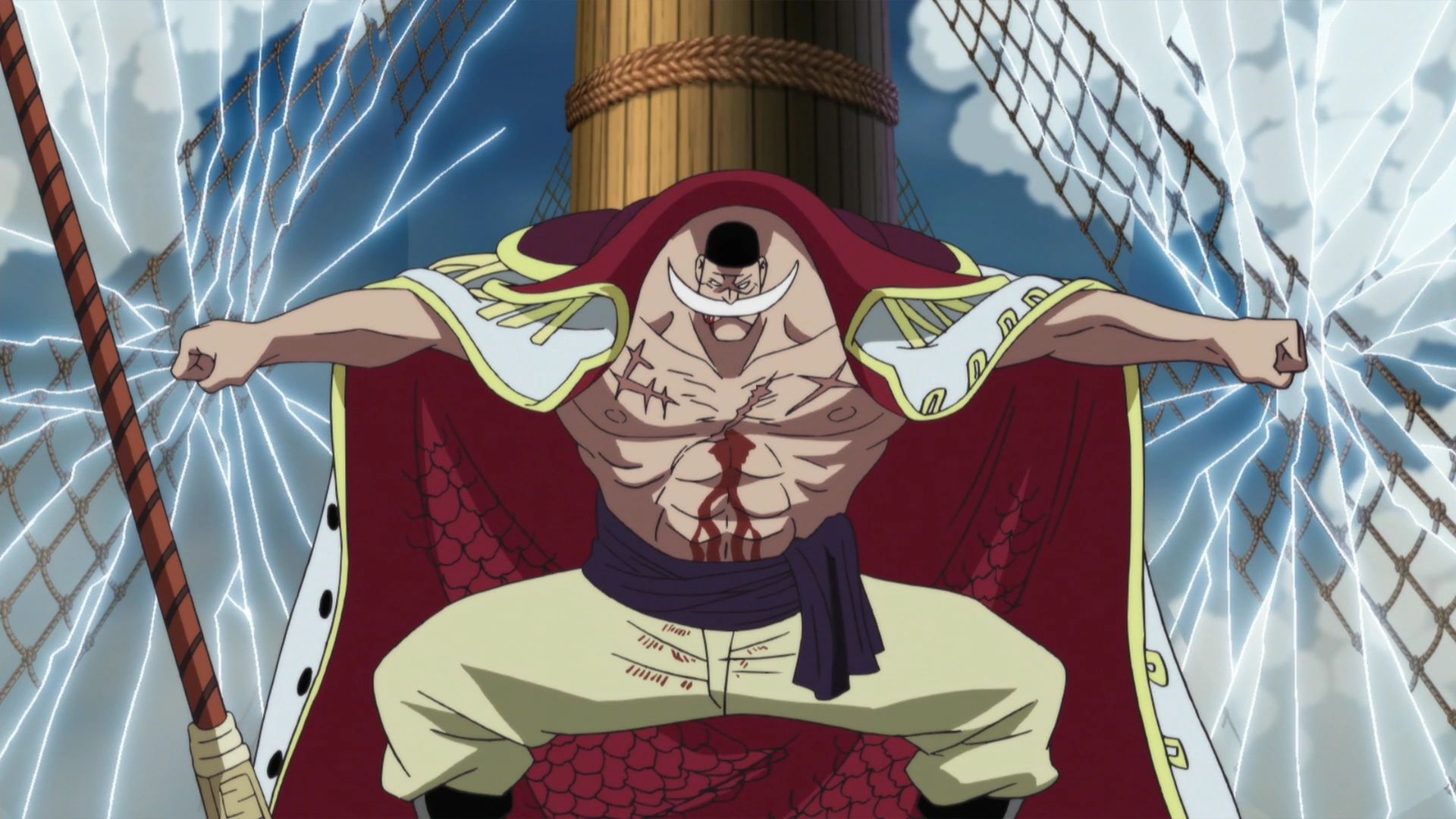
Gura Gura no Mi (Whitebeard)
The Tremor-Tremor Fruit is consistently described as the strongest Paramecia in the series. Whitebeard could crack the air itself, generating shockwaves that radiated outward as vibration forces capable of splitting the ocean surface and destroying structures on impact. The practical range of the fruit made it one of the only abilities in One Piece where the user's position in a fight was almost irrelevant: the shockwave reaches everything. Whitebeard cracked Marineford's plaza with a single bisento thrust, tilted the bay floor to flood the battlefield, and split the air into visible fractures as punctuation between strikes.
The Gura Gura no Mi changed hands at Marineford. Blackbeard extracted it from Whitebeard's corpse via a method that has never been explained in the manga, obscured under a sheet to hide whatever technique he used. Blackbeard then combined it with the Yami Yami no Mi, becoming the only confirmed dual Devil Fruit user in the series. The mechanics of how he holds two fruits without dying remain one of the series' open questions. For the broader power context, the full ranking appears in the strongest devil fruits breakdown and Whitebeard's place in his crew is covered in the Whitebeard Pirates ranked guide.
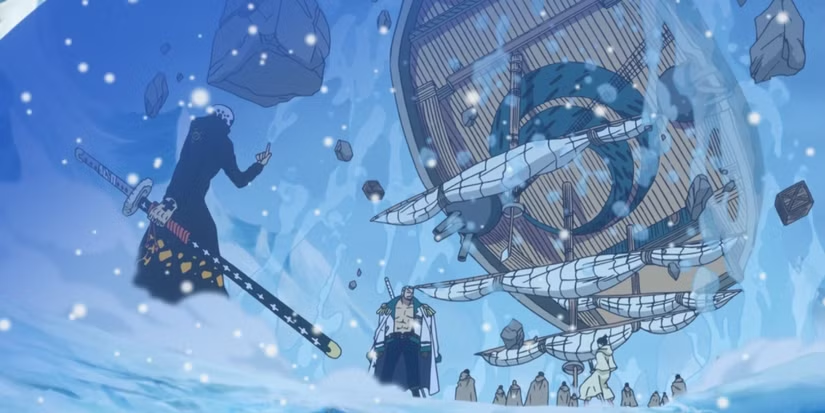
Ope Ope no Mi (Law)
The Ope Ope no Mi generates a spherical operating field called a Room. Everything inside the Room is subject to Law's surgical manipulation: bodies, objects, and spatial positions can all be severed and rearranged without causing injury to living tissue unless Law intends otherwise. The practical applications are broad enough to make the fruit one of the most tactically flexible abilities in the series. ROOM-based techniques include Shambles (position swapping of anything inside), Tact (telekinetic control of inanimate objects), Gamma Knife (internal organ damage without cutting the skin), and Counter Shock (cardiac-level electrical discharge).
The fruit's unique value is its passive ability: the Ope Ope no Mi can grant someone eternal youth at the cost of the user's life. This is the reason Doflamingo spent years orchestrating Law's circumstances to force him into performing the Immortality Operation. The World Government paid 5 billion berries for the fruit specifically because of this ability, making it the most expensive Devil Fruit purchase ever recorded in the series. Law eventually reached awakening, expanding the Room's scale and adding environmental manipulation at the territory level. The fruit is classified as the "Ultimate Devil Fruit" in-universe, a designation that refers to the immortality operation rather than raw combat output, though the combat ceiling is also among the highest in the Worst Generation. Law's rivalry and alliance with Luffy is covered in the Worst Generation supernovas breakdown.
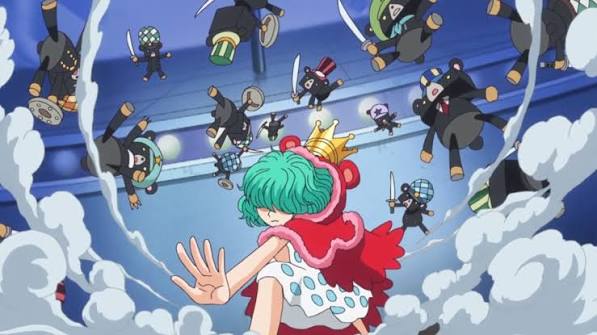
Hobi Hobi no Mi (Sugar)
The Hobby-Hobby Fruit converts any human who makes physical contact with Sugar into a living toy. The transformation is permanent unless Sugar loses consciousness. The fruit also erases all memory of the converted person from every other person who knew them: the moment of transformation wipes the target from the collective memory of every witness simultaneously, with no exceptions found in the series. The converted toy retains its intelligence and personality but is permanently trapped in the object form Sugar assigns at the moment of contact.
The secondary effect, memory erasure, is what makes the fruit more dangerous than its surface mechanics suggest. Sugar is physically weak and easy to incapacitate if you can reach her, but the memory wipe means any converted person loses all allies, relationships, and identity in an instant. Doflamingo built the entire labour infrastructure of Dressrosa on this fruit: thousands of converted humans working as toy soldiers with no one in Dressrosa even remembering they had been people. The fruit is also responsible for Sugar's own condition: consuming it halted her biological ageing permanently, leaving her with the body of a child despite her actual age. The fruit is a Paramecia outlier in that its primary mechanism operates on other people rather than the user's own body or environment.
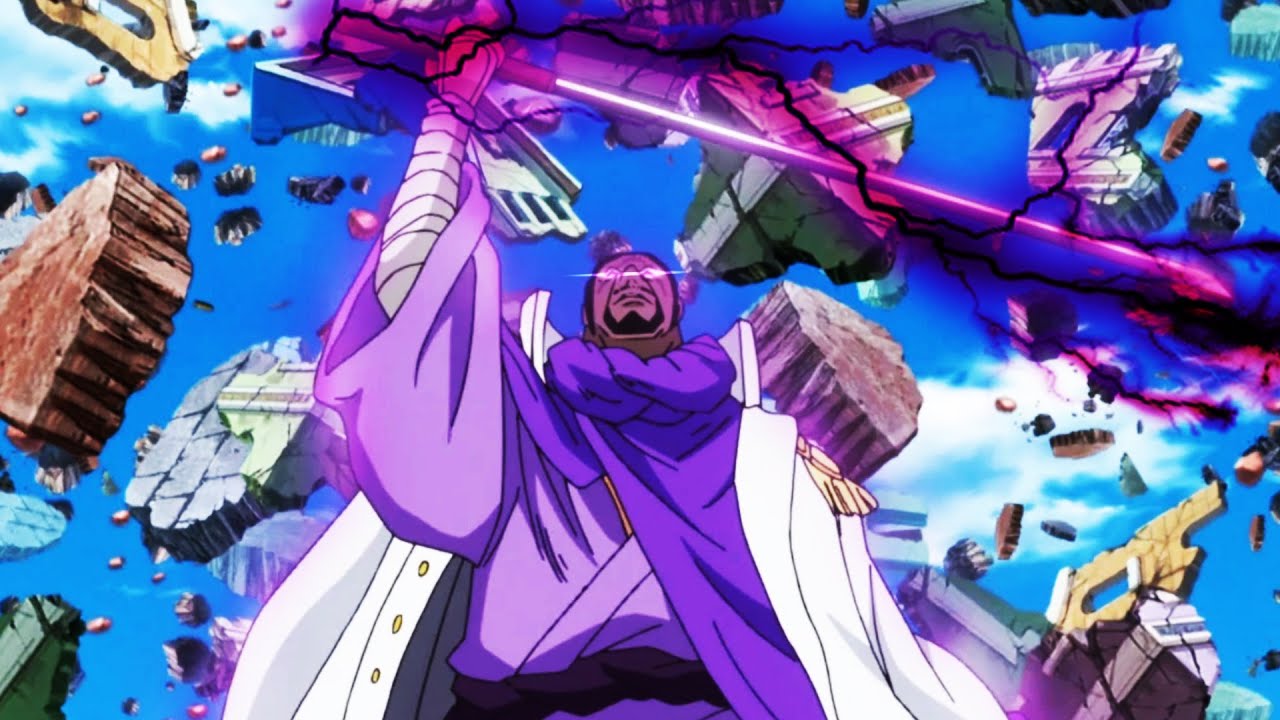
Zushi Zushi no Mi (Fujitora)
The Press-Press Fruit grants Fujitora control over gravitational force. He can generate localised gravity fields of arbitrary direction and intensity: pressing targets into the ground, reversing gravity to lift them, or applying lateral force vectors. The most visually extreme application is pulling meteorites from orbit and directing them at a target, an attack that combines the fruit's gravity field with the astronomical mass of a space rock. The meteorite technique is both an offensive weapon and a psychological statement: the delay between calling the attack and the meteorite's arrival gives opponents time to understand what is about to land on them.
Fujitora is a Marine Admiral, introduced in Dressrosa as one of the two post-Aokiji replacements. His fruit pairs with his sword combat style to create a compressed fighting approach: gravity pins opponents while the sword closes range, or gravity fields redirect incoming attacks. The awakening potential of a gravity Paramecia has not been shown in the series, but the environmental manipulation floor at base level is already among the broadest in the non-Logia class. The Admiral tier context is covered in the Marine Admirals ranked guide.
Zoan
Zoan fruits grant an animal form. Users gain three modes: human, hybrid, and full animal. The hybrid form is generally the most combat-effective: it combines the body mass and natural weapons of the animal with the cognitive function and fighting style of a human. Zoan fruits also have a passive durability enhancement that makes users more resistant to damage even in human form, which contributes to the disproportionate number of high-tier fighters who eat Zoan types.
Zoan fruits are the only type known to have personalities. Ancient and Mythical Zoans are described as having wills of their own, which affects the recovery ability of users and the fruit's behaviour in special circumstances (Devil Fruit-induced coma recovery rates are higher for Zoan users). The Mythical Zoan subtype is rarer than Logia and carries abilities that extend beyond standard animal-form grants.
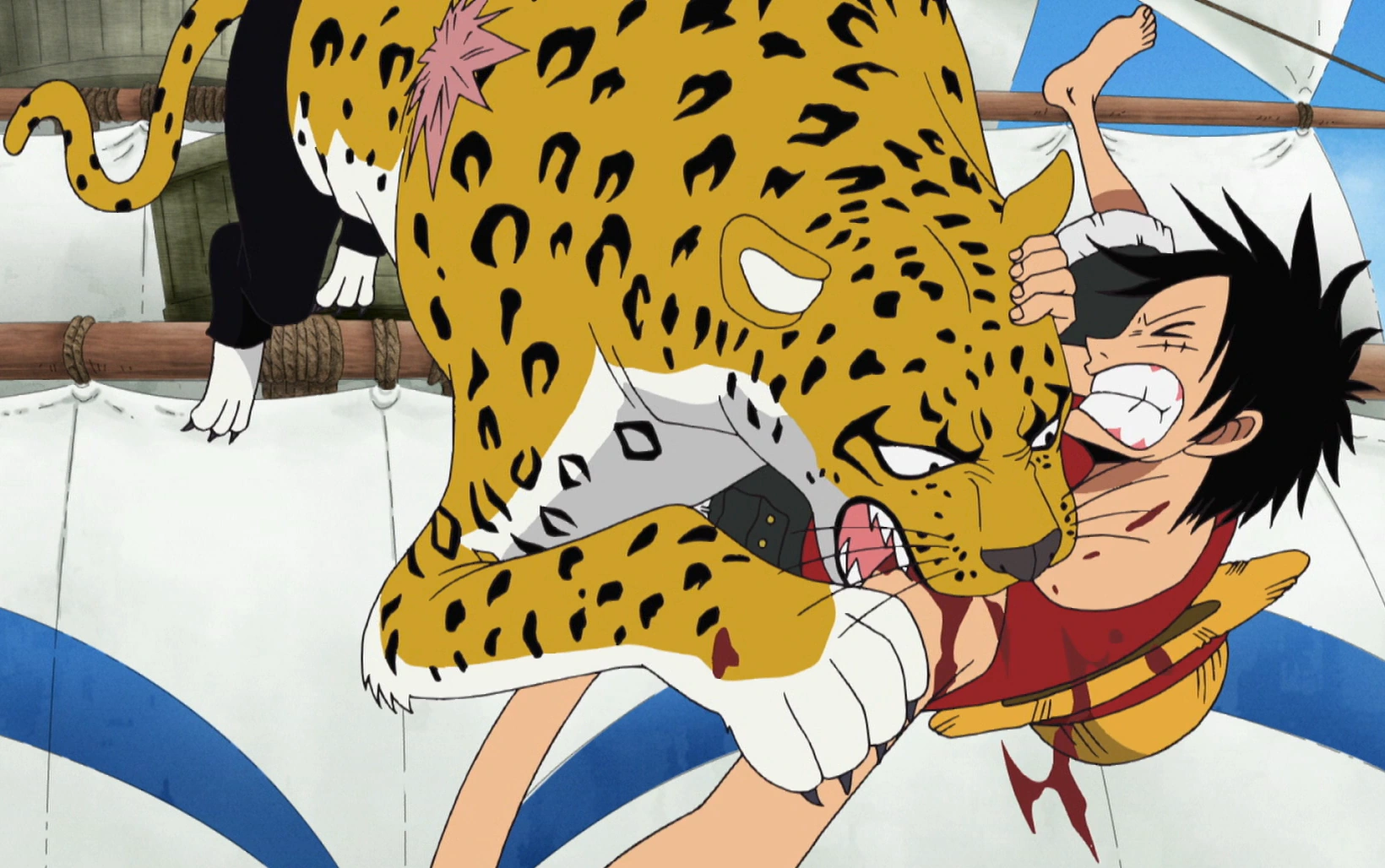
Neko Neko no Mi, Model: Leopard (Rob Lucci)
Lucci's fruit is a standard Carnivorous Zoan: leopard form with full animal and hybrid modes. In hybrid form Lucci retains human proportions with leopard fur, claws, and muscle density, combining his hand-to-hand combat style with the raw output of a big-cat physique. The full leopard form is faster and smaller, useful for pursuit and evasion. Lucci's fight with Luffy in Enies Lobby remains one of the most technically extended protagonist duels in the series: both fighters operated near their respective limits for the entire encounter, and the length of the fight required multiple Gear transitions on Luffy's side before the outcome resolved.
Lucci returned in the post-timeskip arcs as a CP0 operative, upgraded from CP9 and operating at a noticeably higher level than his Enies Lobby appearance. The fruit itself did not change, but Lucci's Haki development over the timeskip placed him in a different bracket. He reached awakening at some point before his Egghead Island appearance, gaining the white transformation state that characterises awakened Zoan forms. The awakened form provides enhanced recovery and output compared to the standard hybrid state. Lucci represents the baseline ceiling for non-Mythical Carnivorous Zoans in the series' current power scale.
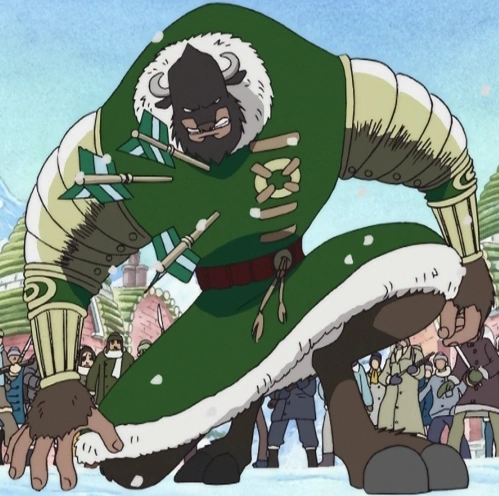
Ushi Ushi no Mi, Model: Bison (Dalton)
Dalton's fruit is a Herbivorous Zoan, the earliest Zoan type introduced in the series. Bison form grants bulk and charging force at the cost of speed and agility relative to Carnivorous Zoans. The hybrid form retains the bison's mass in a humanoid frame, increasing durability and striking weight without fully committing to the animal's movement constraints. Dalton appeared at Drum Island during the Alabasta saga, fighting Wapol's forces in defence of the island's population after Wapol had stripped Drum Kingdom's medical infrastructure and abandoned the citizens.
Dalton sits at the lower end of the Zoan ceiling relative to later fruit users, which reflects his introduction timing in the series rather than a structural weakness of Herbivorous Zoans in general. His fruit is primarily notable as the series' first clear presentation of the Zoan model: three forms, the hybrid as the combat default, and a personality that matched the animal archetype the fruit reflected. Drum Island became Sakura Kingdom under his leadership after Wapol's defeat, making him one of the few fruit users in the series whose arc concluded in a governing rather than combat role.
Mythical Zoan
Mythical Zoan is a subtype that grants forms based on legendary creatures rather than real animals. The classification is rarer than Logia and grants abilities that extend beyond the physical attributes of the creature: a phoenix heals, a dragon breathes elements, a deity-form generates force fields. The fruit's will is considered stronger in this subtype, which also correlates with the high recovery rates associated with Mythical Zoan users.
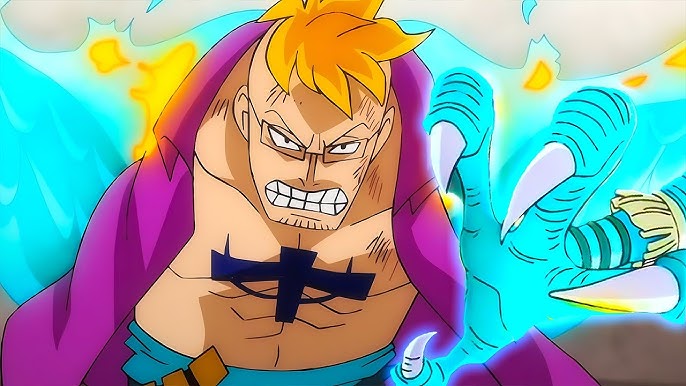
Tori Tori no Mi, Model: Phoenix (Marco)
Marco's fruit grants phoenix transformation with the defining ability of regenerative blue flames. Any wound sustained heals in the phoenix or hybrid state: the flames reconstitute damaged tissue in real time, making Marco functionally impossible to damage in sustained combat at any tier below Admiral level. The regeneration is the entire combat argument for the fruit: offensively, Marco is a strong Zoan fighter with flight and aerial reach, but the reason he held position against Admiral-level attacks at Marineford and then fought King and Queen simultaneously at Wano is the healing. He could absorb damage that would incapacitate or kill any other fighter and return at full effectiveness.
The fruit's limitation is Haki: advanced Armament Haki can suppress the regeneration, as Kizaru demonstrated at Egghead. Marco also cannot indefinitely sustain the healing; Wano showed him visibly fatigued after extended combat, suggesting the regeneration has a stamina cost rather than being literally infinite. He is one of the clearest examples of a fruit where the secondary ability (regeneration) defines the fruit's tier more than the primary grant (phoenix transformation). His position in the Whitebeard crew hierarchy is covered in the Whitebeard Pirates ranked guide.
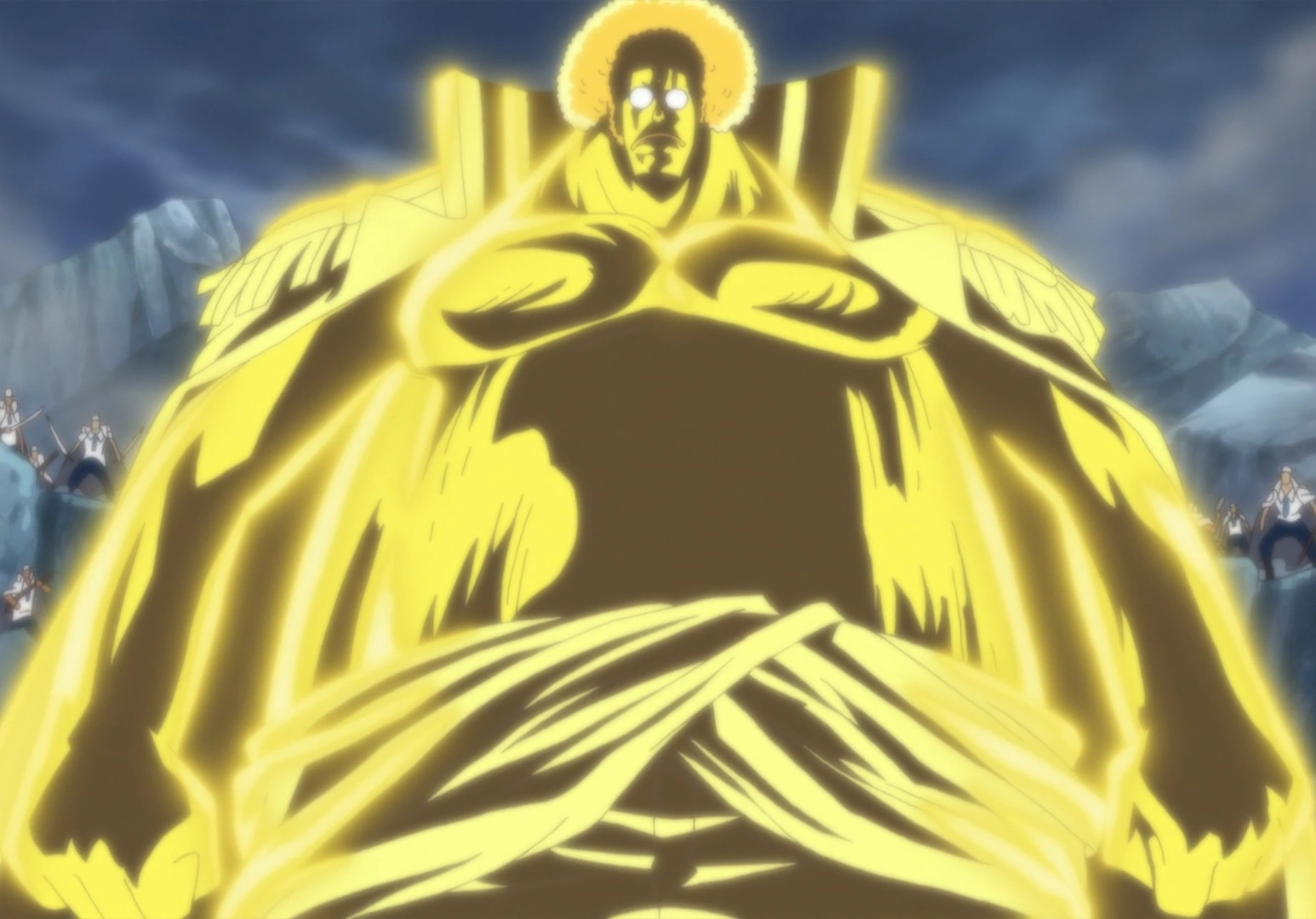
Hito Hito no Mi, Model: Daibutsu (Sengoku)
Sengoku's fruit grants transformation into a giant golden Buddha form. The full Daibutsu transformation produces a body comparable in scale to a small giant, with golden colouration and the shockwave ability that the fruit adds beyond basic physical attributes. Sengoku can emit destructive force waves from his palms in this form, a ranged attack that scales with the mass and output of the enlarged body. The Marineford demonstration showed him using it at the scale of the bay battlefield, affecting multiple targets simultaneously.
The Hito Hito no Mi family is unusual in the Zoan classification because "human" as the animal form grants cognitive elevation to non-human creatures rather than a direct combat upgrade for a human user. The Daibutsu variant sidesteps that by making the human deity form into a physically superior giant rather than just a humanoid. Sengoku's Marineford performance confirmed the fruit as genuinely high-tier in the Mythical Zoan class, though his post-timeskip role as Fleet Admiral retiree has not produced further combat benchmarks. The broader Admiral context is in the Marine Admirals guide.
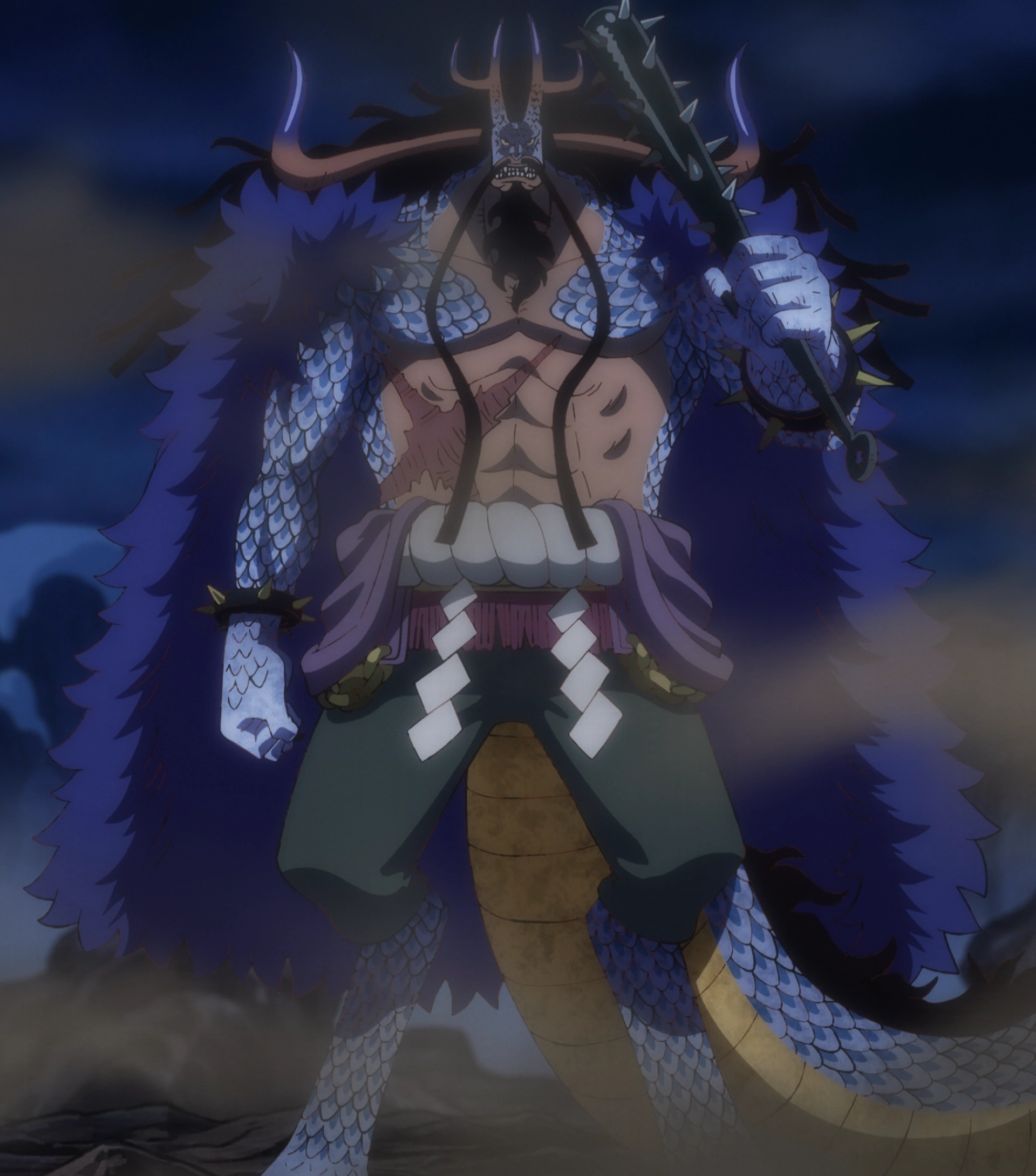
Uo Uo no Mi, Model: Seiryu (Kaido)
Kaido's fruit is a Fish-Fish Fruit granting the form of the Azure Dragon of Japanese mythology. The dragon form is massive: Kaido's full transformation dwarfs Onigashima's castle and can carry the entire island through the sky. He breathes fire, generates destructive wind attacks from his scales (Tatsumaki), and flies without wings via a combination of clouds and the fruit's inherent mobility. The hybrid form retains most of the dragon's attributes in a humanoid frame, maintaining Kaido's preferred kanabo combat style with dragon-scale durability layered on top.
The fruit's awakening has not been shown in the series, but Kaido's base ceiling is the highest of any Zoan user demonstrated. His claimed title of "Strongest Creature in the World" was backed by his performance at Wano: he fought Luffy, Zoro, Law, Kid, and Killer in succession across multiple nights while simultaneously managing an island invasion, and his eventual defeat required a Gear Fifth awakening from Luffy plus accumulated damage from the alliance as a whole. The Yonko tier context is in the Yonko ranked guide.
Logia
Logia fruits transform the user's body into a natural element. The defining property is intangibility: physical attacks that hit a Logia user pass through the element rather than the body beneath, unless the attacker is using Haki or the element is inherently vulnerable to the attack (water against fire, for instance). Logia users can also produce and manipulate their element at will, generating it for offensive use or dispersing their body into it for defence.
Haki changed the balance of Logia combat permanently. Before Haki was understood as a universal mechanic, Logia users were treated as nearly impossible to fight without specific counters. After the timeskip, Armament Haki as a baseline skill for serious fighters collapsed that advantage: a competent Haki user can hit through elemental intangibility as a matter of course. The remaining Logia advantages are offensive output and environmental control, which are still significant but no longer the untouchable ceiling they appeared to be in the East Blue era.
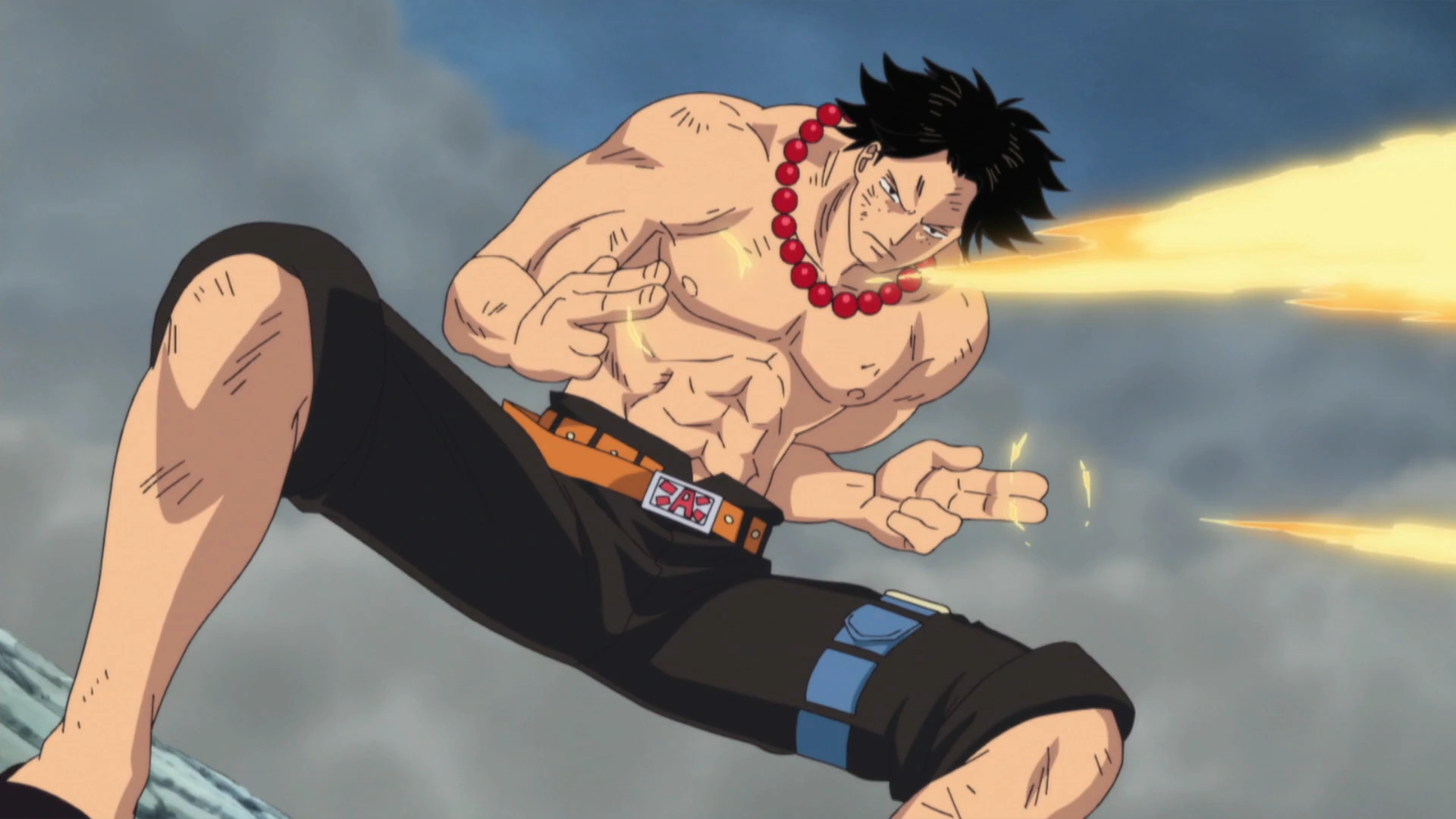
Mera Mera no Mi (Portgas D. Ace)
The Flame-Flame Fruit is one of the strongest fire-type abilities in the series. Ace could produce fire at scale sufficient to cover a ship in flame, generate the Entei fireball technique (described as a sun-level concentration of fire), and operate at full combat effectiveness using only his fire output against similarly ranked opponents. Fire Logia at Ace's level means full intangibility to non-Haki attacks, ambient temperature control, and offensive output from a base state that is already destructive without technique enhancement. Ace also possessed Conqueror's Haki, a rare trait that compounds an already high floor.
Ace was killed at Marineford by Akainu's Magu Magu no Mi: magma burns hotter than fire, creating a natural elemental counter that bypassed the fire Logia's usual intangibility. The Mera Mera no Mi resurfaced at Dressrosa in a Corrida Colosseum prize, eventually claimed by Sabo after a tournament that included Luffy, Burgess, and several other notable fighters. The fruit's second user carries different combat associations than Ace did, but the fruit itself is unchanged. The full breakdown of Ace's position in the Whitebeard crew is in the Whitebeard Pirates guide.
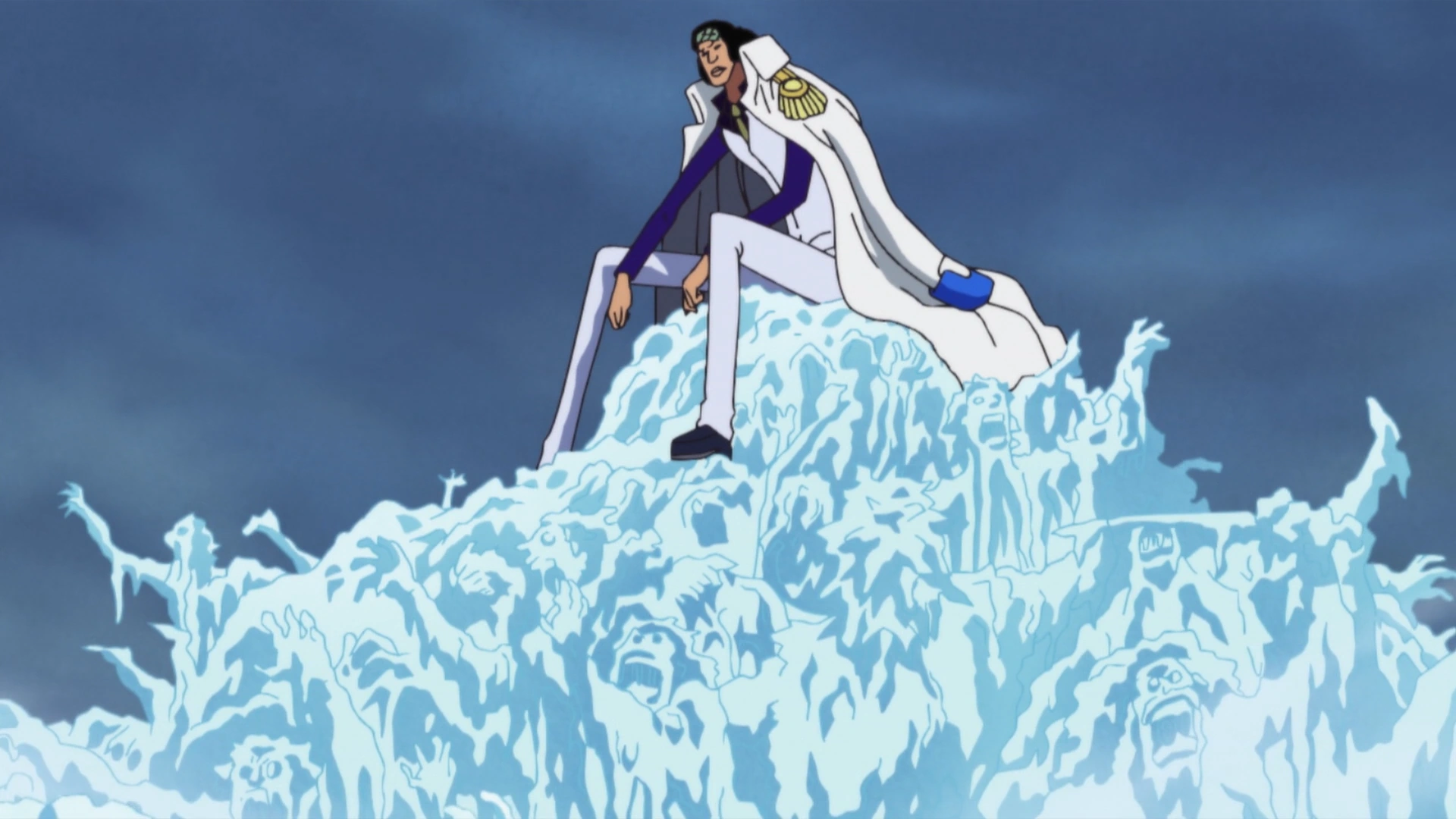
Hie Hie no Mi (Aokiji)
The Ice-Ice Fruit grants Aokiji complete ice body transformation and generation at a scale that covers ocean surfaces. He demonstrated the fruit's range ceiling at its most extreme when he froze the Marineford bay in response to Whitebeard tilting the ocean floor: a single application that immobilised the entire body of water used for the alliance's initial naval advance. Aokiji can also freeze opponents on contact, encasing targets in ice or inducing frostbite-level damage through the air in his immediate vicinity. His travel method, Ice Time, converts his body to ice and propels him across frozen surfaces at high speed.
The fruit's only demonstrated natural counter is magma: Aokiji and Akainu fought for ten days on Punk Hazard to determine Sengoku's successor as Fleet Admiral. The island's terrain split into permanent fire and ice halves as a result of that fight. Aokiji lost and left the Marines, subsequently affiliating with Blackbeard's crew. The ice half of Punk Hazard is a lasting environmental consequence of a Logia-versus-Logia fight at its highest level. The Admiral comparison is covered in the Marine Admirals guide.
Magu Magu no Mi (Akainu)
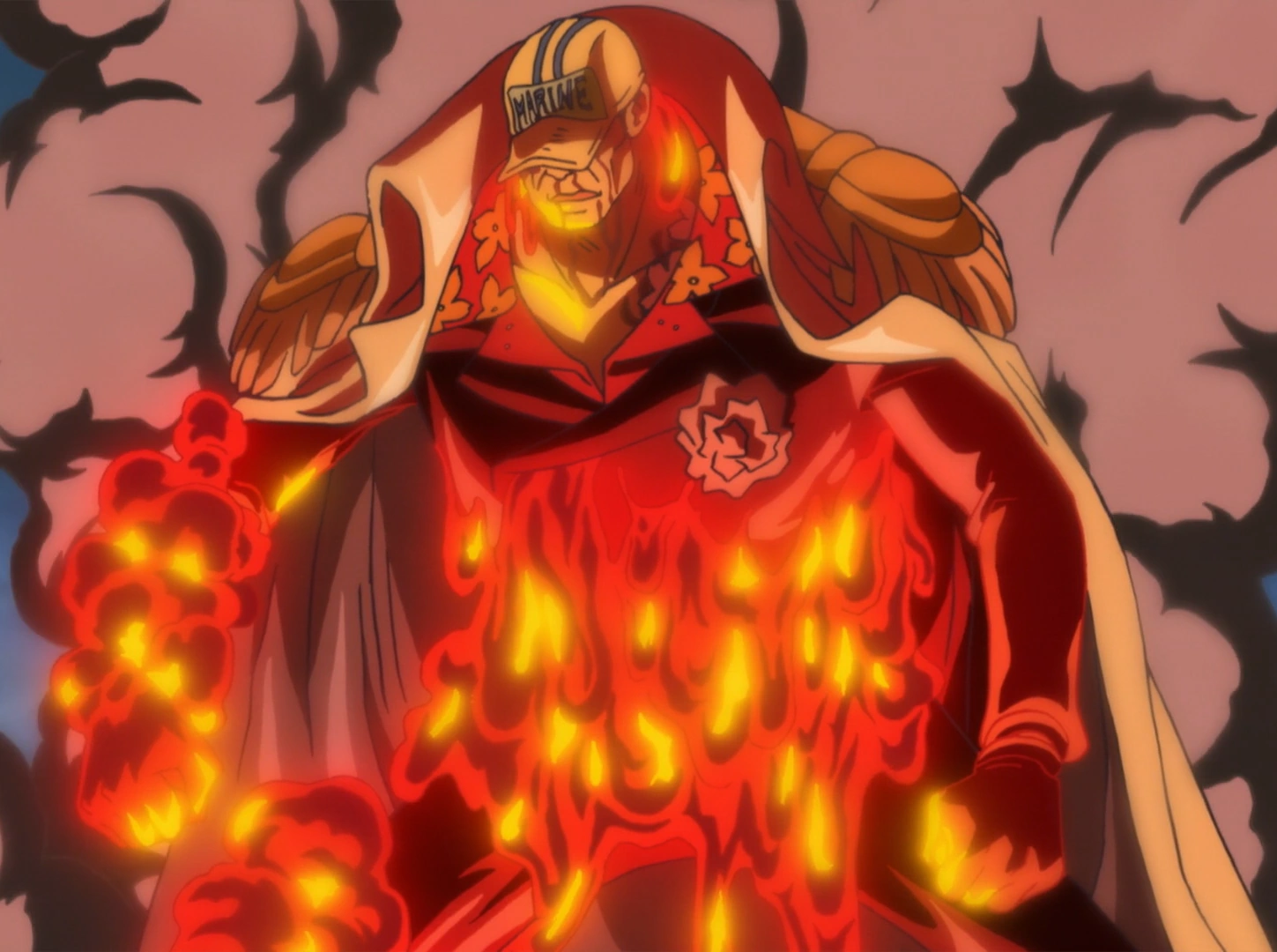
The Magma-Magma Fruit is the strongest offensive Logia in the series by demonstrated output. Magma burns hotter than fire, which gave Akainu a direct elemental counter to Ace's Mera Mera no Mi at Marineford. The fruit's passive heat output means proximity to Akainu is damaging regardless of active technique use. His primary offensive application, Ryusei Kazan, produces a downpour of magma fists from the air, an area denial attack that converts a battlefield into a kill zone. At Marineford he burned through Whitebeard at point-blank range twice and continued fighting after taking multiple hits from the World's Strongest Man.
Akainu's candidacy for Fleet Admiral was contested by Aokiji, and the ten-day fight on Punk Hazard that settled it is the highest-intensity Admiral clash in the series. His current position as Fleet Admiral gives him institutional power that compounds the already-high ceiling of his fruit. Among demonstrated Logia abilities, the Magu Magu no Mi has the highest shown single-target damage output, the highest environmental destruction rate, and the only confirmed elemental counter to another Logia in the series. The full Admiral context is in the Marine Admirals breakdown.
Pika Pika no Mi (Kizaru)
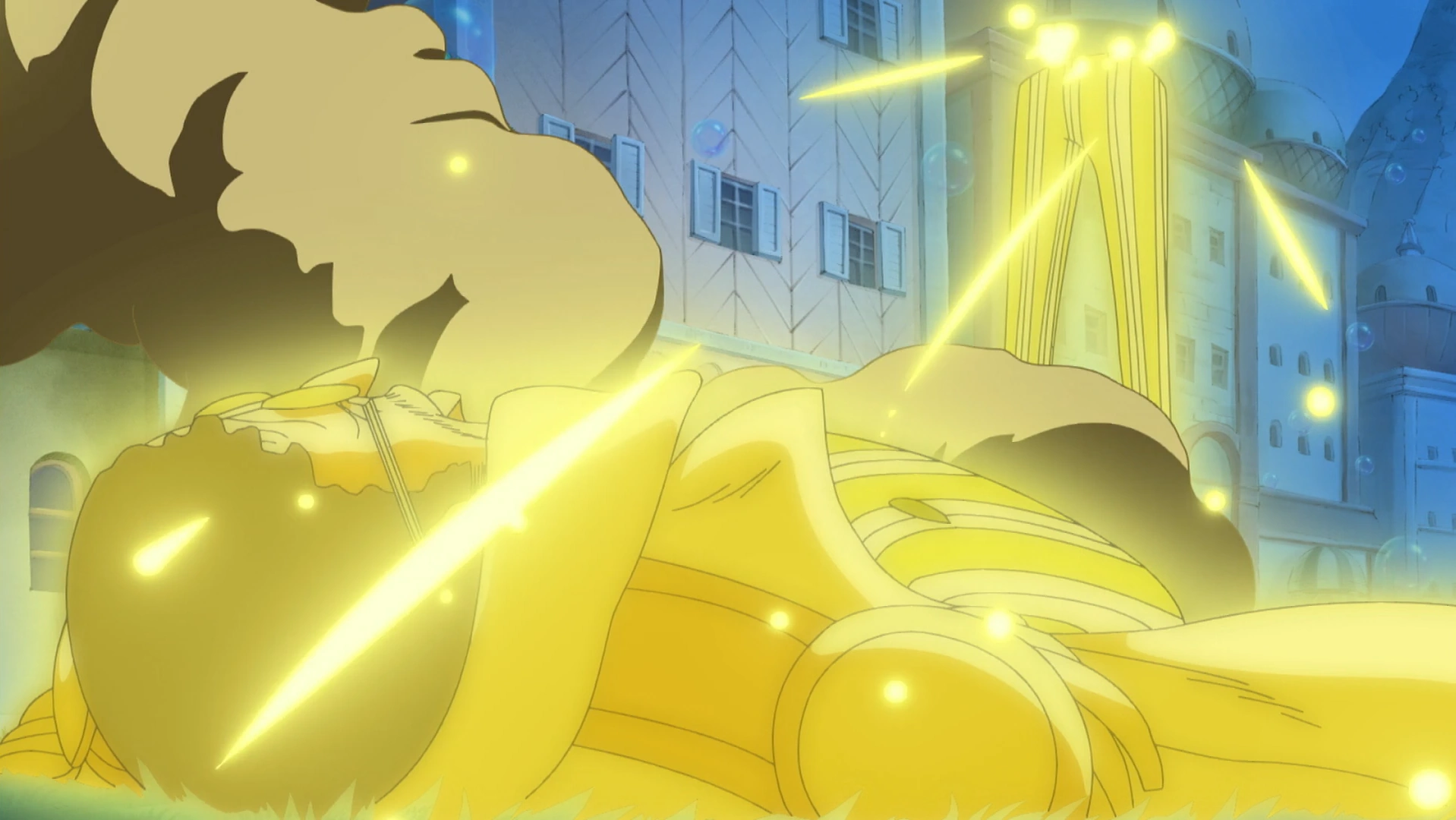
The Glint-Glint Fruit converts Kizaru's body to light and grants movement at light speed. The speed advantage is the defining factor: in a conventional fight, an opponent cannot react to an attack they cannot see coming before it arrives. Kizaru can move across a battlefield in a single frame, fire laser beams from his fingertips, and reflect himself off surfaces to change direction at full speed. The Sabaki no Yari technique sends a concentrated light beam the size of a ship through a target; Yasakani no Magatama saturates a combat area with small light particles that act as projectiles across the entire field.
The fruit's speed advantage interacts differently with advanced Observation Haki: Future Sight Observation can provide enough predictive information to respond to attacks that arrive faster than conventional reaction time. Luffy's Gear Fifth at Egghead demonstrated that a sufficiently elevated reaction framework could engage Kizaru at speed without being overwhelmed. That fight also showed the fruit's limit in a prolonged engagement: speed does not compensate indefinitely for the output difference at the highest tier, where opponents are operating with Conqueror's Haki and awakened fruits that change the physics of the fight. Kizaru remains one of the fastest individuals in the series with no demonstrated ceiling on his movement speed.
Yami Yami no Mi (Blackbeard)
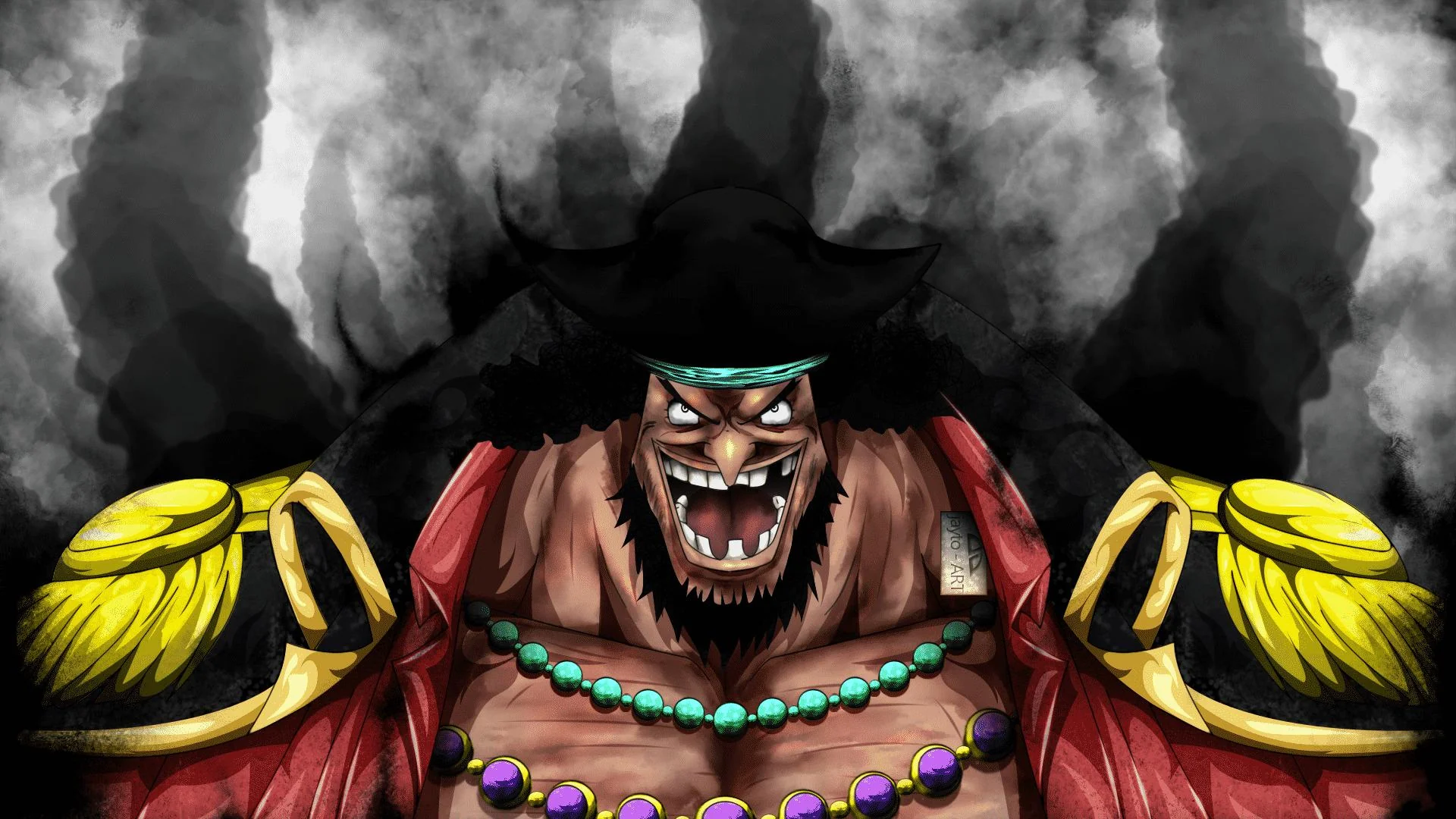
The Dark-Dark Fruit is classified as Logia but does not grant true intangibility, which is the defining exception in the type. Blackbeard's darkness body cannot disperse to avoid physical attacks the way fire or ice bodies can. The darkness is instead a gravity field: it draws everything it contacts toward its centre, nullifying the momentum of incoming attacks and pulling opponents into melee range. The fruit's most significant tactical ability is Devil Fruit nullification: physical contact with Blackbeard's darkness temporarily cancels any other Devil Fruit ability, making him uniquely dangerous to Logia and other fruit users who rely on their ability as a primary defence.
Blackbeard combined the Yami Yami no Mi with the Gura Gura no Mi taken from Whitebeard at Marineford, becoming the only dual-fruit user in the series. The nullification ability of the Yami Yami no Mi is the reason the combination works offensively: he can pull an opponent into range while cancelling their ability, then release the Gura Gura no Mi's earthquake force at contact distance. The mechanics of holding two fruits without dying remain unexplained. Blackbeard's status among the Yonko is covered in the Yonko breakdown, and the Gura Gura no Mi's standalone power ranking is in the strongest devil fruits guide.
Type comparison
The three types are not a clean power hierarchy. Logia's intangibility was the dominant mechanic for the first half of the series, but Haki universalised the counter and reduced its defensive value. Paramecia's ceiling has consistently expanded: awakening reveals that the strongest Paramecia abilities operate on a territory scale that matches or exceeds most Logia output. Zoan's durability and Haki compatibility make it the most reliable floor, with Mythical Zoans providing secondary abilities that break out of the standard animal-form framework entirely.
The current series consensus places Mythical Zoan and high-tier awakened Paramecia as the most dangerous combinations, with Logia remaining strong primarily for its offensive element manipulation rather than defensive intangibility. For a direct comparison of where specific fruits rank against each other, the strongest devil fruits guide covers the full list.
One Piece merchandise tied to these fruits, including wanted posters, figures, and collector items, is available to buy and sell on AnimeVault.
More from the blog
Get new anime collector posts in your inbox.
Reviews, guides, and hobby news — delivered directly.
By subscribing, you agree to our Privacy Policy.