


Every JJK Cursed Technique Ranked (Jujutsu Kaisen)
Spoiler warning: This post covers events through the Culling Game arc and the Shinjuku Showdown. Character deaths, technique reveals, and combat outcomes are discussed without restriction. If you are mid-series or have not finished the manga, read at your own risk.
A Cursed Technique is an innate ability tied to a sorcerer's soul. It is not learned or copied in the conventional sense: each sorcerer is born with a fixed technique, and everything they can do flows outward from that single foundation. The technique can be developed, extended, and refined across years of practice, but its fundamental nature does not change. Gojo's technique manipulates space at the level of infinity. Sukuna's technique produces slicing and dismantling forces. These are not skills acquired through training. They are what each person is.
This matters for understanding how the series ranks power. A Domain Expansion is the highest-tier deployment of a technique, the point at which a sorcerer's cursed energy materialises their technique as an enclosed space. But the Domain is downstream of the technique itself. A weak or poorly understood technique produces a weak or incomplete Domain regardless of how much cursed energy the sorcerer has. A technique with no natural combat ceiling produces a Domain with no natural combat ceiling. For the Domain-level ranking, see the companion post on JJK Domain Expansions ranked, which covers the Domains built from these techniques. This post ranks the techniques themselves.
The ranking uses demonstrated combat output, mechanical ceiling, and versatility across the full series run as criteria. Techniques that appeared briefly or remain underexplored on-page are ranked conservatively relative to techniques with extensive combat documentation. For the user placement of each sorcerer ranked here, see JJK Special Grade Sorcerers ranked.
TL;DR: Cursed Technique power ranking
| Rank | Technique | User | |------|-----------|------| | 1 | Malevolent Shrine | Ryomen Sukuna | | 2 | Limitless | Satoru Gojo | | 3 | Ten Shadows | Megumi Fushiguro | | 4 | Copy | Yuta Okkotsu | | 5 | Jackpot | Kinji Hakari | | 6 | Idle Death Gamble | Hiromi Higuruma | | 7 | Boogie Woogie | Aoi Todo | | 8 | Blood Manipulation | Choso | | 9 | Ratio Technique | Kento Nanami | | 10 | Straw Doll Technique | Kasumi Miwa | | 11 | Cursed Speech | Toge Inumaki | | 12 | Construction | Kokichi Muta (Mechamaru) |
#12: Construction
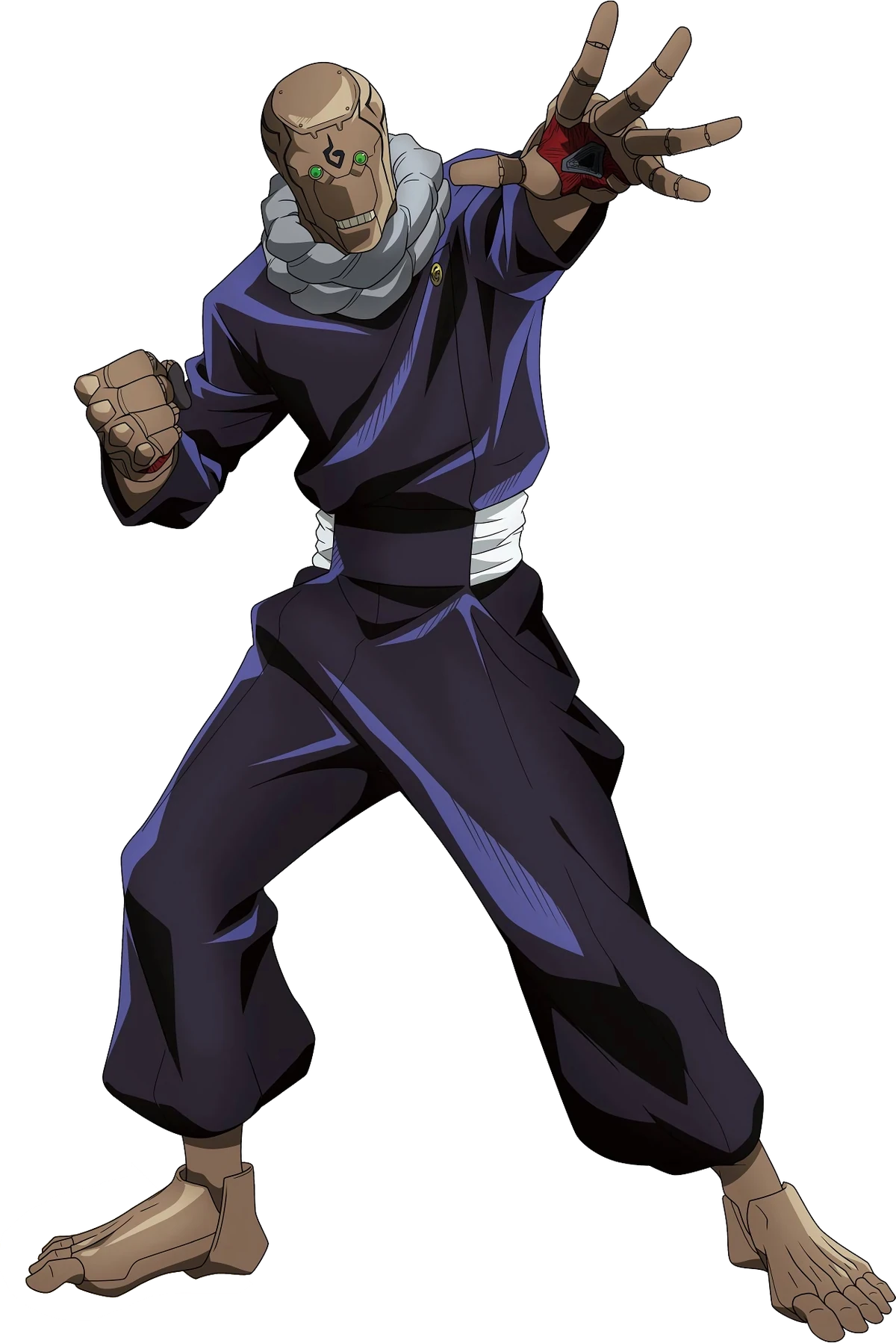
Construction (Kokichi Muta / Mechamaru)
Construction allows Muta to create and remotely pilot cursed-tool objects using his cursed energy as the animating force. In practice, this produces Mechamaru: a full-scale puppet body with combat capability, ranged energy attacks, and enough durability to function as a frontline fighter. The technique is unique in the series in that its user never personally enters combat. Muta operates from a remote location, running Mechamaru as a proxy. The puppet body can be rebuilt after destruction if Muta survives and has sufficient energy.
Construction ranks last because its combat ceiling is entirely dependent on the puppet rather than the technique. The technique itself has no offensive or defensive application outside the constructed object. Once Mechamaru is destroyed, Muta has no combat options. Against any opponent who can locate and reach the remote operator, or who can destroy the puppet faster than Muta can redirect it, the technique offers nothing further. It is a high-utility technique with a narrow combat function, and it is the only technique in this ranking where the user's own body is structurally uninvolved in any fight.
#11: Cursed Speech
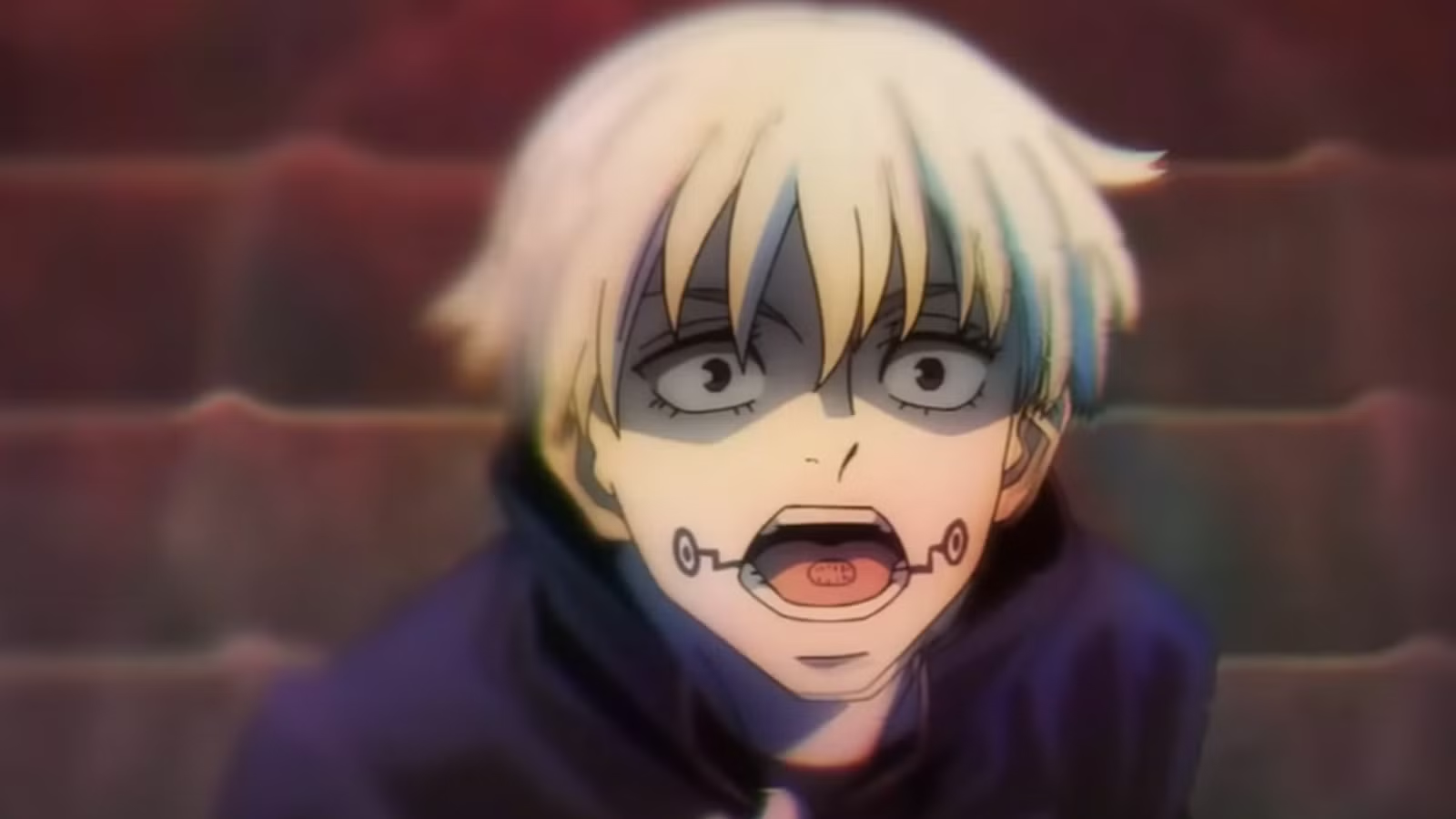
Cursed Speech (Toge Inumaki)
Cursed Speech infuses spoken words with cursed energy, compelling physical compliance from anyone who hears them. The commands are absolute within their scope: "Explode" produces an explosion in the target. "Stop" freezes movement. "Sleep" induces unconsciousness. The technique bypasses defensive technique almost entirely; it operates through hearing rather than through a direct physical vector, which makes many standard defensive measures irrelevant. Against cursed spirits or sorcerers who lack sufficient cursed energy to resist a command, the technique is effectively instant resolution.
The limitation that suppresses it in this ranking is the cost imposed on the user. Inumaki cannot speak freely. Unguarded speech risks compelling harm on anyone nearby. He limits his vocabulary to rice ball ingredients as a safety protocol, which means his social function is permanently constrained by the technique. More importantly, high-grade targets with sufficient cursed energy can resist or partially resist the commands, and repeated high-output commands cause physical damage to Inumaki's throat, capping how many times he can use high-tier commands in a single engagement. The ceiling is real and situationally high; the floor is constrained by the user's inability to escalate without cost.
#10: Straw Doll Technique
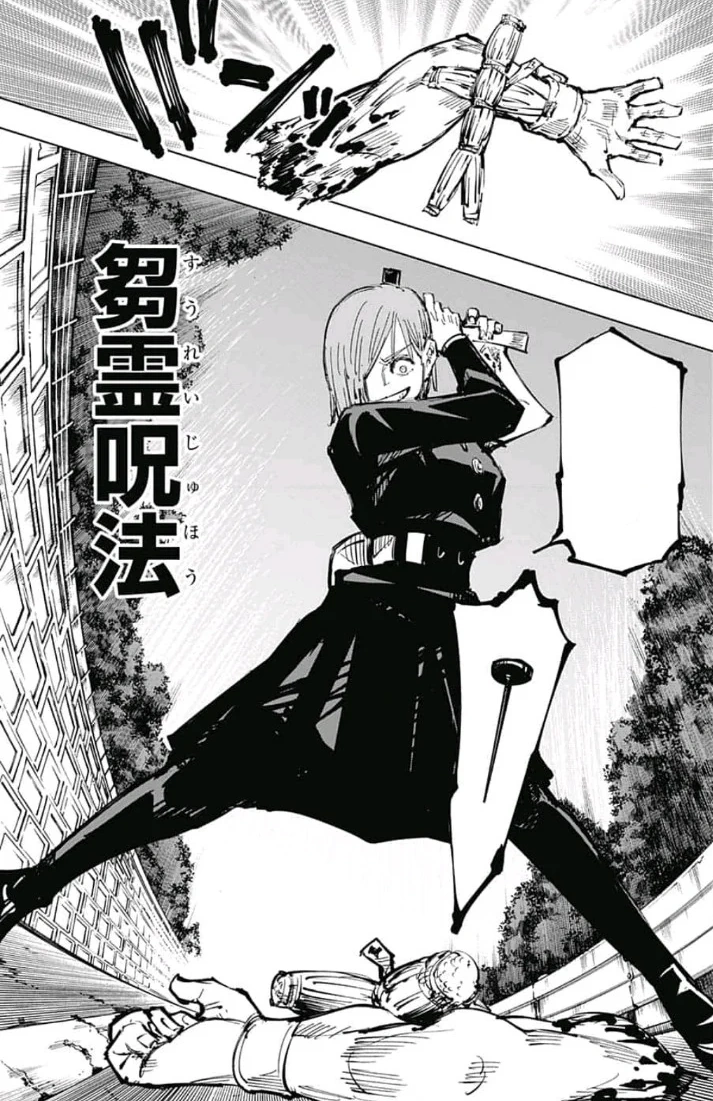
Straw Doll Technique (Kasumi Miwa)
The Straw Doll Technique is a weapon-transfer ability. Miwa can manifest a katana from her technique and fight using it as the primary instrument, with the technique providing cursed energy to the blade rather than operating as an independent combat system. The exact mechanics of how the Straw Doll element interacts with her swordsmanship have not been fully explained on-page: her combat appearances show sword techniques but the technique itself remains the least-documented in this ranking by confirmed mechanical detail.
The conservative placement reflects the gap between demonstrated use and theoretical ceiling. Miwa is a capable swordswoman and a legitimate sorcerer, but her technique has not been shown doing anything that extends meaningfully beyond her weapon combat. Without a confirmed extension technique, a Domain, or demonstrated output against high-grade targets, placing Straw Doll higher than tenth would require speculation the series has not earned. If subsequent material expands the technique's scope, this ranking changes.
#9: Ratio Technique

Ratio Technique (Kento Nanami)
The Ratio Technique divides any target into ten equal sections and identifies the 7:3 boundary point. A strike at that specific point on any object or person produces a guaranteed weak point hit regardless of the target's physical defenses. The application is precise and repeatable: Nanami marks the boundary on any surface, strikes it with his blunt-tipped weapon, and the technique does the rest. Against opponents who cannot counter through cursed energy reinforcement at that specific point, the technique is a guaranteed vitals strike every time it lands.
The Ratio Technique also interacts with Nanami's binding vow: he works salaried hours, and past his designated workday his cursed energy output increases significantly as a penalty on himself for overtime. This makes his late-engagement output notably higher than his baseline. The technique ranks ninth rather than higher because its ceiling is fixed: it does not adapt, cannot be extended into a Domain of exceptional power, and is matched or exceeded by techniques that operate at a broader scale or with higher raw output. It is one of the most efficiently designed techniques in the series in terms of damage-per-hit guaranteed, but efficiency does not outrank ceiling in a direct power comparison.
#8: Blood Manipulation
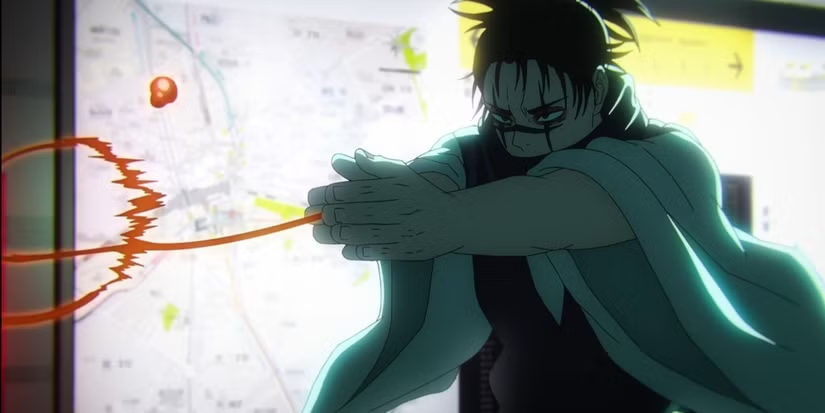
Blood Manipulation (Choso)
Blood Manipulation allows Choso to control blood: his own and, given the right circumstances, that of others. The technique produces a range of combat applications from close range to extreme distance. Convergence concentrates blood into a dense sphere; Piercing Blood then fires it at near-sonic speed, a projectile that moves faster than most sorcerers can track and carries enough force to punch through high-grade targets. The Supernova technique clusters multiple blood projectiles for area saturation. At close range, Choso can use blood as a physical construct for grappling and binding. The technique also allows him to transfuse blood to injured allies, adding a support function that no other combat technique on this list replicates.
Choso is a Death Painting Womb, a cursed spirit with human hybrid physiology, which gives him a larger baseline blood volume than human sorcerers and the ability to manipulate it without the physical cost a human user would incur from self-drawn blood. His placement at eighth reflects a technique with genuine high-tier combat output, confirmed use against top-grade opponents, and a broader application set than anything ranked below him. It ranks below Boogie Woogie and above because the Blood Manipulation ceiling, while high, is a single-domain technique without the multiplicative or domain-level impact of the techniques ranked above it. For Choso's placement among Special Grade fighters, see JJK Special Grade Sorcerers ranked.
#7: Boogie Woogie
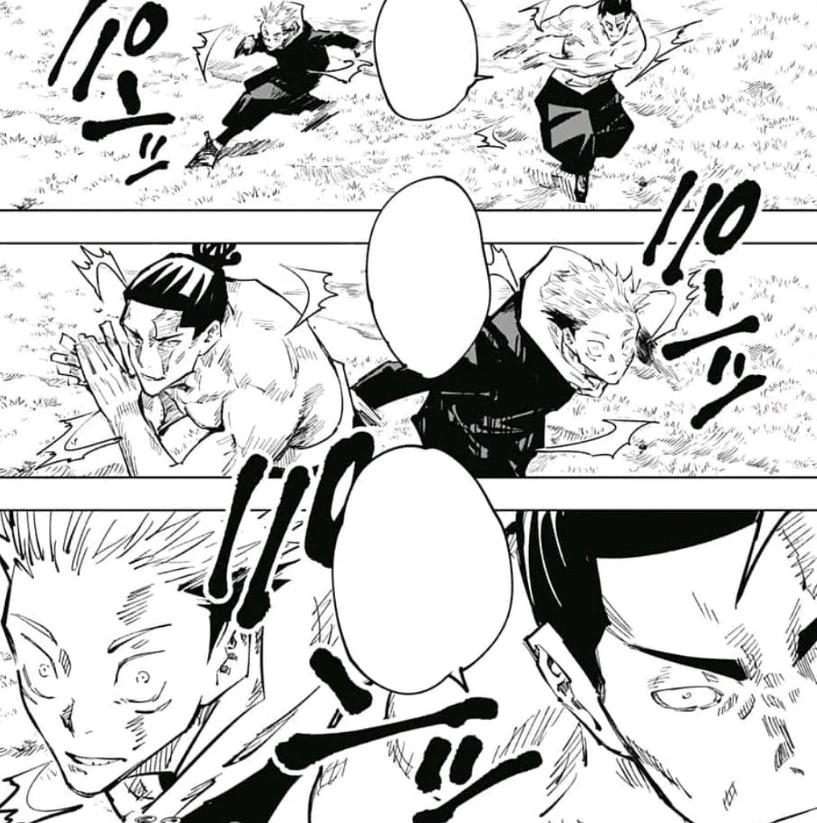
Boogie Woogie (Aoi Todo)
Boogie Woogie is a position-swap technique triggered by a clap. Todo can exchange the spatial positions of any two objects or people within range. The technique has no damage floor on its own: it does not strike, cut, or burn anything directly. What it does is restructure the geometry of any physical exchange. In a one-on-one fight, Boogie Woogie means that every attack Todo or his ally throws can be followed by an instant position swap, repositioning either combatant behind an opponent mid-sequence. The swap is fast enough that it routinely bypasses an opponent's defensive reaction window.
Boogie Woogie's ranking above dedicated damage techniques is justified by its battlefield multiplier effect. Todo and Yuji's coordinated use of the technique against Mahito is the clearest example in the series of a small technique generating outsized impact through positioning leverage alone. A sorcerer with high physical output combined with a technique that continuously repositions them into optimal strike geometry is more dangerous than the sum of the parts. The technique also has no meaningful cost to activate, no charge-up period, and no announced targeting that tips off the opponent before the swap occurs. It is the strongest example in the series of a utility technique punching well above what its surface description suggests.
#6: Idle Death Gamble
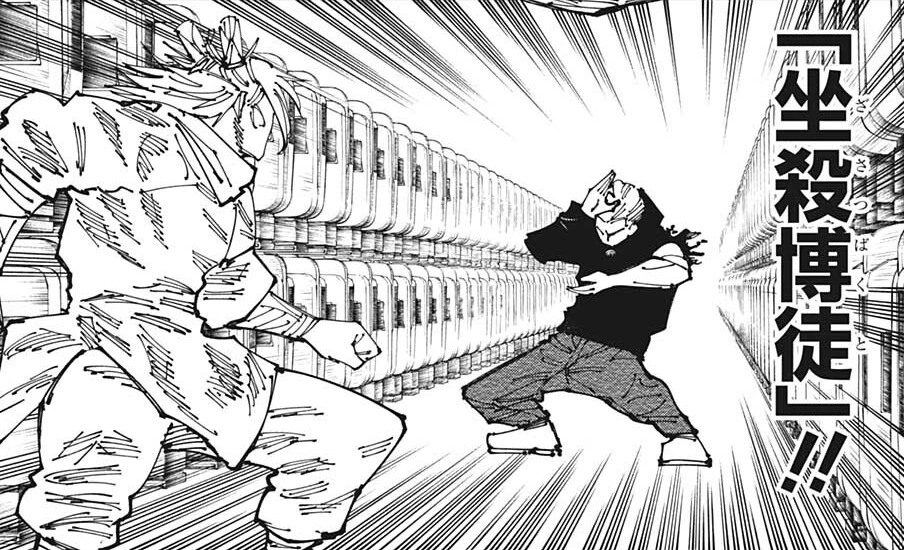
Idle Death Gamble (Hiromi Higuruma)
Higuruma's technique operates through a courtroom-verdict mechanic. His shikigami Judgeman conducts a trial against the target, charging them with a crime based on Higuruma's accusation. If the verdict is guilty, the penalty is applied: confiscation of the target's cursed technique for a set duration, or in capital cases, a lethal sentence. The trial runs entirely within Higuruma's Domain Expansion, which is the highest-tier deployment of the technique. Outside the Domain, the technique functions through Judgeman as a shikigami who can collect items from the target as a lighter application of the same mechanic.
The placement at sixth reflects a technique with one of the most tactically disruptive effects in the series. Stripping an opponent's cursed technique is not a damage output; it is a complete negation of their primary combat system for the duration. Against any technique-dependent fighter, a guilty verdict inside Idle Death Gamble immediately removes their most dangerous capability. The technique ranks here rather than higher because its primary ceiling is the Domain, and the Domain's ranked position (fourth in the Domain Expansions ranking) defines the upper end of what Higuruma's technique can accomplish at peak use.
#5: Jackpot
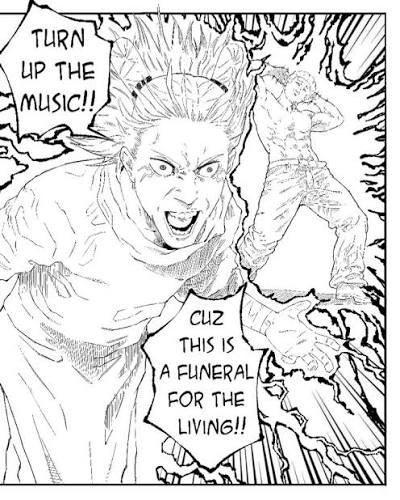
Jackpot (Kinji Hakari)
Hakari's technique is built around a pachinko-machine binding vow. He sets the odds of a jackpot outcome, and when the jackpot triggers, the binding vow pays out in a massive burst of cursed energy. The payout is so large that it enables near-infinite cursed energy during the jackpot window, which Hakari uses to regenerate from any injury including theoretically fatal wounds. The jackpot does not trigger on demand: the odds are set by the binding vow's own structure, which means Hakari has to manage the loop's timing as a live variable during combat. When the jackpot is running, he is functionally unkillable for the window's duration.
The near-unlimited regeneration during a jackpot loop is the technique's defining property. An opponent who cannot end the fight before the jackpot triggers, or who cannot prevent Hakari from sustaining the loop, is fighting an opponent who can recover from anything they do. The technique ranks fifth rather than higher because its ceiling requires the jackpot to activate: in the window between loops, Hakari is a powerful but standard close-combat sorcerer, and any opponent capable of ending the fight in that gap bypasses the regeneration entirely. The Domain Expansion built from Jackpot ranks third overall in the Domain Expansions post.
#4: Copy
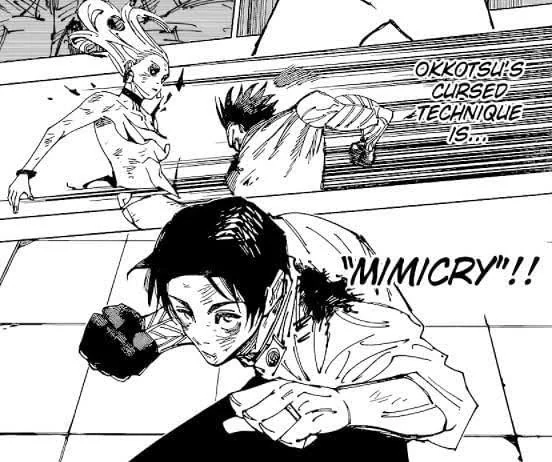
Copy (Yuta Okkotsu)
Yuta's technique, channelled through Rika, allows him to copy cursed techniques from other sorcerers and use them. The copy is not a degraded imitation: Yuta can deploy a copied technique at full output using Rika's cursed energy reservoir as the power source. Because Rika's reservoir is vast, Yuta can sustain techniques that would exhaust their original users far sooner. The technique has no announced ceiling on what it can copy, limited only by what Yuta has observed and the physical constraints of the body deploying it. In terms of adaptability, Copy is the most flexible technique in the series: every fight Yuta has adds to his available toolkit, and every technique he can reach in a fight becomes a weapon for subsequent encounters.
Copy ranks fourth rather than first or second because flexibility does not automatically outrank a technique whose ceiling is defined. Sukuna's Malevolent Shrine and Gojo's Limitless have demonstrated outputs at a scale that Copy has not yet matched in confirmed combat. A theoretical "copy everything including Limitless" argument exists, but the series has not staged that encounter, and rankings based on demonstrated use require more than theoretical maximums. Within what the manga has shown, Yuta is a top-tier combatant with a technique that makes him more dangerous the longer any conflict continues, which is a genuinely unusual property that justifies his placement in the top four.
#3: Ten Shadows
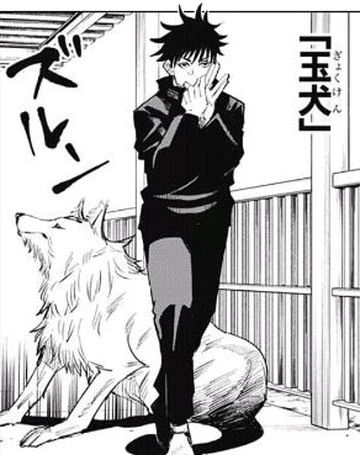
Ten Shadows Technique (Megumi Fushiguro)
The Ten Shadows Technique gives Megumi access to ten shikigami, each with a distinct combat function. Divine Dogs provide tracking and pursuit. Nue offers flight and lightning. Max Elephant produces water at scale. The Great Serpent excels at binding. Each shikigami must be tamed before use, a process that involves a combat trial against the shikigami itself. A shikigami that dies in combat cannot be recovered, but its techniques and cursed energy are absorbed by the surviving shikigami, which means losing a weaker shikigami to a stronger opponent can strengthen the overall set if the right survivors remain.
The technique's ceiling is Mahoraga: the Eight-Handled Sword, a shikigami that no Ten Shadows user in recorded history has successfully tamed. Mahoraga's defining property is adaptation: it adjusts to any technique used against it and becomes increasingly resistant to that technique across the fight. Sukuna's engagement with Mahoraga in Shibuya is the most significant demonstration of the shikigami's ceiling, requiring Sukuna to fundamentally change his attack vector mid-fight to put it down. The Ten Shadows technique's Domain Expansion, Chimera Shadow Garden, is an incomplete domain by the series' own classification, yet it ranks fifth overall in the Domain Expansions post, which indicates how high the technique's ceiling is even at a stage short of full development.
#2: Limitless
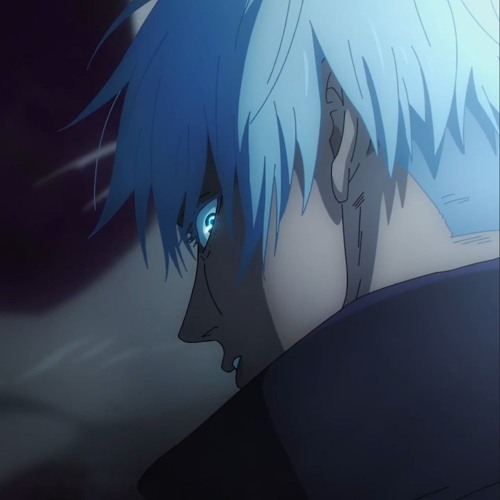
Limitless (Satoru Gojo)
Limitless is a technique that manipulates space at the level of infinity. Its passive state, Infinity, applies an asymptotic deceleration to anything approaching Gojo: objects and attacks slow toward zero speed as they near him, never reaching their target because the space between attacker and Gojo subdivides infinitely. This passive layer operates without conscious activation. It cannot be physically broken; it can only be countered by techniques that operate outside the spatial framework it manipulates. The active applications extend from Cursed Technique Lapse Blue (attraction force) to Cursed Technique Reversal Red (repulsion force at the output of reversed cursed energy) to Hollow Purple, a combination of both that erases whatever it contacts by cancelling the two opposing forces at a single point.
Limitless requires the Six Eyes to use at its full ceiling. Without them, the calculations required to operate Infinity in real time would consume the user's consciousness. Gojo inherited both: the technique and the eyes that make it usable. The combination produces the strongest passive defence in the series paired with one of the highest offensive outputs. Limitless ranks second rather than first because Sukuna's demonstrated combat record in the Shinjuku Showdown, combined with the ceiling Malevolent Shrine showed in that engagement, places Sukuna's technique above Gojo's at peak. The margin is narrow and debated. The Domain comparison is the clearest supporting evidence: Unlimited Void ranks second in the Domain Expansions post, behind Malevolent Shrine, which mirrors the technique ranking here.
#1: Malevolent Shrine
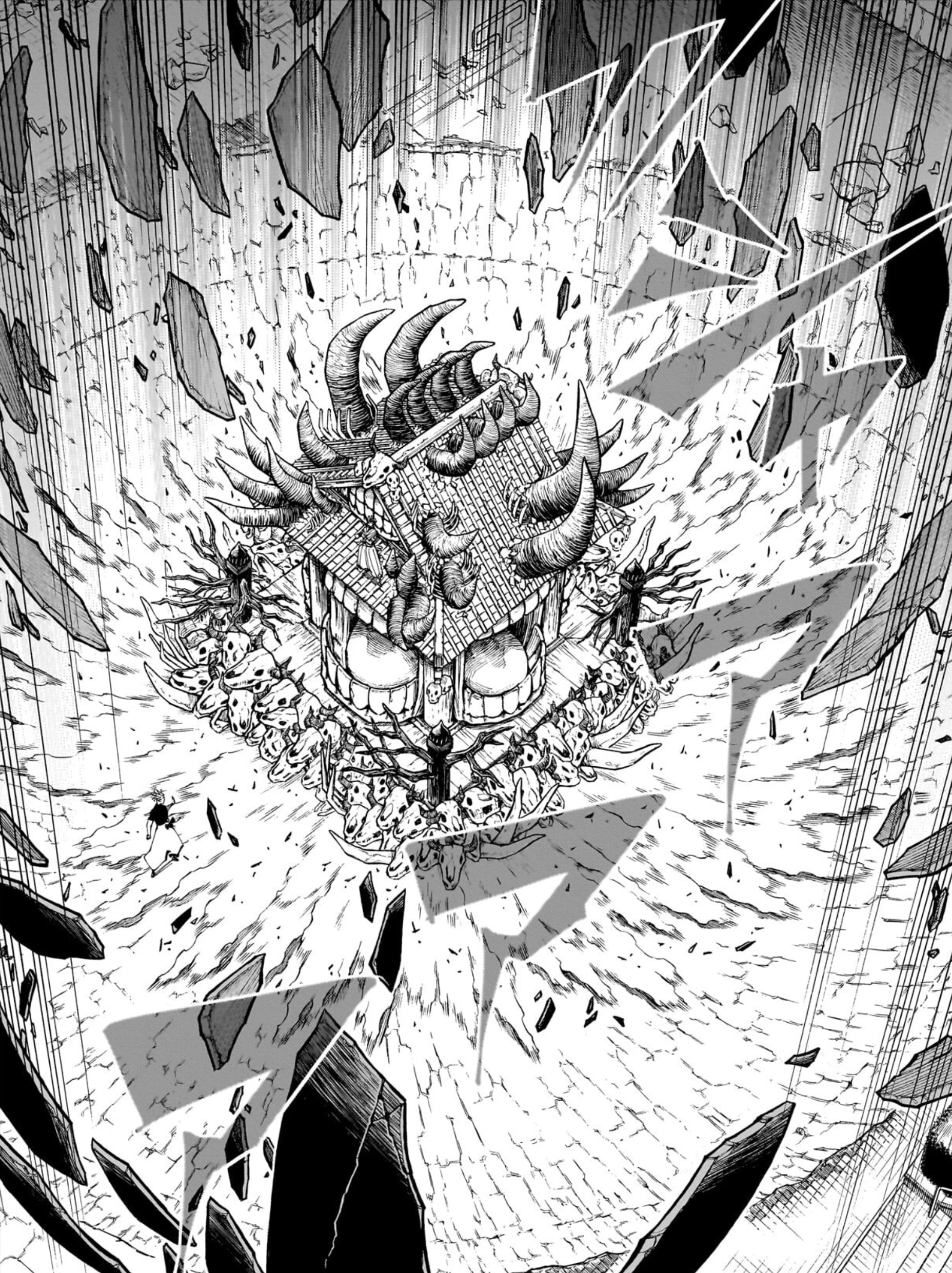
Malevolent Shrine (Ryomen Sukuna)
Sukuna's technique produces two forces: Cleave and Dismantle. Dismantle is a pure slicing force applied to inanimate objects, generating cuts of arbitrary scale and direction in the surrounding environment. Cleave adjusts automatically to the cursed energy and physical durability of a living target, scaling its output to what is required to actually cut through whatever it contacts. The two forces operate simultaneously across Sukuna's spatial range, which means every surface, structure, and person within reach is subject to continuous cutting regardless of physical position. There is no place to stand inside Sukuna's active technique that is not already being cut.
What elevates Malevolent Shrine above every other technique in this ranking is its Domain configuration. Every other Domain Expansion in the series requires a closed barrier: an enclosed space within which the sure-hit applies. Malevolent Shrine uses a binding vow instead. Sukuna sacrifices the barrier, giving opponents a theoretical escape route, and in exchange the Domain's range expands to a radius of approximately 200 metres operating on open terrain. The sure-hit applies across that entire radius without enclosing the target. The binding vow's reciprocal cost is the expansion range itself: opponents can exit the radius, but inside it there is no cover, no barrier to break to escape, and no defensive technique that neutralises the sure-hit. The Shinjuku Showdown demonstrated the technique's ceiling against the strongest opposition the series has staged. It tops both this ranking and the Domain Expansions post for the same reason: the gap between Sukuna's technique and everything else is visible in the series' own fight outcomes, not a matter of interpretation.
Closing
Cursed Techniques define a sorcerer's identity in Jujutsu Kaisen in a way that borrowed power or trained skills do not. The ceiling of any sorcerer is the ceiling of their technique: how far it can be pushed, how it interacts with Domain Expansion, and what its fundamental nature allows at full mastery. Sukuna's technique tops this list because its design has no internal ceiling in the way others do. A technique that scales its output to whatever is required to cut through a target and then deploys at open-air Domain scale is a technique that does not run out of room to grow.
For the Domain-level ranking that sits above these techniques, see JJK Domain Expansions ranked. For the sorcerer placement built on top of both, see JJK Special Grade Sorcerers ranked.
JJK figures, manga volumes, and collector items are available to buy and sell on AnimeVault.
More from the blog
Get new anime collector posts in your inbox.
Reviews, guides, and hobby news — delivered directly.
By subscribing, you agree to our Privacy Policy.