


Every JJK Domain Expansion, Ranked (Jujutsu Kaisen)
Spoiler warning: This post covers events through the Culling Game arc and the Shinjuku Showdown. Character deaths, domain clash outcomes, and technique reveals are discussed without restriction. If you are mid-series or have not finished the manga, read at your own risk.
A Domain Expansion is the highest-tier technique in Jujutsu Kaisen. A sorcerer with a sufficiently developed innate technique can materialise that technique as a fully enclosed cursed space: a miniature reality built from the sorcerer's own soul. Inside the domain, the technique is imprinted on every point of the environment, guaranteeing that every attack lands on any target trapped within. This is the "shikigami of the technique made manifest" concept: the technique does not merely extend outward, it becomes the ground, the walls, the air itself. A target inside a domain cannot avoid the sure-hit by movement, because there is no point inside the space where the technique does not already reach.
The counters are limited: a stronger Domain Expansion, a Simple Domain (a compact barrier technique that creates a neutral zone within the attacker's space), or Falling Blossom Emotion (a Zen'in clan defensive technique that auto-counters incoming sure-hits). Without one of these, a sorcerer caught inside an enemy domain is fighting inside the other person's absolute strongest technique with guaranteed accuracy on every attack.
This is a ranking of every named Domain Expansion in the series, ordered by power level, mechanical sophistication, and cost to the user.
TL;DR: Domain Expansion power ranking
| Rank | Domain | User | Sure-hit? | |------|--------|------|-----------| | 1 | Malevolent Shrine | Ryomen Sukuna | Yes (no barrier required) | | 2 | Unlimited Void | Satoru Gojo | No (target frozen instead) | | 3 | Deadly Sentencing | Kinji Hakari | Yes (via binding vow jackpot) | | 4 | Idle Death Gamble | Hiromi Higuruma | Yes (judge strips opponent's technique) | | 5 | Chimera Shadow Garden | Megumi Fushiguro | No (incomplete domain) | | 6 | Coffin of the Iron Mountain | Dagon | Yes (shikigami swarm) | | 7 | Horizon of the Captivating Skandha | Jogo | Yes | | 8 | Time Cell Moon Palace | Uraume | Yes |
#8: Time Cell Moon Palace
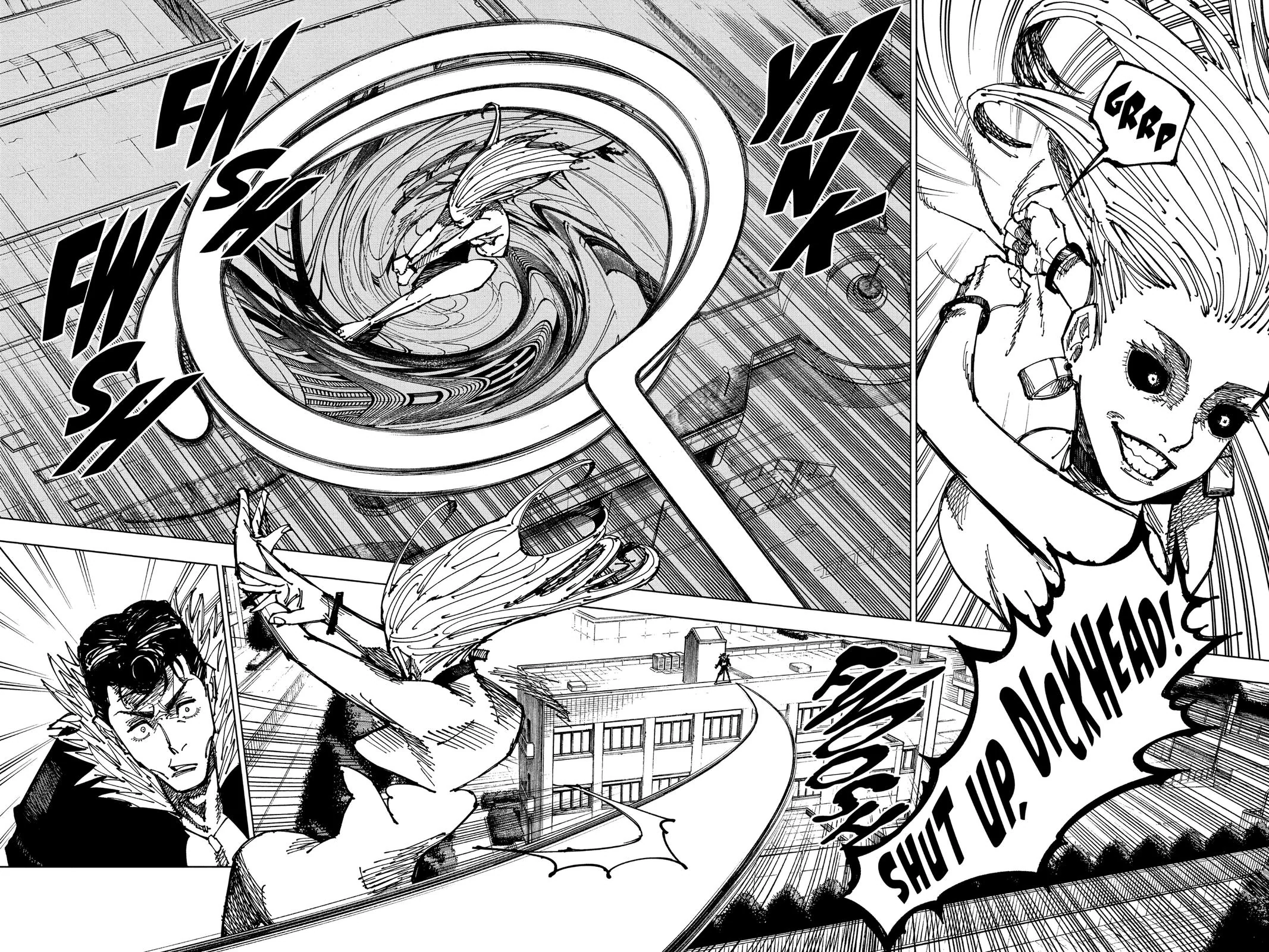
Time Cell Moon Palace (Uraume)
Uraume's domain is ice-based, enclosing the target in an extreme-cold environment and delivering sure-hits via ice shikigami. The domain was briefly used during the Culling Game arc but did not survive long enough for its full technique depth to be explored.
It ranks eighth for one specific reason: minimal screen time and no demonstrated complexity beyond the surface-level enclose-and-freeze design. The ice premise is visually strong. Uraume is a dangerous opponent. But without more extended use, the domain cannot be rated higher than domains that have shown what they actually do at full expression.
#7: Horizon of the Captivating Skandha

Horizon of the Captivating Skandha (Jogo)
Jogo's domain is a volcanic environment: a barren hellscape of magma and superheated air that applies extreme-heat sure-hits to anyone trapped inside. Mechanically it is one of the more primitive domains in the series. Close the barrier, generate heat, burn everything inside. There is no binding vow complexity, no conditional mechanic, no secondary function beyond the environmental sure-hit.
What keeps it out of last place is raw output. The environmental heat inside the domain is extreme enough to threaten high-grade sorcerers. The limitation is matchup: Jogo opened the domain against Gojo and it achieved nothing beyond demonstrating what Unlimited Void looks like in response. Against any opponent other than the strongest sorcerer alive at the time, the result would be different. The domain itself is not the problem; it ran directly into the one matchup that made its output irrelevant.
#6: Coffin of the Iron Mountain
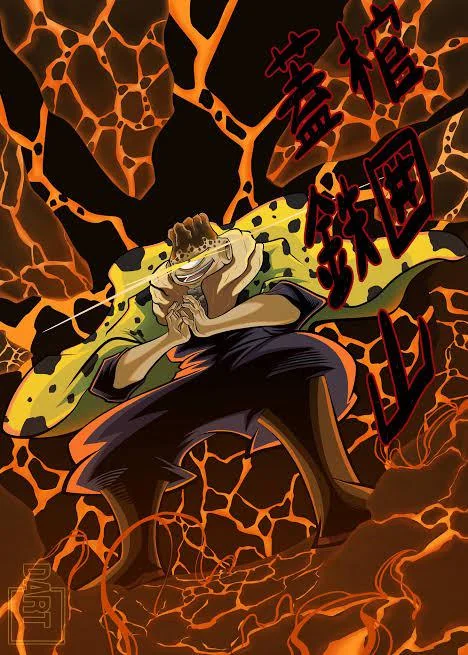
Coffin of the Iron Mountain (Dagon)
Dagon's domain is an infinite beach paradise: sunlight, shallow water, and an endless swarm of water shikigami that deliver the sure-hit from every direction simultaneously. The visual contrast between the paradise setting and the lethal output is one of the better domain designs in the series.
The shikigami volume is high enough to overwhelm standard-grade opponents immediately and to pose a genuine problem for special-grade calibre fighters. Naobito Zenin and Nanami Kento were pushed to their limit inside it during the Shibuya arc. The ranking reflects the absence of any higher-order complexity beyond the shikigami flood: the domain is mechanically solid and visually memorable, but it does not break any rules or introduce a secondary mechanic that standard domain design cannot explain.
#5: Chimera Shadow Garden

Chimera Shadow Garden (Megumi Fushiguro)
Chimera Shadow Garden is the most tactically interesting incomplete domain in the series. Because Megumi's domain has no barrier and no sure-hit, it does not function by standard Domain Expansion rules: targets are not trapped and attacks are not guaranteed to land. What it does instead is flood the enclosed space with shadow fluid, from which every shikigami in Megumi's arsenal can be summoned simultaneously at no cursed energy cost. The shadow fluid also generates secondary shikigami composed entirely of shadow material.
The "incomplete domain" framing matters. Megumi opened it knowing it was unfinished, in a fight against Haruta Shigemo, where flooding the area with free shikigami was tactically more valuable than a conventional sure-hit domain. This is an unusually sophisticated read on domain mechanics. The ranking reflects the structural weakness of an incomplete domain without a sure-hit: by definition it sits below any complete domain. But the ceiling of a finished Chimera Shadow Garden, and Sukuna's demonstrated interest in Megumi's Ten Shadows Technique specifically because of what that finished domain could become, suggests the eventual ranking would be significantly higher.
#4: Idle Death Gamble
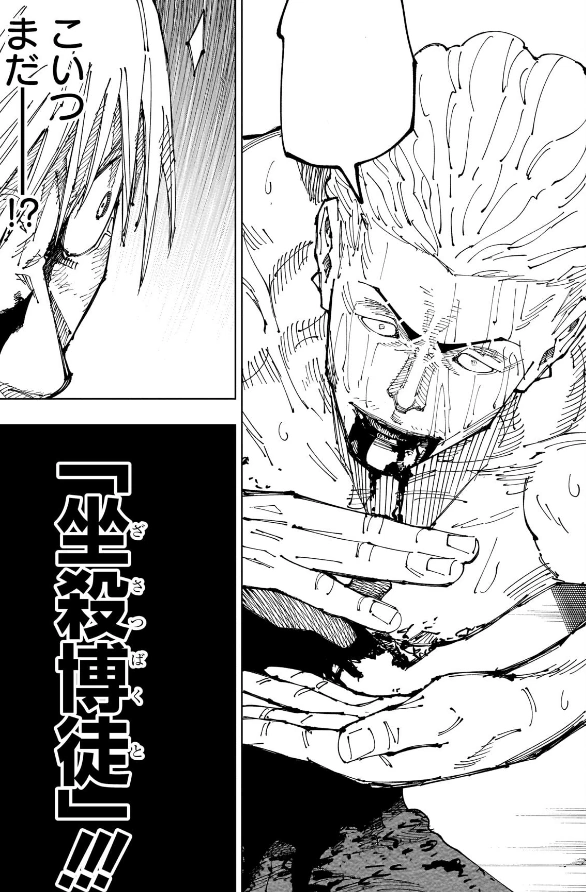
Idle Death Gamble (Hiromi Higuruma)
Higuruma's domain is a courtroom. The sure-hit is a judge's gavel. The gavel does not deal damage: if the court finds the defendant guilty, it strips their cursed technique entirely for the remainder of the fight.
This is one of the most mechanically unusual domains in the series. The trial mechanic functions on a binding vow principle: Higuruma accepts specific procedural rules (the court must follow trial logic, the defendant can enter a plea) in exchange for a sure-hit outcome that is categorically more powerful than conventional damage. Stripping a sorcerer's technique removes their primary tool for the rest of the fight without needing to reduce their health. Against a technique-dependent fighter, Idle Death Gamble is arguably more decisive than a lethal domain, because a technique-stripped opponent becomes a standard problem even for a non-special-grade sorcerer. Against Sukuna, the trial returned a not-guilty verdict, which reflects how the domain's binding vow logic interacts with something operating outside the normal framework. The courtroom design and the technique-stripping output make this one of the most inventive domains in the series.
#3: Deadly Sentencing

Deadly Sentencing (Kinji Hakari)
Hakari's domain is a pachinko parlour. The sure-hit is built into a binding vow mechanic: if the pachinko machine inside the domain hits a jackpot, Hakari receives 4 minutes and 11 seconds of infinite Reverse Cursed Technique (unlimited self-healing) plus guaranteed critical hits on every attack. If the jackpot does not land, the domain produces no sure-hit output at all.
This is the most deliberately variance-based domain design in the series. Hakari accepted a conditional power structure in exchange for a jackpot outcome that is functionally immortality paired with guaranteed damage for 4 minutes and 11 seconds per activation. In practice, Hakari cycles the jackpot repeatedly, each activation resetting the healing window and stacking critical hit output. Once the loop is running, he is operationally unkillable for the duration of each window.
Gege Akutami designed this as the single most mechanically broken power-cost tradeoff in the series: Hakari's domain sacrifices determinism for a ceiling that is effectively unreachable once the jackpot loop is established. Third overall because the jackpot condition creates a genuine counterplay window that the top two domains do not offer. If an opponent can neutralise Hakari before the first jackpot lands, the domain achieves nothing. That window keeps it below Unlimited Void and Malevolent Shrine.
#2: Unlimited Void

Unlimited Void (Satoru Gojo)
Unlimited Void does not deal damage directly. Instead it forces every possible piece of information onto the target simultaneously: every sight, sound, sensation, and cognitive input that exists is delivered at once, without filter, without pause. The target's nervous system cannot process the volume and locks up completely. They remain conscious but frozen, unable to initiate any action, while Gojo operates freely inside the domain for its full duration.
The reason this ranks second: Unlimited Void requires a barrier to function. The target must be enclosed. Against someone with their own domain, the domain clash rules apply and the outcome depends on whose technique is more refined. Against Sukuna in the Shinjuku Showdown, Gojo opened Unlimited Void and forced a domain clash. Malevolent Shrine's open-air design meant it was not a conventional clash between two barriers, and the external slash output continued to operate regardless of what happened inside the Void. That specific interaction is the only reason Unlimited Void does not hold the top ranking.
In any matchup that is not Sukuna, Unlimited Void is almost certain to be the decisive move in the fight. The sure-hit is a cognitive lockdown that cannot be resisted by faster movement, stronger physical defense, or higher cursed energy output. The only valid counters are a domain of equivalent or greater refinement, a Simple Domain, or Falling Blossom Emotion. Against opponents without these, Unlimited Void ends fights immediately and completely.
#1: Malevolent Shrine
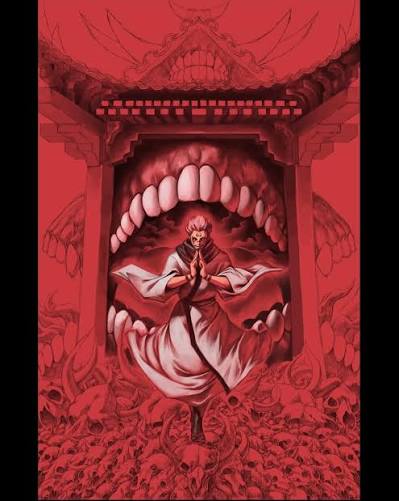
Malevolent Shrine (Ryomen Sukuna)
Malevolent Shrine does not use a barrier. Every other Domain Expansion in Jujutsu Kaisen encloses a space. Sukuna's domain projects outward instead, extending a 200-metre radius of guaranteed-hit slashes across open terrain. Cleave and Dismantle are applied simultaneously to everything within range: one technique that cuts through cursed energy defenses, one that destroys objects without them, both active across the entire 200-metre radius at once. There is no enclosed space to escape from. The domain covers the ground.
The binding vow Sukuna accepts to achieve this is the barrier itself: by taking no enclosure, he accepts that targets can technically leave the radius. In practice, the radius is large enough and the slashes are fast enough that exiting the 200-metre zone before the sure-hit connects is not a realistic option for any opponent in the series. The tradeoff is structural: a conventional domain with a barrier would be more powerful in a head-to-head domain clash because barriers amplify sure-hit force. Sukuna accepts that cost and compensates with coverage area and dual-slash output that no other domain delivers.
Against Gojo's Unlimited Void in the Shinjuku Showdown, Malevolent Shrine's open-air design meant that rather than a conventional domain clash (two barriers meeting, stronger technique wins inside), Sukuna's slash sure-hits continued to operate on the external environment while the two domains fought. This is the specific mechanical advantage that places Malevolent Shrine first: it does not need to win the domain clash in order to continue dealing damage. It is the only domain in the series that operates by a fundamentally different rule set from every other entry on this list.
What makes a domain "broken"
Three factors determine where a domain sits in the power tier.
Sure-hit strength. The standard domain sure-hit guarantees that attacks land. What those attacks actually do determines the ceiling. Jogo's sure-hit is environmental heat. Sukuna's sure-hit is Cleave and Dismantle applied simultaneously. Both are guaranteed to connect; the output gap between them is categorical.
Enclosed space size. A larger domain is harder to exit, harder to counter with a Simple Domain (which covers a smaller radius), and provides more room for the user to manoeuvre. Malevolent Shrine is the exception to this framing because it is not enclosed at all: the "size" is a 200-metre open radius, which makes it structurally immune to barrier-based Simple Domain counters.
Cost to the caster. Domain Expansions consume significant cursed energy. Some domains add binding vow costs on top: Hakari's jackpot condition, Higuruma's trial procedure, Sukuna's no-barrier design. These additional costs are accepted in exchange for specific power advantages. The binding vow system in Jujutsu Kaisen scales a technique's power directly to the restrictions the user accepts. The domains with the highest ceilings are, without exception, the ones that accepted the most unusual constraints.
The three domains at the top of the ranking each break a different rule. Malevolent Shrine bypasses the enclosure requirement. Unlimited Void bypasses the need for a lethal sure-hit by using cognitive lockdown instead. Deadly Sentencing bypasses the determinism of a conventional sure-hit by accepting variance in exchange for an immortality window on jackpot.
Domain-vs-domain mechanics
When two sorcerers open their domains simultaneously, the stronger technique wins. Stronger means: higher refinement, larger enclosed space, and more concentrated sure-hit output. The weaker domain collapses and the sorcerer inside is exposed to the winning domain's sure-hit. This is how Gojo's Unlimited Void handled every domain clash before the Shinjuku Showdown. No other domain in the current era of the series was refined enough to match it in a head-to-head clash.
The Gojo versus Sukuna domain clash is the reference case because it is the only clash in the series where the outcome was not straightforward. Malevolent Shrine does not have a barrier, so a conventional clash (two barriers meeting, stronger technique wins inside) was not the mechanism. Instead, Sukuna's slash sure-hits continued to operate on the external environment while the interiors of both domains interacted. The specific resolution is deliberately ambiguous in the manga; the readable outcome is that Malevolent Shrine's external slash coverage prevented Unlimited Void from being the fight-ending move it would be against any other opponent.
The domain clash rule matters for collecting context too: every high-tier sorcerer depicted in JJK merchandise and figures is defined by which end of the domain clash hierarchy they occupy. Gojo figures are sold under the Unlimited Void brand identity. Sukuna figures under Malevolent Shrine. These are not arbitrary commercial choices; they reflect the canonical power architecture.
Domains that require binding vows
Three domains in the series are built around binding vow mechanics, accepting procedural constraints in exchange for power outputs that standard domain design cannot produce.
Idle Death Gamble (Higuruma). The binding vow is the trial itself. Higuruma accepts that the domain operates on trial logic, that the defendant can enter a plea, and that the outcome must follow the court's verdict. In exchange, a guilty verdict strips the opponent's cursed technique entirely rather than delivering a conventional sure-hit. The procedural constraint is the cost; the technique removal is the return.
Deadly Sentencing (Hakari). The binding vow is variance. Hakari accepts that the domain's primary sure-hit is conditional on a pachinko jackpot. In exchange, a jackpot activates 4 minutes and 11 seconds of infinite Reverse Cursed Technique and guaranteed critical hits. The probabilistic constraint is the cost; the immortality window is the return.
Malevolent Shrine (Sukuna). The binding vow is the barrier. Sukuna accepts that the domain is open rather than enclosed, giving targets a theoretical exit route. In exchange, the domain projects across a 200-metre radius with dual-slash sure-hits and no enclosure requirement. The lack of a barrier is the cost; the open-field coverage and bypass of standard domain clash rules is the return.
Yuki Tsukumo also opened an incomplete domain in her fight against Kenjaku. The structure suggested a similar binding vow pattern, though the fight's conclusion before full technique expression meant the binding vow logic was not elaborated. Yuki's domain reflects the upper range of what sorcerers in Gojo's approximate tier can access, which provides useful context for how far Hakari and Higuruma's binding vow domains sit above the standard complete domain template.
Closing
Jujutsu Kaisen runs one of the most technically designed power systems in modern shonen. Most shonen scale through training arcs and power levels; JJK scales through technique design, cursed energy mechanics, and the binding vow system that turns any accepted constraint into a tradeable power multiplier. Domain Expansions are the endgame expression of that system: the point where a sorcerer's innate technique is refined enough to be materialised as a complete enclosed reality with guaranteed outputs.
The ranking above reflects both narrative outcomes and mechanical analysis. A domain that has not been fully explored cannot be rated above one with demonstrated depth, regardless of theoretical ceiling. The top three domains each break a different standard rule in ways that specifically undercut the expected counter-strategies, which is what separates them from everything else on the list.
For more anime guides and ranked lists, see the full blog. If you want to pick up JJK figures or merchandise, browse the marketplace for what is currently available.
More from the blog
Get new anime collector posts in your inbox.
Reviews, guides, and hobby news — delivered directly.
By subscribing, you agree to our Privacy Policy.