


Every Bijuu (Tailed Beast) in Naruto, Ranked from Weakest to Strongest
Before the nine Bijuu existed, there was one entity: the Ten-Tails. When the Sage of the Six Paths, Hagoromo Otsutsuki, defeated the Ten-Tails and absorbed it, he spent his dying years splitting its chakra into nine separate beings to prevent it from ever being resurrected as a whole. Each of the nine Bijuu is essentially a chakra-based deity in beast form, carrying a fragment of the original creature's power.
Tail count is the most common proxy for strength, and it is not wrong as a rough guide. More tails generally means more raw chakra. But chakra volume is not the same as combat effectiveness, and this ranking is built on the latter. A Bijuu that cannot control its power, has no useful ability set, or has never been shown pushing the limits of a high-level fight ranks below one that has demonstrated what it can actually do when pushed. The Ten-Tails sits above the individual nine by definition. Everything else is the interesting part.
TL;DR: Bijuu power ranking
| Rank | Bijuu | Jinchuriki | Signature ability | |------|-------|------------|-------------------| | 1 | Ten-Tails | Obito / Madara (temporary) | Contains all nine Bijuu; reality-scale threat | | 2 | Kurama (Nine-Tails) | Naruto Uzumaki | Highest raw chakra of any single Bijuu | | 3 | Gyuki (Eight-Tails) | Killer B | Full coordination with jinchuriki; tentacle combat | | 4 | Chomei (Seven-Tails) | Fu | Flight, armoured carapace, scale powder defence | | 5 | Saiken (Six-Tails) | Utakata | Corrosive acid and mist; attritional threat | | 6 | Kokuo (Five-Tails) | Han | Boil release; exceptional physical power | | 7 | Son Goku (Four-Tails) | Roshi | Lava release; one of the most articulate Bijuu | | 8 | Isobu (Three-Tails) | Yagura | Water and ice; extreme durability | | 9 | Matatabi (Two-Tails) | Yugito Nii | Blue flame form; agile but limited in scale | | 10 | Shukaku (One-Tail) | Gaara | Sand manipulation; weakest raw chakra of the nine |
#10: Shukaku, the One-Tail
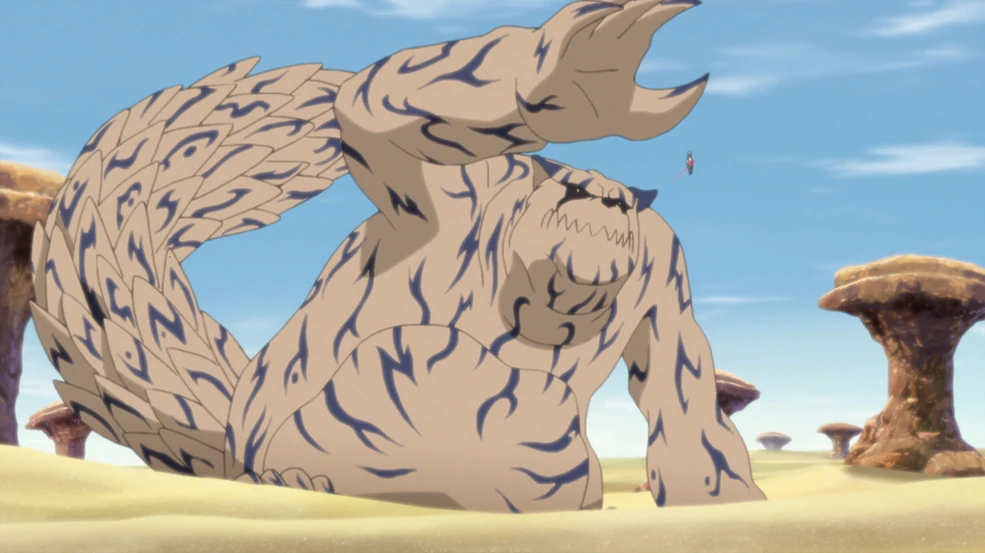
Shukaku (One-Tail)
Jinchuriki: Gaara of the Sand.
Shukaku is a sand-manipulating tanuki with one tail and the weakest raw chakra reserves of the nine. Its signature technique is Absolute Defence: an autonomous sand shield that reacts to threats even while Gaara sleeps, making it one of the most reliable defensive Bijuu abilities in the early series. Shukaku also possesses a unique Magnet Release application that Gaara channels through sand.
It ranks last because its power set is almost entirely defensive and its chakra output is the lowest among the nine. Shukaku is also one of the more unstable Bijuu mentally, which historically made its jinchuriki dangerous but not particularly effective in coordinated high-level combat. In the post-war period, Shukaku's relationship with Gaara softened and the two reached something closer to mutual understanding.
#9: Matatabi, the Two-Tails
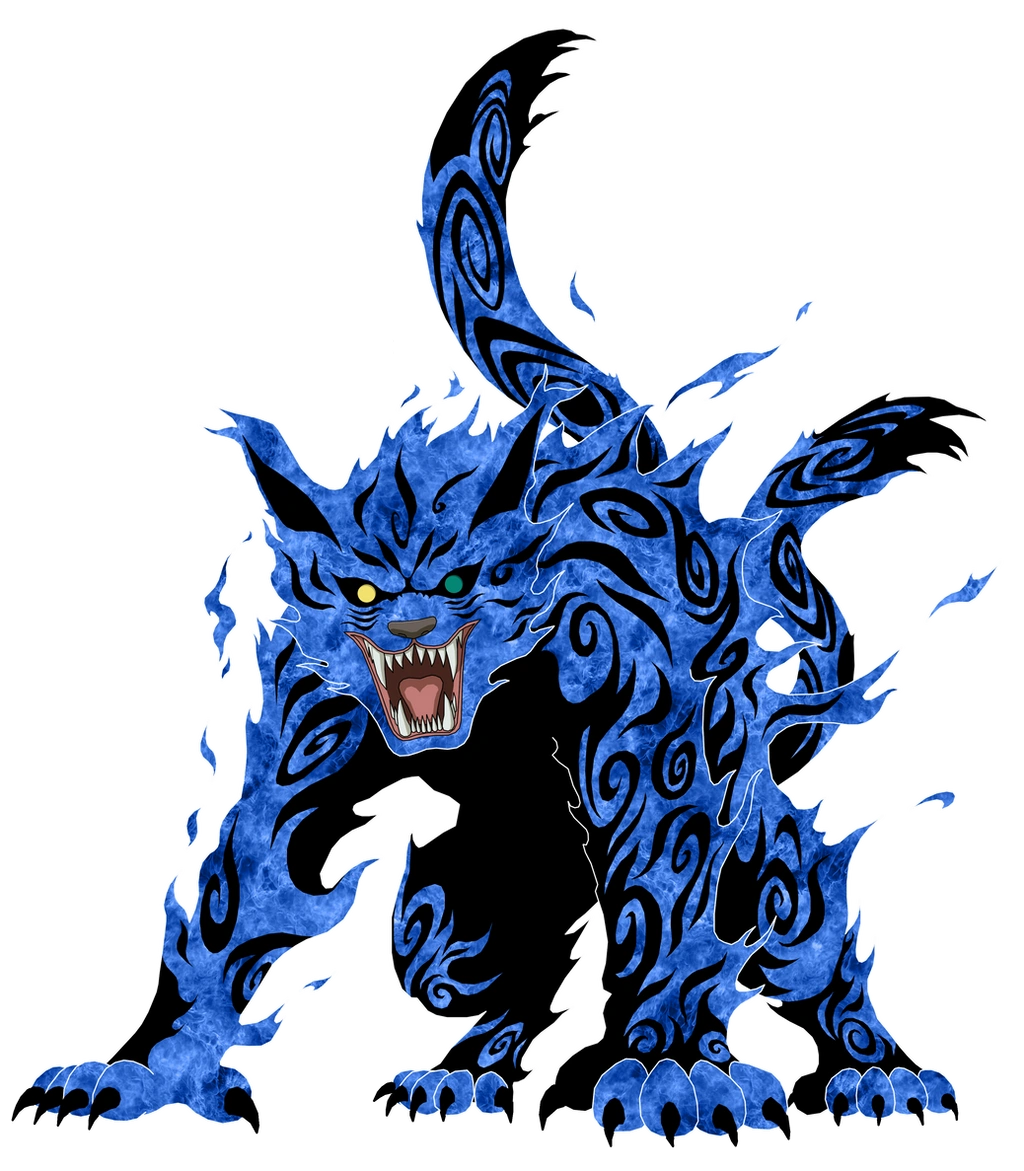
Matatabi (Two-Tails)
Jinchuriki: Yugito Nii of the Hidden Cloud.
Matatabi takes the form of a massive flaming cat, wreathed entirely in blue fire. Its offensive output is fire-based and it is among the more agile Bijuu in movement. Yugito Nii was considered one of the more accomplished jinchuriki in the series, capable of fully transforming into Matatabi and sustaining that form in combat.
It ranks ninth because two tails is two tails: the chakra ceiling is simply lower than the remaining seven, and the blue flame ability, while visually distinctive, does not introduce a level of capability that closes the gap with the higher-ranked Bijuu. Yugito was captured by Hidan and Kakuzu before the full extent of Matatabi's combat output could be shown.
#8: Isobu, the Three-Tails
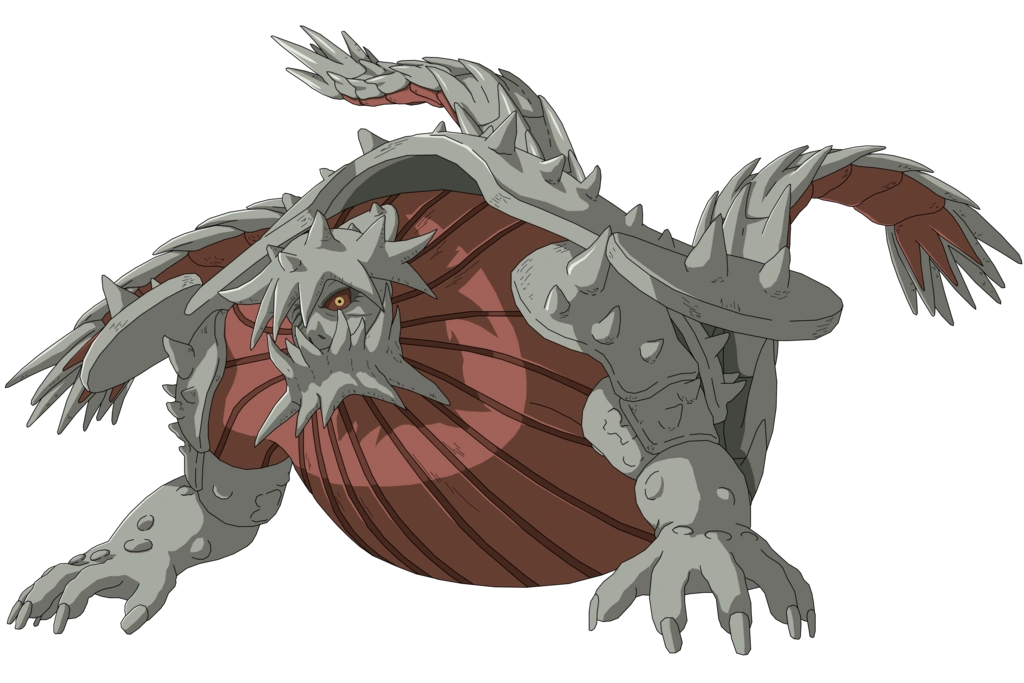
Isobu (Three-Tails)
Jinchuriki: Yagura Karatachi, Fourth Mizukage of the Hidden Mist.
Isobu is a giant turtle with three tails. Its primary elemental affinity is water, it is capable of generating ice, and it is one of the most physically durable Bijuu in the series. Isobu's shell is nearly impenetrable and it uses its tails as water and physical weapons simultaneously. It is also capable of creating a genjutsu-based illusion field, which is unusual for a Bijuu and puts it above pure physical combatants at the same tier.
Yagura was one of the series' more notable jinchuriki: a child Mizukage who reached full synchronisation with Isobu. The ranking reflects the durability advantage and genjutsu capability that push it above the two below it, while the raw chakra gap versus the higher-ranked Bijuu prevents it climbing further.
#7: Son Goku, the Four-Tails
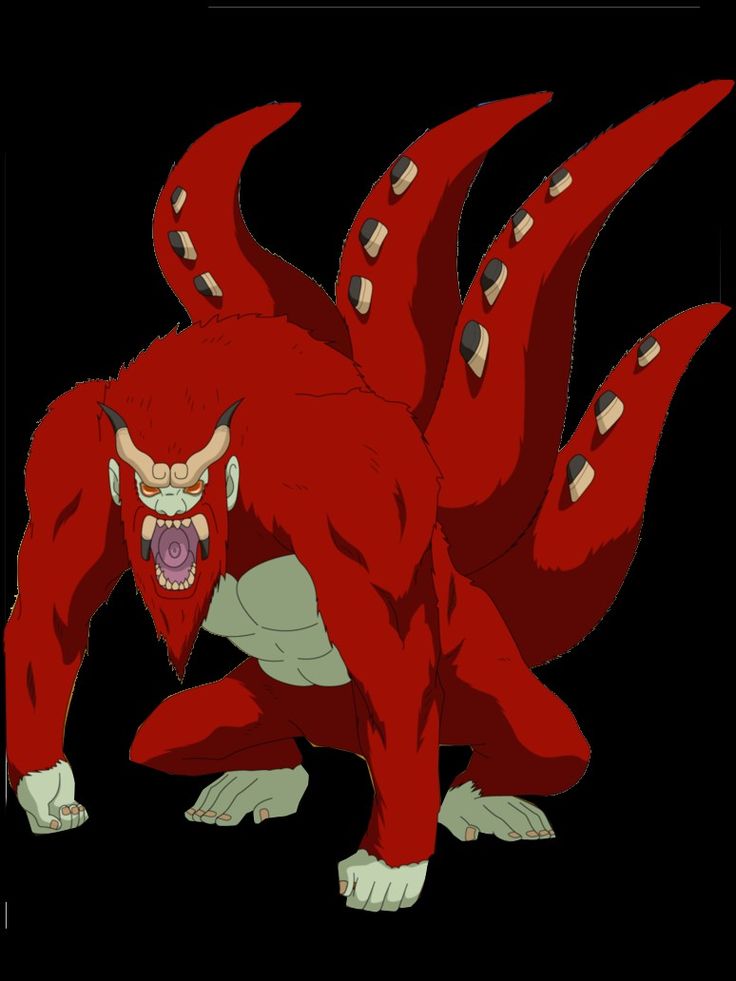
Son Goku (Four-Tails)
Jinchuriki: Roshi of the Hidden Rock.
Son Goku is a red-furred ape with four tails. Its standout ability is Lava Release: a combination of fire and earth chakra natures that generates genuine magma. Lava Release is a rare advanced nature transformation, and a Bijuu capable of producing it has an elemental offense that most opponents have no natural counter to. Son Goku is also one of the more verbally articulate Bijuu in the series, capable of philosophical conversation when not being weaponised.
Roshi spent his life studying lava release to control and work with Son Goku, eventually achieving genuine partnership rather than suppression. Son Goku ranks seventh because lava release is a meaningful ability advantage over the Bijuu below it, but the raw chakra ceiling of four tails limits how far that advantage extends in a sustained fight against the larger Bijuu.
#6: Kokuo, the Five-Tails
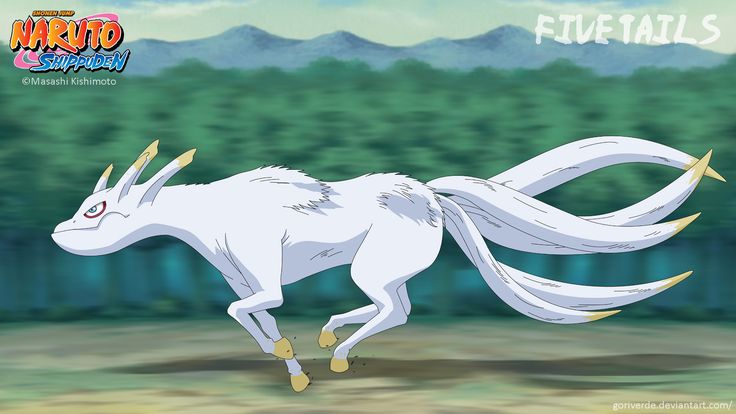
Kokuo (Five-Tails)
Jinchuriki: Han of the Hidden Rock.
Kokuo takes an unusual form: a half-dolphin, half-horse hybrid with five tails. Its signature ability is Boil Release, a combination of fire and water chakra natures that generates superheated steam capable of corroding most materials it contacts. Beyond the boil release, Kokuo is one of the physically strongest Bijuu at its tier, with a mass and striking force that makes close-range combat a genuine problem even for opponents who can handle the steam.
Han was a highly proficient jinchuriki, known for wearing heavy armour that channelled the steam as both offense and movement. Kokuo's ranking reflects both the physical power ceiling of five tails and the boil release advantage, placing it above Son Goku's lava release because steam-based offense is functionally harder to defend against in close quarters than magma-based projectiles.
#5: Saiken, the Six-Tails
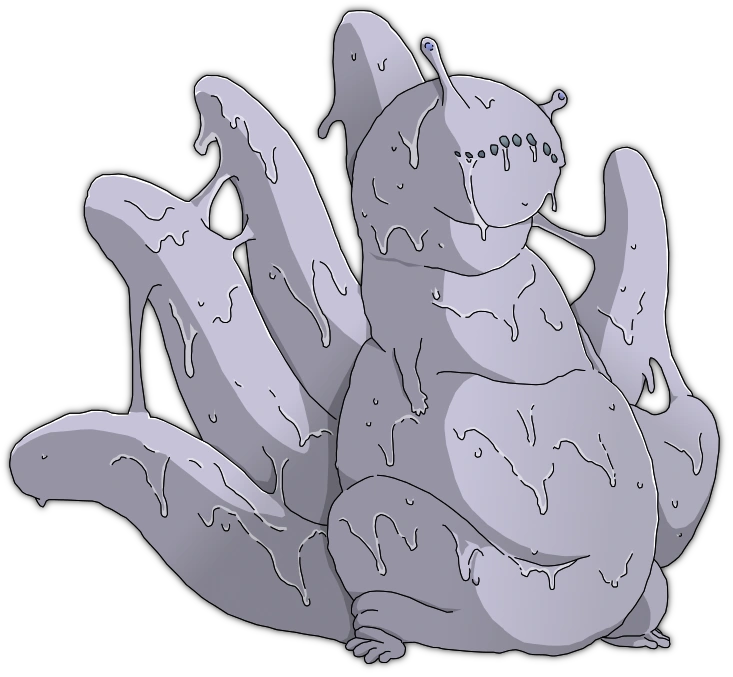
Saiken (Six-Tails)
Jinchuriki: Utakata of the Hidden Mist.
Saiken is a slug with six tails. This is objectively not the most intimidating design in the Bijuu lineup. The ability set compensates: Saiken produces corrosive acid and alkaline gas that functions as a persistent area denial tool. Unlike the more direct-damage Bijuu, Saiken's threat is attritional: it does not need to overpower an opponent in a single exchange because the acid and mist degrade the battlefield and anyone in it over time.
Utakata was a missing-nin from the Hidden Mist who was eventually captured by Pain. The ranking places Saiken fifth because the combination of six-tail chakra reserves and a unique area-control ability set gives it more tactical range than the Bijuu below it, even if the raw aggressive output is lower than Kokuo or Son Goku. In a prolonged fight on open ground, Saiken's corrosive field becomes a decisive factor.
#4: Chomei, the Seven-Tails
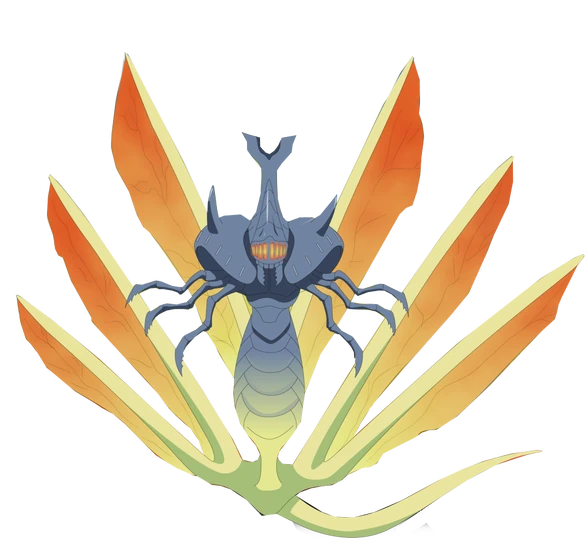
Chomei (Seven-Tails)
Jinchuriki: Fu of the Hidden Waterfall.
Chomei is a giant rhinoceros beetle with seven tails. Its primary advantages are flight capability, an armoured carapace that provides exceptional physical defense, and a scale-powder ability that disrupts an opponent's vision and movement. The flight ceiling alone makes Chomei a difficult opponent: it is the only Bijuu with natural aerial dominance, which forces ground-based opponents into a fundamentally different combat posture.
Chomei is consistently underrated in Bijuu discussions because Fu died before any meaningful extended fight could showcase what the seven-tailed form actually does. Seven tails is a significant chakra increment above Saiken, and the combination of flight, armour, and scale powder gives Chomei a toolkit that covers ranges most Bijuu cannot address simultaneously. The ranking reflects the capabilities on paper rather than what was demonstrated narratively, which is the correct approach for a Bijuu that was removed from the story before its ceiling was shown.
#3: Gyuki, the Eight-Tails
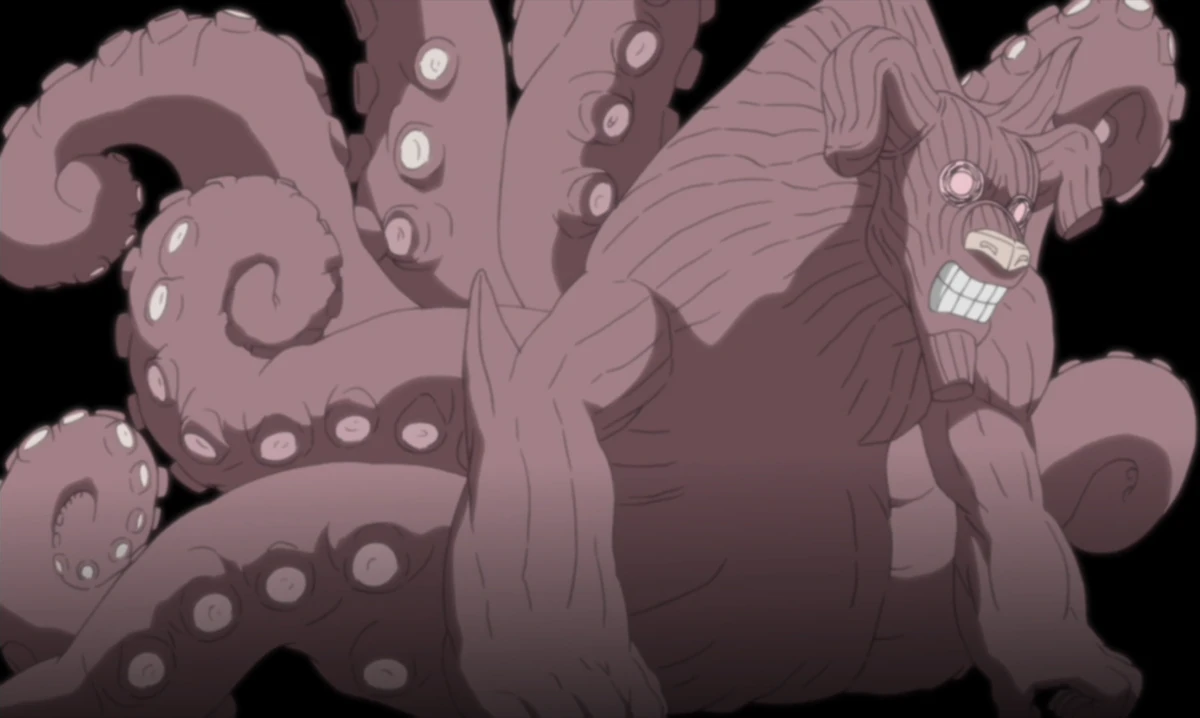
Gyuki (Eight-Tails)
Jinchuriki: Killer B of the Hidden Cloud.
Gyuki is an octopus-bull hybrid with eight tails. In raw chakra terms, it sits one step below Kurama. What puts it above everything else in the practical rankings is Killer B: the only jinchuriki in the series to achieve a complete, voluntary, mutual partnership with their Bijuu. Killer B did not suppress Gyuki, and Gyuki did not consume B. They cooperated, developed combined techniques, and fought as a genuine team across multiple arcs.
This matters because partnership amplifies combat effectiveness in ways that raw chakra alone cannot. A Bijuu whose jinchuriki has full access to its power without losing consciousness, without risk of the Bijuu taking over, and with active tactical cooperation from the Bijuu itself is functionally a different weapon from a Bijuu that is either suppressed or running uncontrolled. Gyuki's tentacle-based combat is devastating at range, the ink-based blinding technique is a meaningful utility tool, and the eight-tailed Bijuu bomb is in the top tier of destructive outputs among the nine.
Third overall because eight tails versus nine tails is a genuine chakra gap that Naruto and Kurama's own eventual partnership closes in the other direction. But in the middle of the war arc, B-plus-Gyuki versus most of the remaining jinchuriki was not a fair fight for the other side.
#2: Kurama, the Nine-Tails
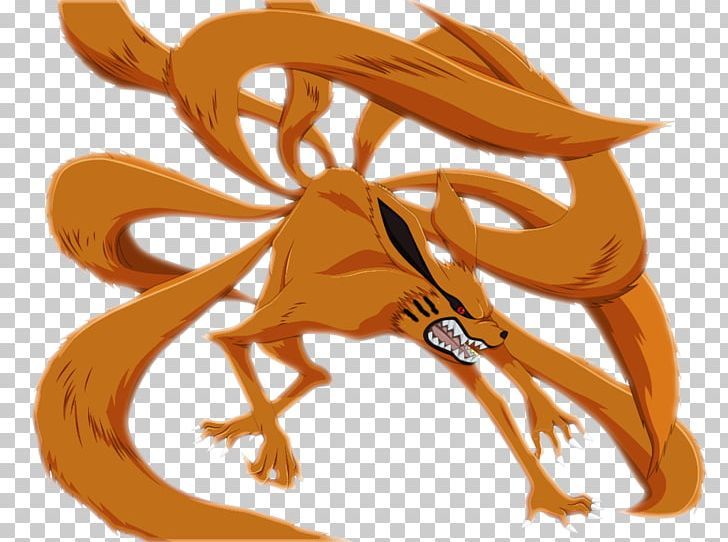
Kurama (Nine-Tails)
Jinchuriki: Naruto Uzumaki (prior: Mito Uzumaki, Kushina Uzumaki).
Kurama has the highest raw chakra of any individual Bijuu. Nine tails is not a close competition: Kurama's chakra reserves dwarf the eight Bijuu below it by a margin that has been directly referenced within the series multiple times. The Nine-Tails Chakra Mode and eventually Six-Paths Sage Mode gave Naruto access to a power ceiling that was capable of trading with the Six-Paths-empowered Madara and Kaguya-level threats.
For most of the series, Kurama was also the most dangerous Bijuu in terms of uncontrolled destructive output. The attack on Konoha at Naruto's birth, the partial releases during the early series, and the full unleashing during Pain's assault represent genuine village-scale destruction from a single Bijuu. The hatred that Kurama accumulated over centuries of being weaponised made it actively more dangerous than a Bijuu simply operating at its baseline chakra level.
The ranking places Kurama at second rather than first because the Ten-Tails exists and contains Kurama plus the other eight. Within the set of individual nine Bijuu, Kurama is the ceiling. The partnership Naruto and Kurama eventually reached made the combination arguably the most effective jinchuriki pair in the series. Kurama's death in the Boruto era, as a result of the Baryon Mode tax paid to fight Isshiki, is one of the most significant losses in the post-war narrative.
#1: The Ten-Tails
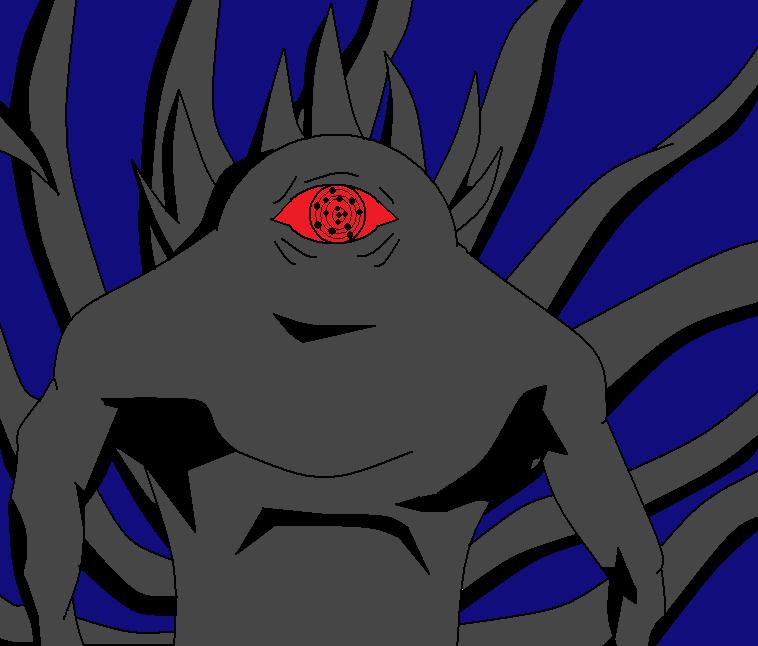
The Ten-Tails
Jinchuriki: Obito Uchiha (temporarily); Madara Uchiha (temporarily); originally the Sage of Six Paths.
The Ten-Tails is not a Bijuu in the sense that the other nine are. It is the original entity from which all nine were created. When the nine Bijuu are recombined, the resulting creature is not approximately as strong as the sum: it is the original God-tree-connected entity that the Otsutsuki clan used to drain entire planets of chakra. The Ten-Tails has no upper limit that any individual within the series has meaningfully tested.
Both Obito and Madara became Ten-Tails jinchuriki during the war arc. In both cases, the result was a God-tier power state that required the full Allied Shinobi Forces plus the combined efforts of Naruto, Sasuke, and the resurrected Hokage to counter. As a jinchuriki, Madara's version was stable enough to demonstrate Infinite Tsukuyomi and begin the transformation toward becoming the Sage of Six Paths himself. The Ten-Tails sits first not because of a ranking argument but because it is factually the source of everything below it.
The Kurama vs Ten-Tails argument
Every ranking that defaults to Kurama at number one is forgetting the Ten-Tails exists. This is a common omission because the Ten-Tails is not a standalone character in the same way the nine Bijuu are: it appears as a partially resurrected weapon and then as a jinchuriki power-up rather than as an independent entity with a personality and relationship arc.
But mechanically, there is no argument. The Ten-Tails contains Kurama plus the other eight Bijuu. Kurama's chakra, which is already the highest of any individual Bijuu, is a fraction of what the Ten-Tails holds. The six-paths power mechanics that Naruto and Sasuke received came from Hagoromo Otsutsuki, the original Ten-Tails jinchuriki, and those mechanics were required to close the power gap against a Ten-Tails jinchuriki Madara. None of those paths run through Kurama alone.
The counterargument is usually that the Ten-Tails does not count as a Bijuu in the standard nine-beast sense, and therefore the ranking should treat it as a separate category. That is a valid framing choice. But if the question is "what is the strongest tailed-beast-tier entity in Naruto canon," the answer is the Ten-Tails, and treating it as disqualified on a technicality produces a less accurate ranking. Ten-Tails first. Kurama second. That is the call here.
Jinchuriki partnership versus raw containment
Every jinchuriki relationship in the series falls somewhere on a spectrum from forced suppression to genuine partnership. The default state is suppression: the Bijuu is a dangerous entity sealed into a human vessel, contained by the jinchuriki's own willpower and training. In the suppression model, the jinchuriki has access to some of the Bijuu's chakra but the Bijuu itself is working against the host, or at best passively tolerating the arrangement.
The Bijuu that breaks this pattern most completely is Gyuki and Killer B. B did not suppress Gyuki. He developed a relationship, trained with the Bijuu rather than against it, and reached a state where Gyuki actively cooperated in combat. The result is that Gyuki's combat effectiveness with B is dramatically higher than Gyuki under the suppression model would be: tentacle coordination, combined techniques, and a jinchuriki who can enter the Bijuu's full form without losing consciousness.
Naruto and Kurama's eventual partnership, reached in the war arc, follows a similar logic. The Nine-Tails Chakra Mode that Naruto accessed by confronting Kurama's hatred and taking its chakra by force was already extraordinary. Once the two reached genuine cooperation, the output ceiling moved again. The Akatsuki pursued jinchuriki as weapons because they understood this: a jinchuriki operating at full partnership capacity is a completely different threat level from one fighting against their own Bijuu. Removing the Bijuu kills the host; working with the host multiplies the output.
Where the Bijuu ended up
After the Fourth Great Ninja War, the Bijuu were freed from their forced jinchuriki bindings. The Sage of the Six Paths, Hagoromo, appeared and spoke with them directly, acknowledging what had been done to them and allowing them to choose their own path. Most of the nine dispersed as independent entities across the world.
Kurama remained with Naruto, voluntarily, until Baryon Mode killed it in the Boruto era. Shukaku maintained a distant but friendly relationship with Gaara after their reconciliation during the war. Son Goku, who had a particularly pointed interaction with Naruto during the war, came away with a changed perspective on the relationship between Bijuu and humans.
The broader context is that the Bijuu were tools for most of shinobi history, weaponised by villages, traded as political assets, and killed and resealed across generations. The post-war acknowledgment of their autonomy is a meaningful shift in how the world of Naruto treats them, even if that shift came very late and the Bijuu had spent centuries being exactly the weapons the Kage who commanded them wanted.
Closing
Nine Bijuu, one Ten-Tails, and a history of being treated as weapons by every village that could get hold of them. The power hierarchy is real and the tail count roughly predicts the ranking, but the more interesting axis is what happened when a jinchuriki stopped fighting their Bijuu and started working with it instead. B and Gyuki are the clearest example. Naruto and Kurama are the most famous. The rest of the jinchuriki histories are mostly tragedies.
For the full context on how the Bijuu were hunted and extracted by the Akatsuki, that post covers every member and the organisation's Bijuu-collection operation in detail. The Kage post covers the jinchuriki who became village leaders, which is a narrower but overlapping slice of the same history.
More from the blog
Get new anime collector posts in your inbox.
Reviews, guides, and hobby news — delivered directly.
By subscribing, you agree to our Privacy Policy.