


Muzan Kibutsuji Explained: The Demon King, His Origin and His Role in Infinity Castle
Spoilers throughout. This post covers Muzan's complete story including the Infinity Castle arc (chapters 97 onwards), his final battle form, and the ending of the manga. Anime-only viewers who want to stay unspoiled should bookmark this and return after Part 3.
Muzan Kibutsuji is the origin point of every demon in Demon Slayer. He is over a thousand years old, walks among humans in disguise, and has spent his entire existence pursuing a single flower that would free him from his only weakness: sunlight. Every arc, every Upper Moon, every Hashira, every sacrifice traces back to him.
This is his complete breakdown before Infinity Castle.
Origin: Heian-era Japan
Muzan was born during the Heian period, somewhere between the 8th and 12th century CE, as a chronically ill human with a terminal prognosis. A court doctor undertook an experimental treatment to extend his life, using the Blue Spider Lily as the base compound of a medicine. The doctor was killed before he could complete the treatment or administer the final corrective dose.
Muzan survived. He also transformed into the first demon: physically immortal, capable of regenerating almost any wound, and strong beyond any human measure. He also became fatally sensitive to sunlight, unable to survive direct exposure. He killed the doctor before he understood what had happened, and before he understood that the final treatment might have resolved the sunlight weakness entirely.
That incomplete transformation is the engine of the entire series. A thousand years of search, of demon army, of Demon Slayer Corps, all of it stems from a medicine that was never finished.
Muzan in the modern era
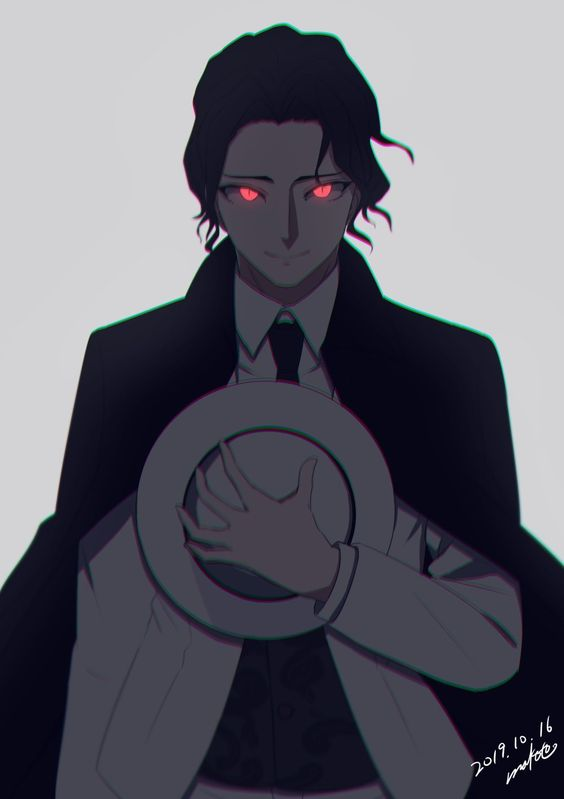
Muzan Kibutsuji: Human Form
In the Taisho-era setting of Demon Slayer (roughly 1912 to 1926), Muzan presents as an immaculately dressed businessman. He maintains a constructed identity: a wife, a young daughter, a home. He can reshape his physical appearance to some degree, changing his apparent age, sex, and features. He moves in public mostly at night but can tolerate daylight for limited periods using wide-brimmed hats and careful planning, unlike the common demons he creates who are entirely destroyed by sunlight. He is meticulous, cold, and treats every interaction as a matter of dominance. Humans who speak to him without recognising him have no idea they are standing next to a being who has killed thousands across a millennium.
The curse
Muzan creates demons by injecting his blood into humans. Most people who receive his blood die during the transformation: the conversion is lethal to most bodies. Those who survive become demons bound to his will. He can sense what his demons sense across any distance, and he can kill any demon he created at any time by activating a blood curse remotely.
This means the Twelve Kizuki, his most powerful demons, operate under permanent threat of immediate death from their own creator. Muzan has killed Upper Moons before. He dissolved most of the Lower Moons in person during the Infinity Castle sequence seen in Season 2, executing them in a conference room inside the castle before the arc's battles begin.
The only way Muzan can die is if he is killed outright before he can regenerate, or if he is exposed to sunlight. Every strategy the Demon Slayer Corps has ever developed comes down to those two options.
Muzan's Heian-era form
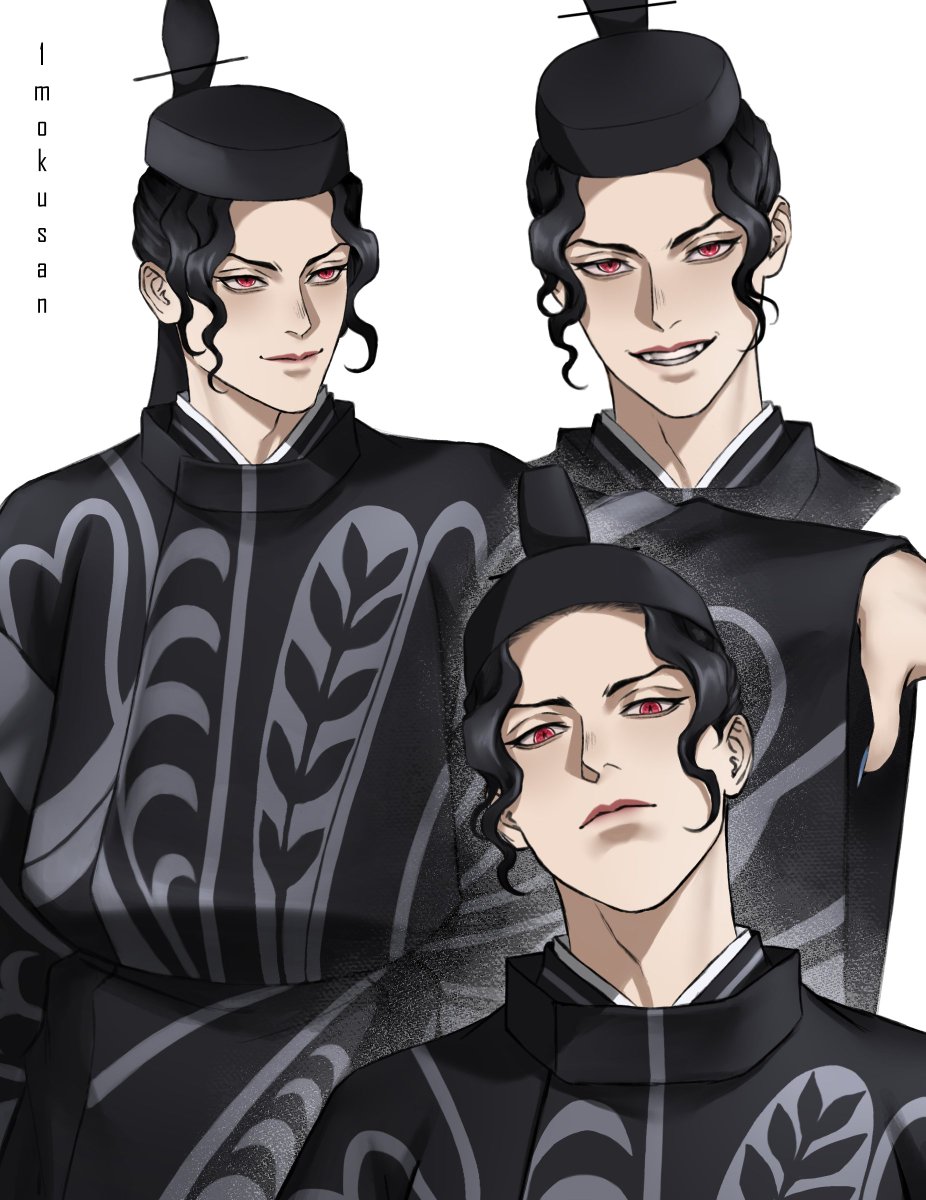
Muzan Kibutsuji: Heian Form
Before refining his human disguise across centuries, Muzan's appearance reflected his demon nature more openly. His historical form is less contained than the businessman persona he runs in the Taisho era. This is the version of Muzan that existed when Yoriichi Tsugikuni intercepted him, and it is the form that survived that near-destruction. The difference between Muzan then and Muzan at the start of the series is largely a matter of accumulated concealment rather than any meaningful change in fundamental nature. He enters the Infinity Castle arc stronger than he was in the Sengoku era because he has continued to evolve, but the incomplete transformation from the Heian period is what defined every limit and every obsession that followed.
The Yoriichi encounter
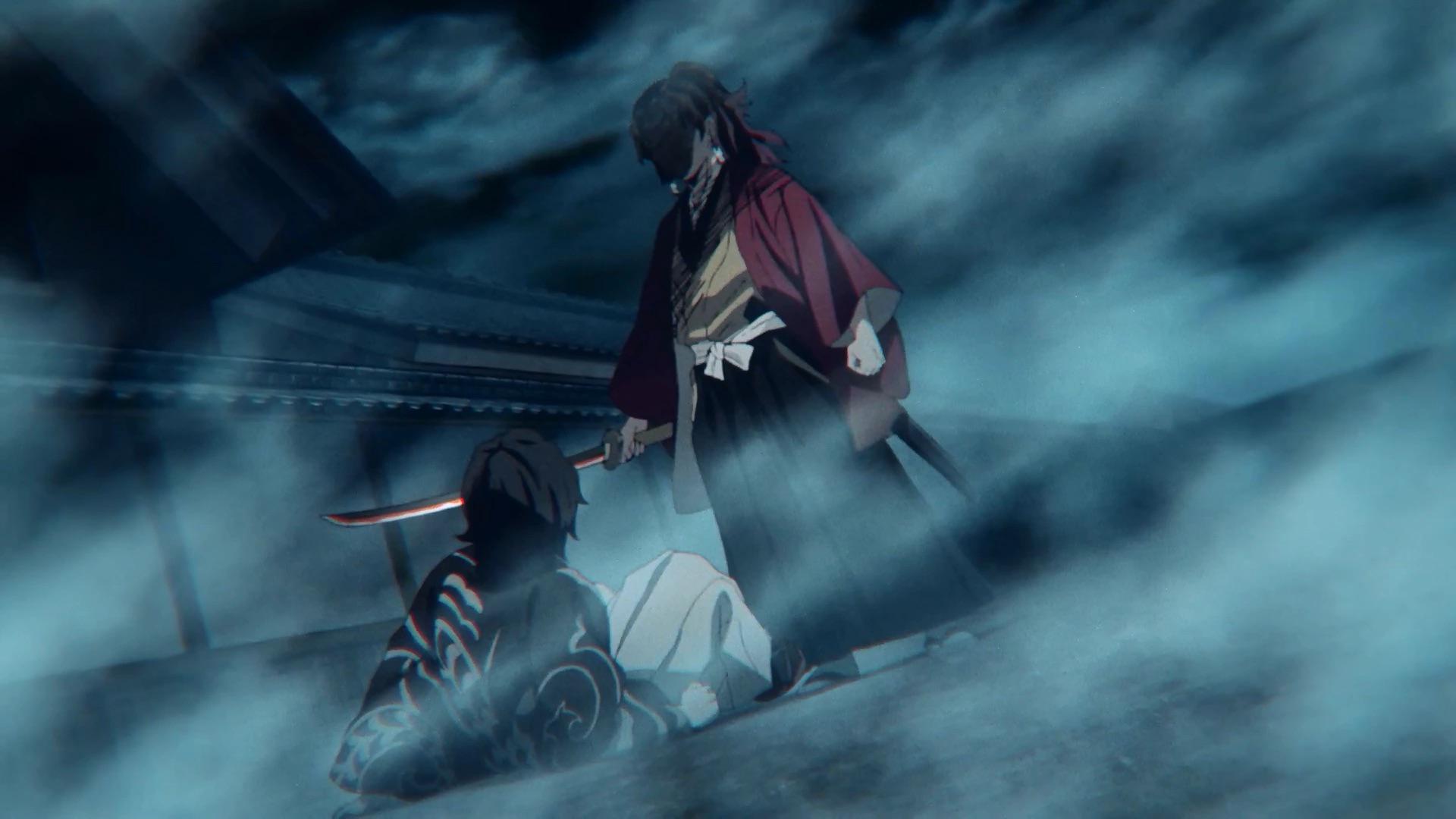
The single most consequential event in the history of the Demon Slayer Corps took place in the Sengoku era, several centuries before the series. Yoriichi Tsugikuni, the original user of Sun Breathing and the strongest demon slayer who ever lived, encountered Muzan and came within one strike of killing him permanently.
Yoriichi's technique was so far beyond anything Muzan had encountered that Muzan could not process or regenerate fast enough to survive a full exchange. The assault split Muzan's body into over 1,800 fragments that had to reconstitute over time. Muzan escaped only because Yoriichi was aging and slowing, and because Muzan's cellular regeneration, distributed across that many separate pieces, eventually allowed him to recover.
Muzan has been afraid of Sun Breathing ever since. This is why he hunted the Kamado family for generations: they wore Hanafuda earrings, the same earrings Yoriichi wore, which Muzan associated with Sun Breathing users. Tanjiro's father was a practitioner of Hinokami Kagura, the ritual dance that is a surviving fragment of Sun Breathing, and Muzan correctly identified the lineage as a threat worth erasing.
Everything Tanjiro's family suffered traces directly to Yoriichi almost killing Muzan 400 years before Tanjiro was born.
The Blue Spider Lily
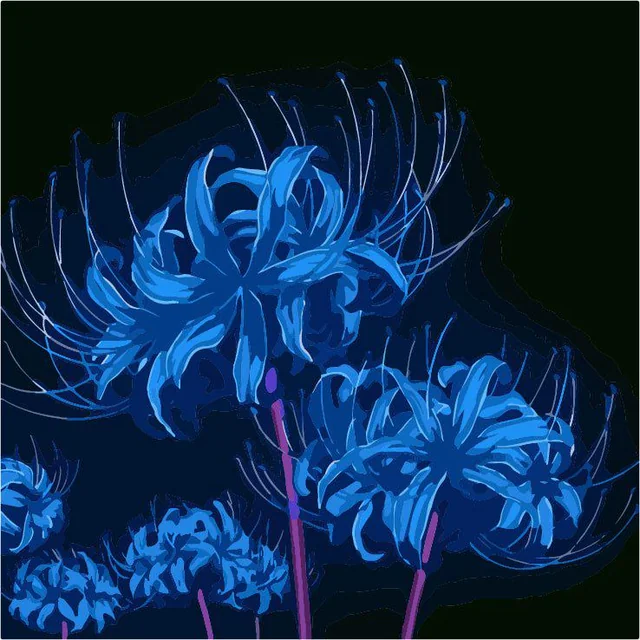
The Blue Spider Lily is the flower at the centre of the medicine that transformed Muzan in the Heian period. Muzan believes that a refined compound from it would resolve his sunlight weakness permanently. He has spent over a thousand years attempting to locate it, cultivate it, and use it.
The search has been consistently obstructed by one biological fact: the Blue Spider Lily blooms for only a few days each year, and only in daylight. A flower that blooms exclusively during the hours Muzan cannot safely be outside.
This is not a symbolic irony built into the story as a literary device. It is a practical obstacle that has genuinely prevented Muzan from resolving his weakness for a millennium. By the time the Infinity Castle arc begins, Muzan has not found the flower. He enters his final battle still searching, still incomplete.
The Twelve Kizuki
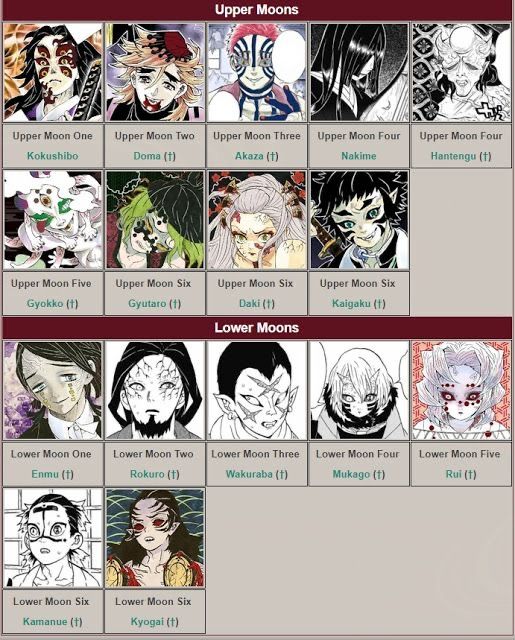
The Twelve Kizuki (also called the Twelve Demon Moons) are Muzan's inner circle: the twelve most powerful demons he has created, divided into Upper Moons (one through six) and Lower Moons (one through six). Upper Moons receive more of Muzan's blood directly, which accounts for the enormous gap in power between the two tiers.
Muzan promotes and replaces members based on performance. He executed the majority of the Lower Moons personally in the Infinity Castle scene during Season 2, dissolving them for failing to kill even a single Hashira across the series' events up to that point. The six Upper Moons are a different tier entirely: they have survived for decades or centuries, and several of them were exceptional humans or former demon slayers before their transformation.
For full profiles on each tier:
- Upper Moons ranked guide covers Kokushibo, Doma, Akaza, and Nakime in detail
- Lower Moons explained covers the disbanded tier and the six who preceded them
Muzan in the Infinity Castle
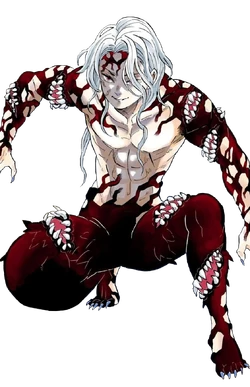
Muzan Kibutsuji: Infinity Castle Form
When the Demon Slayer Corps eliminates the Upper Moons one by one inside the castle, Muzan is forced to fight directly. He abandons his human form and undergoes a full demonic transformation: multiple limbs, drastically altered physiology, and a regeneration capacity that surpasses anything shown previously in the series. His blood, converted into living weapons and injected into opponents as part of his attacks, carries lethal compounds that can kill a Demon Slayer within an hour unless countered by specific medicines. This is the form Ufotable will animate in Part 3 of the Infinity Castle trilogy. It is the most technically demanding version of Muzan in the source material, and everything in the franchise prior to it has been build-up to this confrontation.
Why Muzan activated the Infinity Castle
Muzan did not enter the Infinity Castle battle as a calculated strategic move. He was cornered. By the time Nakime summons every fighter into the castle's shifting rooms, the Demon Slayer Corps has located his position, most of the Twelve Kizuki are gone, and his options are narrowing.
The castle serves three purposes. First, Nakime's biwa gives him geographic control: the shifting architecture separates Hashira from each other, preventing coordinated attacks and isolating fighters in the one-on-one and two-on-one matchups where his remaining Upper Moons have better odds. Second, fighting inside the castle means the battle happens in darkness, removing sunlight as an immediate threat. Third, the chaotic structure of simultaneous fights means that if his Upper Moons survive their matchups, Muzan can conserve himself for the final phase rather than facing the entire Corps at once.
The strategy partially succeeds. The Upper Moons inflict severe casualties before they fall. It fails entirely at its core objective.
For the full breakdown of what happens to each Upper Moon: Hashira vs Upper Moons: Every Infinity Castle Fight Ranked.
Major spoiler: Muzan's final act. The section below covers the very end of the Infinity Castle arc and the resolution of Muzan's storyline. Do not read if you want to experience this in the films without prior knowledge.
Muzan's final act
As dawn breaks over the battle site and sunlight begins to reach the arena, Muzan is losing. He cannot regenerate fast enough against the combined assault of the surviving demon slayers, and he is being burned away by incoming light. In his last moments, rather than accept destruction, Muzan makes a single desperate choice.
He injects every remaining cell of his blood and will into Tanjiro Kamado, who is unconscious and near death from his wounds. The intent is to transform Tanjiro into the next Demon King: a new body to carry Muzan's consciousness forward, immune to Yoriichi's lineage by becoming it, and capable of surviving where Muzan cannot.
It nearly works. Tanjiro briefly transforms into a demon, with Muzan's influence active inside him. The surviving Demon Slayers are faced with having to kill him or find a way to reverse the transformation. Kanao Tsuyuri uses a medicine derived from Tamayo's blood research to force Tanjiro's body to reject it. He recovers.
Muzan is destroyed when sunlight reaches him. There is no further body to retreat into. The demon army he spent a thousand years building, the castle, the Twelve Kizuki, the search for the Blue Spider Lily: all of it ends in daylight, which is what he spent every century of his existence trying to prevent.
Closing
Muzan Kibutsuji is the structural centre of Demon Slayer. Remove him and the Demon Slayer Corps has no reason to exist, Tanjiro's family survives, Nezuko stays human, and the entire series collapses. His thousand-year obsession with a flower is what makes the stakes real: he is not a villain who can be negotiated with or redirected. He wants to survive, and surviving requires removing every threat, and removing every threat means the Demon Slayer Corps has to stop him or be erased.
Understanding Muzan before entering the Infinity Castle is understanding what the Hashira are walking into when the biwa plays.
Before the films:
- Infinity Castle Arc Explained for release dates, watch order, and a spoiler-safe fight overview
- Hashira Ranked for full profiles on every Hashira entering the battle
- Upper Moons Ranked for Kokushibo, Doma, Akaza, and the others Muzan sent ahead of him
- Lower Moons Explained for the tier Muzan dissolved before the castle fights began
- Hashira vs Upper Moons: Every Infinity Castle Fight Ranked for the complete spoiler breakdown of every matchup
If you are picking up Demon Slayer merchandise around the Crunchyroll UK release on 27 July, Muzan figures and Upper Moon sets move quickly in the weeks around each film premiere. The AnimeVault marketplace is worth checking before and after the release.
More from the blog
Get new anime collector posts in your inbox.
Reviews, guides, and hobby news — delivered directly.
By subscribing, you agree to our Privacy Policy.